← Back to Blog
Neighborhoods
Travis Heights Austin Real Estate Market Guide: Prices, Neighborhoods and Timing
By Leila Showery
Compass RE · DRE# 760085
September 2, 2026 · 10 min read
Travis Heights is one of Austin's most talked-about inner-city neighborhoods, and for good reason: it sits directly south of Lady Bird Lake, holds some of the city's oldest bungalows, and continues to draw strong buyer interest even as the broader Austin market has shifted toward more balance. This guide covers what you actually need to know about Travis Heights real estate in September 2026, including current price ranges, what the housing stock looks like street by street, how the neighborhood compares within South Austin, and how to time a purchase or sale here effectively.
1. What Travis Heights Is and Why It Gets So Much Attention
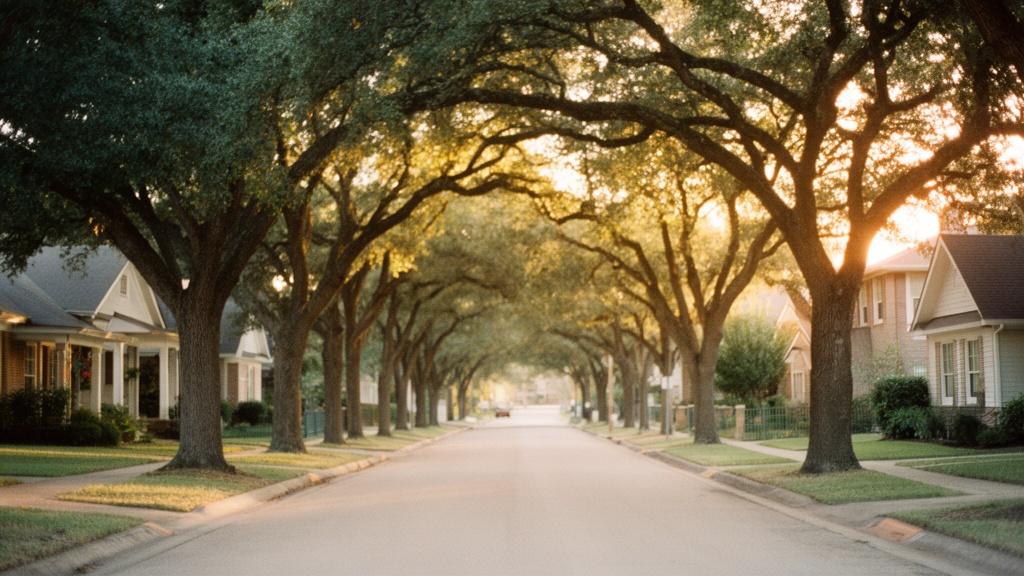
Travis Heights is a well-established inner-city neighborhood in South Austin, and it consistently comes up when people ask which Austin neighborhoods generate the most sustained buyer interest. Its location, its tree canopy, and its mix of historic and newer construction all contribute to demand that holds even when the broader Austin market softens.
The Physical Layout and Boundaries
Travis Heights sits between Lady Bird Lake to the north and East Oltorf Street to the south, with South Congress Avenue forming its western edge and South Pleasant Valley Road running along the east. The neighborhood covers roughly one square mile of hilly, heavily wooded terrain. Elevation changes are significant by Austin standards: streets like Newning Avenue and Travis Heights Boulevard wind through limestone ridges that give many homes elevated views toward downtown.
The area is officially part of the larger 78704 zip code, which also includes Bouldin Creek, Barton Hills, and Zilker. Travis Heights has its own distinct character within that zip code: it is denser and more walkable than Barton Hills, and its housing stock skews older than much of Bouldin Creek's recent infill construction.
Housing Stock and Architecture
The oldest homes in Travis Heights date to the 1920s and 1930s, and Craftsman bungalows are the defining architectural type. Many of these sit on 6,000 to 8,500 square foot lots with mature live oaks and pecans. You will also find mid-century ranch homes from the 1950s and 1960s, along with a growing number of contemporary infill builds and renovated cottages.
Home sizes vary considerably. Original bungalows typically range from 900 to 1,600 square feet. Fully renovated or rebuilt homes on the same lots often come in at 2,000 to 3,000 square feet. A smaller number of larger custom builds, particularly on the ridge streets closest to the lake, exceed 3,500 square feet.
2. Travis Heights Real Estate Prices Right Now
Travis Heights commands a price premium within South Austin, and that premium has held relatively firm even as Austin's overall market has seen price corrections since the 2022 peak. As of September 2026, median home prices in Travis Heights sit in the range of $850,000 to $1.1 million, depending on the street, condition, and lot size. That is a wide band, and understanding what drives the variation matters before you make an offer or set a list price.
Current Median and Price-Per-Square-Foot
Price per square foot in Travis Heights currently runs between $480 and $650 for move-in-ready homes, with fully renovated or new construction properties on view lots pushing above $700 per square foot. Original bungalows in original condition, which need significant updating, often trade closer to $420 to $470 per square foot, reflecting the cost of renovation that a buyer will absorb.
Entry-level access to Travis Heights, meaning smaller bungalows or homes that need work, starts around $650,000 to $750,000. The upper end of the market, particularly homes on Travis Heights Boulevard with lake views or large lots backing to the greenbelt, regularly exceeds $1.5 million. A small number of custom builds have traded above $2 million.
How Prices Vary Within the Neighborhood
Location within Travis Heights creates meaningful price differences. Streets closest to Lady Bird Lake, including the upper reaches of Travis Heights Boulevard and Newning Avenue, carry the highest premiums. Homes on these streets benefit from elevation, tree cover, and proximity to the hike-and-bike trail that runs along the lake's south shore.
Moving south toward Oltorf, prices moderate. Streets like Leland Street, Bonnie Road, and Woodward Street offer more accessible price points in the $700,000 to $900,000 range for updated homes. These blocks still carry the neighborhood's walkability and character, but they sit farther from the lake and tend to have flatter lots.
What the Broader Austin Market Is Doing
Context matters when reading Travis Heights prices. The Austin market overall has been working through a period of adjustment since the 2022 peak, with more inventory, longer days on market, and sellers relying more heavily on price reductions to close deals. HousingWire has documented how Austin sellers have increasingly leaned on price cuts as homes sit longer across the metro. Travis Heights has not been immune to that dynamic, but its limited supply of original bungalows on large lots provides a floor that newer suburban inventory does not have.
For a broader picture of what is happening across Austin's neighborhoods and price tiers right now, the Austin, Texas Right Now Real Estate Market Guide on this site covers citywide conditions in detail.
3. The Neighborhood in Detail: Streets, Parks, and Walkability
Understanding what you are actually buying in Travis Heights means knowing what the neighborhood offers on a day-to-day basis, not just what the house looks like. The physical amenities here are unusually concentrated for a neighborhood of this size, and they directly affect both livability and long-term value.
Big Stacy and Little Stacy Parks
The two Stacy parks sit at the heart of Travis Heights and are among the most used green spaces in South Austin. Big Stacy Park, at East Live Oak Street and Alameda Drive, includes a spring-fed outdoor pool that is open seasonally, tennis courts, and a large shaded lawn. Little Stacy Park, a short walk north, has a playground, a creek trail, and quieter picnic areas under a dense tree canopy.
The Stacy Park pool is a genuine neighborhood institution. It draws residents from across 78704 during Austin's long summers and is one of the specific amenities buyers frequently mention when explaining why they targeted Travis Heights over comparable South Austin neighborhoods.
South Congress Avenue Access
South Congress Avenue runs along the neighborhood's western edge and is walkable from most Travis Heights streets. The corridor includes restaurants, coffee shops, independent retail, music venues, and the historic Armadillo Christmas Bazaar site. Uchi, one of Austin's most recognized sushi restaurants, is on South Lamar a short drive west. The Continental Club, a live music staple on South Congress, is within easy walking distance for residents on the neighborhood's west side.
Walk Score for most Travis Heights addresses runs in the high 70s to mid-80s, which is unusually high for Austin. That walkability is a direct result of South Congress access combined with the neighborhood's own internal street grid.
Commute Times and Getting Around
Downtown Austin is approximately 1.5 to 2 miles from the center of Travis Heights by road, which translates to a 5 to 10 minute drive in off-peak hours. During morning and evening rush, Congress Avenue Bridge traffic can add 10 to 20 minutes. Many residents walk or bike across the bridge using the hike-and-bike trail, which connects directly to the south shore trail at the neighborhood's northern edge.
The Domain, Austin's northern tech employment hub, is roughly 14 miles from Travis Heights via MoPac, typically 20 to 30 minutes in normal traffic. The South Austin tech corridor along East Oltorf and South Lamar is effectively adjacent. Austin-Bergstrom International Airport is about 6 miles southeast, usually 15 to 20 minutes by car.
For a broader look at South Austin neighborhoods and how Travis Heights fits within the larger 78704 and 78745 landscape, the Homes for Sale in South Austin guide covers neighboring areas in comparable detail.
4. Timing the Travis Heights Market: When to Buy and When to Sell
Travis Heights follows Austin's seasonal patterns, but supply is constrained enough here that timing decisions are more nuanced than in higher-inventory parts of the metro. Knowing when homes move fastest, and when sellers have to work harder, is practical information whether you are buying or listing.
Seasonal Patterns in Travis Heights
Spring, specifically March through May, is historically the most active period in Travis Heights. Inventory comes to market as sellers prepare for the school transition calendar, and buyers who want to close before summer are actively searching. Well-priced, well-presented homes in this window have historically sold within two to three weeks.
Summer slows somewhat, particularly July and August, as Austin's heat reduces foot traffic and many buyers pause. Fall, from September through November, sees a second wave of activity that is meaningful but shorter than spring. Buyers who missed spring often return in the fall with urgency to close before year-end. December and January are the quietest months for new listings and showings.
Inventory Conditions in September 2026
As of September 2026, Travis Heights is carrying more active inventory than it did during the 2021 and 2022 frenzy, but supply here remains tighter than in outer Austin suburbs. At any given time, there are typically 15 to 25 active listings within the neighborhood boundaries, which is a thin market compared to areas like Pflugerville or Round Rock where hundreds of homes can be active simultaneously.
Days on market have extended compared to 2021 and 2022. Homes that are priced correctly are still moving in 20 to 40 days. Overpriced listings are sitting 60 to 90 days or longer before sellers adjust. That gap between priced-right and overpriced outcomes is larger now than it was two years ago, which makes pricing strategy more consequential for sellers.
The Austin market overall, as noted by HousingWire's reporting on the Texas housing market, has been characterized by more buyer leverage than the previous cycle. Travis Heights buyers can negotiate more than they could in 2021, but they should not expect the deep discounts available in less constrained suburban markets.
What Buyers and Sellers Should Watch
For buyers, the current environment offers more negotiating room on price and terms than Travis Heights has seen in years. Inspection contingencies, which were routinely waived in 2021 and 2022, are now standard again. Sellers are more willing to negotiate on closing costs and repair credits. The window of opportunity for buyers is real, though it narrows when interest rates shift or when a particularly well-priced listing attracts multiple offers.
For sellers, the lesson from September 2026 conditions is that presentation and pricing precision matter more than they did during the peak. Homes that are staged, photographed well, and priced within 2 to 3 percent of their true market value are still generating solid offers. Homes that are priced aspirationally are sitting, and the longer they sit, the harder it becomes to recover buyer confidence.
If you are weighing whether now is the right moment to act, the article Is Right Now a Good Time to Buy a House in Austin, Texas or Should I Wait? walks through that decision in practical terms.
Sellers who want to understand how the current market compares to recent years can also read Has the Austin, Texas Housing Market Cooled Off and Is It a Better Time to Sell Than Last Year for a direct comparison.
5. Schools, Research Resources, and Making Your Own Assessment
Travis Heights falls within Austin Independent School District. The specific schools serving the neighborhood's addresses can be confirmed directly through AISD's enrollment and boundary tools at austinisd.org.
For demographic and census information about the neighborhood, the U.S. Census Bureau's American Community Survey data for zip code 78704 is publicly available at census.gov. For public safety data, the Austin Police Department publishes crime statistics by neighborhood and sector at austintexas.gov. These are the appropriate third-party sources to consult when making decisions that go beyond the physical characteristics of the homes and streets.
Every buyer's priorities are different, and these resources let you evaluate the factors that matter most to your household directly, without relying on secondhand characterizations. A knowledgeable agent can point you to the right tools and help you interpret what you find in the context of specific properties, but the research itself is yours to do.
FAQ
What is the typical price range for a home in Travis Heights, Austin right now?
As of September 2026, homes in Travis Heights generally trade between $650,000 on the low end for smaller bungalows needing updates, and $1.5 million or more for fully renovated or custom-built homes on larger lots with lake views. The median for move-in-ready homes falls in the $850,000 to $1.1 million range. Price per square foot runs from approximately $420 for original-condition homes to over $700 for new construction or heavily renovated properties on premium streets. The variation within the neighborhood is significant, so comparing recent closed sales on specific streets is essential before making an offer or setting a list price.
How does Travis Heights compare to other South Austin neighborhoods in terms of housing stock?
Travis Heights is distinguished by its concentration of original 1920s and 1930s Craftsman bungalows on lots ranging from 6,000 to 8,500 square feet, which is larger than the typical Bouldin Creek infill lot. The neighborhood's topography, with limestone ridges and significant elevation changes, creates a physical character that flat South Austin streets do not replicate. Its proximity to Lady Bird Lake and direct trail access also separate it from neighborhoods further south like 78745, which have more mid-century ranch homes and fewer walkable amenities. Travis Heights tends to carry a price premium within 78704 that reflects these physical distinctions.
Is Travis Heights a good market to sell in right now, or should I wait for spring?
September 2026 is a legitimate window for sellers in Travis Heights, as the fall season typically brings a second wave of motivated buyers who want to close before year-end. That said, the current market rewards accurate pricing more than any other factor: homes priced within 2 to 3 percent of true market value are still moving in 20 to 40 days, while overpriced listings are sitting 60 to 90 days or longer. Spring, from March through May, historically produces the most buyer activity and the fastest sales, so sellers who can wait have a statistical advantage. However, a well-prepared listing at the right price in fall can perform comparably to a spring listing, particularly in a neighborhood with Travis Heights' supply constraints.