
← Back to Blog
Buying
Buying a Home in Denver, Colorado: Process, Costs and Timeline
By Lisa Hintgen
September 30, 2026 · 13 min read
Buying a home in Denver, Colorado involves more moving parts than most people expect, from navigating a market where inventory has expanded significantly since 2024 to understanding the true cost of closing on a property along the Front Range. This guide walks through the full process, the real numbers, and a realistic timeline so you can move through each stage with confidence rather than surprises.
1. What the Denver Housing Market Looks Like Right Now
Denver buyers in September 2026 have more options than they did two or three years ago. Active listings across the metro have climbed well above the inventory lows of 2021 and 2022, and days on market have stretched longer, which means buyers can take time to think rather than submitting offers sight unseen within hours of a listing going live.
Inventory and Price Context
The median sale price for a single-family home in the Denver metro currently sits in the mid-to-upper $500,000s, though that number shifts considerably depending on the neighborhood. Homes in established neighborhoods like Washington Park or the Highlands tend to list in the $700,000 to $1.2 million range, while properties in areas further from the urban core, such as Montbello or Westwood, can still be found in the $400,000 to $500,000 range. Condos in LoDo and RiNo start around $350,000 and climb steeply based on square footage and floor level.
According to reporting from HousingWire, Denver has seen meaningful price cuts and extended days on market compared to the peak years, which gives buyers more room to negotiate on price, request repairs after inspections, and ask for seller concessions toward closing costs.
Property Types Across Denver Neighborhoods
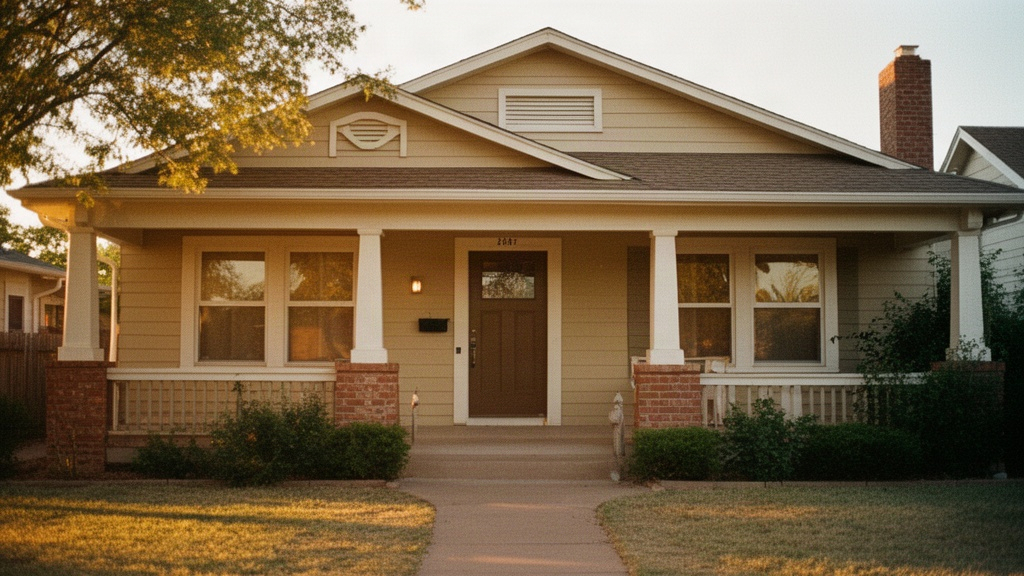
Denver's housing stock is unusually varied for a western city of its size. You will find brick bungalows from the 1920s and 1930s in neighborhoods like Berkeley and Sunnyside, mid-century ranch homes throughout Harvey Park and Athmar Park, Victorian-era two-stories in Curtis Park, and a large inventory of new construction townhomes and condos in neighborhoods like Cole, Globeville, and along the I-70 corridor. The variety means buyers need to be clear about what they want before they start touring, because the trade-offs between a 1940s bungalow and a 2024 townhome are significant in terms of maintenance, square footage, and price per square foot.
If you are relocating from out of state and trying to make sense of which part of Denver fits your priorities, the Denver, Colorado Real Estate Market Guide on this site breaks down the major neighborhoods by housing type, price range, and proximity to downtown.
2. The Step-by-Step Process for Buying a Home in Denver, Colorado
The process of buying a home in Denver follows Colorado-specific contract law and local customs that differ from other states. Understanding each stage before you start saves time and reduces the chance of a costly mistake.
Get Pre-Approved Before You Search
Pre-approval is the first concrete step, and in Denver it is not optional. Sellers will not take an offer seriously without a pre-approval letter from a lender, and most listing agents will not even schedule a showing for a buyer who cannot produce one. A pre-approval involves submitting your W-2s, tax returns, pay stubs, and bank statements to a lender who then pulls your credit and issues a letter stating the loan amount you qualify for. This is different from a pre-qualification, which is a rough estimate based on self-reported numbers. Get the full pre-approval.
Local lenders with Colorado experience often move faster and communicate more reliably than large national banks during the underwriting phase. Lisa Hintgen can point you toward lenders who have a strong track record with Denver transactions if you need a starting point.
Find Your Agent and Start Touring
Colorado requires buyers to sign a Buyer Agency Agreement before an agent can show homes. This agreement formalizes the relationship and outlines how your agent is compensated. It is worth reading carefully, particularly the sections covering the duration of the agreement and the compensation structure. In Denver, buyer agent compensation is negotiated separately from the listing side and is often addressed in the purchase contract.
Once you are signed up with an agent, the touring phase begins. In September 2026, most well-priced homes in Denver are sitting on the market for two to four weeks before going under contract, which means you generally have time to see a property more than once before deciding. The exception is move-in-ready homes priced at or below the neighborhood median, which still tend to attract multiple offers within the first week.
Make an Offer Using Colorado Contract Forms
Colorado uses a standardized contract called the Contract to Buy and Sell Real Estate, published by the Colorado Real Estate Commission. This is a detailed document covering price, earnest money, inspection deadlines, appraisal objection deadlines, loan terms, possession date, and a list of inclusions and exclusions. Your agent will walk you through each section, but it helps to understand the key dates before you sign.
Earnest money in Denver typically runs between 1% and 2% of the purchase price. On a $600,000 home, that means depositing $6,000 to $12,000 into escrow within a few days of contract acceptance. That money is applied toward your down payment at closing, but it can be at risk if you terminate outside of a contract deadline without a valid reason.
Inspection, Appraisal and Due Diligence
The inspection period in Colorado is called the Inspection Objection Deadline, and it typically falls 7 to 10 days after contract acceptance. You hire a licensed home inspector, pay for the inspection out of pocket (usually $400 to $600 for a standard single-family home), and then decide whether to request repairs, ask for a price reduction, or accept the property as-is. Denver's older housing stock means inspectors frequently flag items like aging electrical panels, original cast-iron drain lines, and roof age. These are not necessarily deal-breakers, but they affect your negotiating position.
If you are using a mortgage, your lender will order an appraisal after the inspection period closes. The appraisal confirms that the property is worth at least the purchase price. If the appraisal comes in low, the Colorado contract gives you an Appraisal Objection Deadline during which you can renegotiate the price, make up the difference in cash, or terminate the contract. In the current Denver market, low appraisals are less common than during the frenzied peak years, but they still happen on properties where sellers have priced aggressively.
Clear to Close and Final Walkthrough
Once the lender issues a Clear to Close, your title company schedules the closing. In Colorado, closings are typically handled by a title company rather than an attorney. You will sign a stack of loan documents and transfer documents, wire your down payment and closing costs, and receive the keys. Before closing, you do a final walkthrough of the property, usually within 24 hours of the closing appointment, to confirm the home is in the agreed-upon condition and that any negotiated repairs were completed.
3. What Does It Cost to Buy a Home in Denver?
The total cost of buying a home in Denver goes well beyond the purchase price. Buyers need to budget for the down payment, closing costs, prepaid items, inspection fees, and moving expenses before they ever make their first mortgage payment.
Down Payment Options in Colorado
The size of your down payment depends on the loan type you use. Conventional loans in Denver typically require between 5% and 20% down, though putting down less than 20% adds private mortgage insurance to your monthly payment. FHA loans allow as little as 3.5% down for buyers who meet the credit score requirements. VA loans, available to eligible veterans and active-duty service members, require no down payment at all. Colorado also has the CHFA (Colorado Housing and Finance Authority) program, which offers down payment assistance to qualifying buyers, including a grant option that does not need to be repaid.
On a $580,000 home, a 5% down payment is $29,000 and a 20% down payment is $116,000. Most buyers in Denver fall somewhere in between, often putting down 10% to avoid mortgage insurance while preserving cash reserves for closing costs and post-move expenses.
Closing Costs Buyers Should Budget For
Closing costs in Denver typically run between 2% and 3% of the purchase price for the buyer. On a $580,000 purchase, that means budgeting $11,600 to $17,400 in closing costs on top of your down payment. These costs include lender origination fees, title insurance, recording fees, the appraisal fee, prepaid homeowner's insurance, and prepaid property taxes. In the current market, it is common for buyers to negotiate seller concessions to cover some or all of these costs, particularly on homes that have been sitting on the market for more than 30 days.
For a deeper breakdown of exactly which line items appear on a Denver closing statement and who typically pays them, the First-Time Home Buyer Guide for Denver, Colorado on this site covers each cost in detail.
Ongoing Costs After Closing
Property taxes in Denver are calculated using the Colorado assessment rate applied to the property's actual value. Colorado's Gallagher Amendment adjustments and subsequent legislative changes have kept residential assessment rates relatively low compared to many other states, but on a $600,000 home in the City and County of Denver, annual property taxes generally land in the $3,000 to $4,500 range depending on the specific mill levy for that property. Homeowner's insurance in Colorado has risen sharply over the past several years due to hail risk and wildfire exposure; budget $2,000 to $3,500 per year for a standard single-family home.
HOA fees apply to many condos and some townhome communities in Denver. In LoDo and Cherry Creek, condo HOA fees commonly run $400 to $800 per month and cover building maintenance, amenities, and sometimes water and trash. In planned communities like Stapleton (now Central Park), HOA fees are lower, often $50 to $150 per month, but they exist in addition to your mortgage. Factor these into your monthly budget before falling in love with a property.
4. How Long Does the Buying Process Take in Denver?
From the day you start seriously searching to the day you get keys, buying a home in Denver typically takes two to five months. The range is wide because the search phase varies enormously depending on your price point, how specific your criteria are, and how quickly you can act when the right property appears.
Timeline From Pre-Approval to Close
Pre-approval takes one to three business days once you submit all your documents to the lender. The home search phase in Denver currently averages four to ten weeks for buyers who are clear on their criteria and financially ready. Once you go under contract, the Colorado contract typically sets a closing date 21 to 30 days out, though 30 to 45 days is more common when the lender needs extra time for underwriting. The inspection period runs the first 7 to 10 days of the contract period, the appraisal is typically ordered in week two, and lender approval usually arrives in week three or four.
A realistic end-to-end timeline for a straightforward Denver purchase looks like this: one week for pre-approval, four to eight weeks of searching, then 30 to 45 days from contract to close. That puts the total at roughly two to four months for a buyer who moves efficiently. Add another month or two if you are relocating from out of state and need time to visit Denver before committing, or if your price range is highly competitive.
What Can Slow Things Down
Lender delays are the most common reason closings get pushed back in Denver. Underwriting bottlenecks, missing documents, and last-minute conditions from the lender can add one to two weeks to an otherwise smooth transaction. Title issues, particularly on older Denver properties where ownership history is complex, can also slow things down. Inspection negotiations that drag on past the objection deadline create another pressure point.
Working with an experienced local agent who has relationships with reliable lenders and title companies is one of the most practical ways to keep a Denver transaction on schedule. Lisa Hintgen has worked through enough Denver closings to know where the friction points typically appear and how to get ahead of them before they become problems.
5. Key Considerations Specific to Denver Buyers
Denver has a few local factors that do not come up in generic home-buying guides but matter a great deal in practice. Knowing them in advance puts you in a stronger position.
Hail, Roof Age, and Insurance
Hail damage is one of the most common inspection findings in Denver. Colorado sits in the heart of hail alley, and Denver specifically gets several significant hail events per year. Before you close on any property, confirm the roof's age and condition and check whether the seller has an open insurance claim. Some lenders will not fund a loan on a property with known roof damage, and some insurers will not write a new policy on a roof that is more than 15 years old. This is a practical due diligence item that catches many buyers off guard.
Radon Testing in Denver Homes
Colorado has one of the highest radon concentrations in the country, and Denver is no exception. Radon is a naturally occurring radioactive gas that enters homes through foundation cracks and soil contact. Testing for radon is standard practice in Denver home inspections, and elevated levels are found frequently, particularly in older bungalows with basements. Radon mitigation systems cost $800 to $1,500 to install and are highly effective. If testing reveals elevated radon, you can request that the seller install a mitigation system as part of the inspection resolution.
The I-70 Mountain Corridor and Commute Patterns
Where you live in Denver relative to your workplace matters more than many buyers initially realize. Downtown Denver is roughly 20 to 25 minutes from neighborhoods like Sloan's Lake, Globeville, and City Park West during off-peak hours. That same drive from Aurora or Lakewood can take 35 to 50 minutes during peak commute times. If you plan to ski on weekends, properties on the west side of Denver provide meaningfully faster access to I-70 and the mountain resorts than properties in Aurora or the southeastern suburbs.
New Construction vs. Resale in Denver
New construction is active in several Denver submarkets right now, particularly in the Elyria-Swansea corridor, along the northern edge of Cole, and in infill pockets throughout the near northeast. New construction typically comes with a builder warranty covering workmanship and major systems, but the purchase process is different: you negotiate directly with the builder's sales team, and having your own buyer's agent present from the first visit is important because the builder's representative works for the builder, not for you. Resale homes in established Denver neighborhoods often come with mature landscaping, finished basements, and neighborhood character that new construction cannot replicate.
For a full look at what is being built across the metro right now and how to evaluate builder contracts, the Highlands Neighborhood Real Estate Market Guide offers a useful comparison of resale inventory in one of Denver's most active established neighborhoods.
For buyers considering a condo purchase, the process has some important differences from buying a single-family home. The guide to buying a condo in LoDo, Denver walks through HOA document review, lender warrantability requirements, and what to look for in an urban high-rise purchase.
FAQ
Do I need a real estate agent to buy a home in Denver?
You are not legally required to use a buyer's agent in Colorado, but navigating the Colorado Contract to Buy and Sell Real Estate without professional guidance is genuinely risky. The contract has multiple deadlines, each of which carries specific consequences if missed, and local customs around earnest money, inspection resolution, and seller concessions vary by neighborhood and price point. In Denver's current market, where sellers are more willing to negotiate than they were two years ago, a skilled buyer's agent can often recover their cost through price reductions or concessions. Colorado does require you to sign a Buyer Agency Agreement before an agent can show you homes, so the relationship is formalized from the start.
How much earnest money is expected in Denver?
Earnest money in Denver typically runs 1% to 2% of the purchase price, though in competitive situations buyers sometimes offer more to strengthen their position. On a $600,000 home, expect to deposit $6,000 to $12,000 into escrow within one to three business days of contract acceptance. That money is held by the title company and applied toward your down payment or closing costs at closing. If you terminate the contract within a valid deadline, such as the inspection objection deadline or the loan objection deadline, your earnest money is returned. Terminating outside of those deadlines without a valid contractual reason puts your deposit at risk.
Can I buy a home in Denver while living out of state?
Yes, and it happens frequently given Denver's draw for people relocating from California, Texas, and the Midwest. The process works largely the same way, with a few practical adjustments. Many buyers do one focused trip to Denver to tour properties in person before making an offer, though some have gone under contract based on video tours and detailed agent walkthroughs. Colorado's contract allows for remote signing through electronic signature platforms, and closings can sometimes be handled by mail or through a local notary if you cannot be in Denver on closing day. Working with an agent who has experience with out-of-state buyers makes the logistics considerably smoother. The guide on this site covering relocation to Denver from out of state goes into more detail on how to structure a buying trip and what to prioritize when you have limited time on the ground.