
← Back to Blog
Buying
Investment Property Guide for San Antonio, Texas: What Buyers Need to Know Before They Invest
By Lisa Reyna
Option One Real Estate
September 18, 2026 · 13 min read
San Antonio has drawn consistent attention from real estate investors for good reason: a large and growing population, a diverse employment base anchored by military installations and healthcare, and home prices that remain below the national median. This investment property guide for San Antonio, Texas walks through the property types available, the neighborhoods where investor activity is concentrated, the numbers you need to underwrite a deal, and the practical steps to close on your first or next investment here.
1. Why San Antonio Attracts Real Estate Investors
San Antonio is one of the few large American cities where population growth, military-driven employment stability, and relatively affordable land costs align at the same time. The San Antonio-New Braunfels metro was named one of the National Association of REALTORS' top housing hot spots, a recognition that reflects the metro's combination of in-migration, job diversity, and housing demand. For investors, that combination matters more than any single data point.
Population and Job Growth
San Antonio is the second-largest city in Texas by population and has added residents steadily for over a decade. The metro's employment base is anchored by Joint Base San Antonio, which is the largest military installation complex in the United States by acreage and supports tens of thousands of active-duty personnel, contractors, and civilian employees. The South Texas Medical Center, located off Fredericksburg Road on the northwest side, employs roughly 45,000 people across hospitals, research centers, and clinics. Both of these create a durable floor of rental demand that does not evaporate when one employer downsizes.
Toyota's North American manufacturing plant on the far south side, along with a growing logistics and distribution sector along IH-35 and IH-10, adds private-sector employment that draws workers who need housing at a range of price points. That breadth of employment is a structural advantage for landlords because tenant pools draw from multiple industries rather than one.
Price Points Relative to Other Texas Cities
San Antonio's median home price sits meaningfully below Austin's and is competitive with Dallas and Houston on a price-per-square-foot basis. As of September 2026, the median sale price for a single-family home in the San Antonio metro is in the range of $295,000 to $310,000, depending on the submarket and data source. That entry point allows investors to acquire properties with smaller down payments and lower carrying costs than they would face in Austin, where comparable homes often exceed $450,000.
2. Types of Investment Properties Available in San Antonio
San Antonio's housing stock is broad enough to support several investment strategies. The right property type depends on your capital, your tolerance for management complexity, and how you want to hold the asset.
Single-Family Rentals
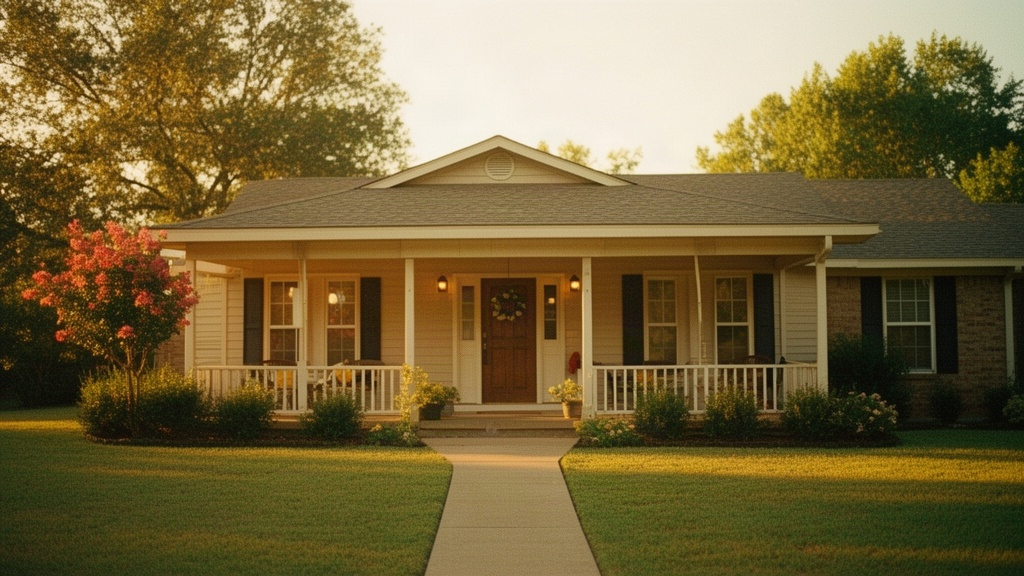
Single-family homes are the most common investment vehicle in San Antonio and the easiest to finance, insure, and eventually sell. The city has an enormous supply of 1950s through 1980s ranch-style homes on the near north, south, and east sides, many of which were built with pier-and-beam or slab foundations and sit on lots between 6,000 and 9,000 square feet. These homes typically run between 1,000 and 1,600 square feet, have three bedrooms and one or two bathrooms, and can be acquired in the $180,000 to $240,000 range in established neighborhoods. Newer construction in master-planned communities along Highway 90 West, Loop 1604, and in areas like Converse and Schertz starts closer to $250,000 and offers lower maintenance costs in the early years of ownership.
Small Multifamily Properties
Duplexes, triplexes, and fourplexes exist throughout San Antonio's older urban core, particularly in areas like Highland Hills, Prospect Hill, and along the corridors connecting downtown to the Medical Center. Properties with two to four units are still eligible for conventional residential financing, which means a buyer can put as little as 20 to 25 percent down and access standard 30-year fixed rates. A well-located duplex in San Antonio can be acquired for $280,000 to $380,000 and generate combined gross rents of $2,400 to $3,200 per month, depending on unit size and condition.
Short-Term Rentals
San Antonio's tourism economy, centered on the River Walk, the Alamo, and a year-round convention calendar at the Henry B. Gonzalez Convention Center, supports a meaningful short-term rental market. Properties within two to three miles of downtown, including the King William Historic District and Southtown, see the strongest short-term rental performance. Before pursuing this strategy, confirm the property's zoning and review the City of San Antonio's short-term rental registration requirements, which have been updated in recent years and carry specific rules about owner occupancy and distance from other registered STRs.
3. Where Investor Activity Is Concentrated in San Antonio
Investor activity in San Antonio is not uniform. Certain corridors and submarkets see heavier acquisition volume because of their proximity to employment, their price-to-rent ratios, or their pipeline of renovation opportunities. This section describes where those concentrations are and what drives them.
Near the Medical Center and South Texas Medical Center Corridor
The neighborhoods surrounding the South Texas Medical Center, including Huebner Estates, Whisper Hollow, and the streets between Fredericksburg Road and Babcock Road, attract investors because of the density of healthcare workers who prefer to rent close to work. Single-family homes in this area typically range from $220,000 to $320,000, and three-bedroom rentals command between $1,400 and $1,900 per month as of September 2026. The area also benefits from proximity to UTSA's main campus and the University of the Incarnate Word, which adds a student and young-professional tenant pool.
Southside and Near East Side
The southside along Highway 181 and Military Drive, and the near east side along New Braunfels Avenue and Commerce Street, offer some of San Antonio's lowest acquisition prices for single-family homes, with many properties in the $140,000 to $200,000 range. These areas carry higher management demands than newer suburban submarkets, and investors should budget for deferred maintenance on homes built before 1970. That said, gross rent yields in this price tier are often higher on paper, and proximity to downtown and the Port San Antonio aerospace and logistics complex on the former Kelly Air Force Base provides employment-driven rental demand.
North San Antonio and the 1604 Loop Area
The suburban corridor along Loop 1604 from Helotes on the northwest through Stone Oak and into Universal City and Converse on the northeast is where the majority of new construction investor activity occurs. Build-to-rent communities and investor-purchased new homes in this corridor target tenants who want newer construction and suburban amenities but are not yet ready to purchase. Acquisition prices for new or near-new three-bedroom homes in this corridor run from $260,000 to $340,000, and monthly rents range from $1,700 to $2,200. Vacancy tends to be lower here than in older urban submarkets because the product is newer and tenant turnover is driven more by life changes than by dissatisfaction with the unit.
If you are still exploring which part of the metro fits your investment goals, the overview in the San Antonio real estate market guide covers price ranges and submarket characteristics across the city in more detail.
4. The Numbers: What to Expect on Price, Rent, and Returns
Understanding the financial profile of a San Antonio investment property starts with three figures: what you pay, what you collect, and what it costs you to hold the asset. Here is how those numbers look in September 2026.
Purchase Prices by Property Type
- Entry-level single-family (pre-1980, near east or southside): $140,000 to $200,000
- Mid-tier single-family (1980s through 2000s, northwest and northeast corridors): $200,000 to $270,000
- New or near-new single-family (post-2015, suburban 1604 corridor): $260,000 to $340,000
- Duplex or small multifamily (2 to 4 units, urban core): $280,000 to $420,000
Rental Rates and Vacancy
- Two-bedroom single-family or apartment: $1,100 to $1,450 per month
- Three-bedroom single-family (older urban): $1,300 to $1,600 per month
- Three-bedroom single-family (suburban, newer): $1,700 to $2,200 per month
- Duplex per unit (near Medical Center or downtown adjacent): $1,100 to $1,600 per month
- Metro-wide residential vacancy rate: approximately 7 to 9 percent as of September 2026, reflecting the elevated new apartment supply that has entered the market over the past two years
Estimating Your Cash-on-Cash Return
Cash-on-cash return measures your annual pre-tax cash flow as a percentage of the cash you invested. On a $240,000 single-family home purchased with 25 percent down ($60,000), a 30-year fixed investment loan at current rates near 7.25 percent produces a principal and interest payment of roughly $1,230 per month. Add property taxes (Bexar County's effective rate runs approximately 2.2 percent of assessed value, or about $440 per month on a $240,000 assessment), insurance ($120 to $160 per month), and a vacancy and maintenance reserve of 10 to 12 percent of gross rent, and your total monthly cost is in the $2,000 to $2,100 range. At a rent of $1,600, this deal is cash-flow neutral to slightly negative at current rates, which is why many San Antonio investors are prioritizing appreciation and equity paydown rather than immediate monthly cash flow.
Entry-level properties acquired below $200,000 with rents above $1,300 can still produce positive cash flow, but they require more hands-on management and a larger upfront repair budget. The math improves materially if rates move lower or if you put more than 25 percent down.
For broader context on how the Texas market is evolving, HousingWire's analysis of Texas housing market trends covers the supply and demand dynamics affecting pricing and rent growth across the state's major metros, including San Antonio.
5. Financing an Investment Property in San Antonio
How you finance the purchase has a larger impact on your returns than almost any other variable. San Antonio investors currently have three primary loan structures to choose from.
Conventional Investment Loans
Conventional loans for non-owner-occupied properties require a minimum of 15 percent down for single-family homes and 25 percent for two-to-four-unit properties, and they carry interest rates that are typically 0.5 to 0.75 percent higher than owner-occupant rates. Most lenders will count 75 percent of projected rental income toward your qualifying income, which helps investors who already own income-producing properties. You will need a credit score of at least 680 for most conventional investment loan programs, and reserves of two to six months of mortgage payments are commonly required.
House Hacking with an Owner-Occupant Loan
House hacking means purchasing a two-to-four-unit property, living in one unit, and renting the others. Because you occupy the property, you qualify for owner-occupant loan programs. FHA loans allow as little as 3.5 percent down on two-to-four-unit properties, and VA loans, which are widely used in San Antonio given the military population, allow zero down. The income from the other units can offset your mortgage payment substantially. A duplex near the Medical Center purchased at $320,000 with an FHA loan at 3.5 percent down requires roughly $11,200 upfront, and if each unit rents for $1,300, the rental income covers more than half the total monthly payment.
DSCR Loans
Debt Service Coverage Ratio loans qualify the borrower based on the property's rental income rather than personal income, which makes them useful for self-employed investors or those who have maximized their conventional loan count. Most DSCR lenders in San Antonio require a ratio of at least 1.0, meaning the property's gross rent covers the full mortgage payment, and they typically require 20 to 25 percent down with rates that run 0.5 to 1.5 percent above conventional investment rates. DSCR loans close faster than conventional loans in many cases because the underwriting is simpler.
If you are relocating to San Antonio and considering an investment purchase alongside a primary residence, the relocation guide for San Antonio covers cost-of-living benchmarks and neighborhood characteristics that are useful context when evaluating which submarket to buy in.
6. Steps to Buy an Investment Property in San Antonio
The purchase process for an investment property follows the same general sequence as a primary home purchase, but with a few additional steps specific to income-producing assets.
- Step 1: Define your strategy. Decide whether you are targeting long-term rentals, short-term rentals, or a house-hack structure. Each strategy points to different submarkets and property types in San Antonio.
- Step 2: Get pre-approved. Work with a lender who has experience with investment loans in Texas. Have two years of tax returns, recent bank statements, and a schedule of any existing real estate you own ready to submit.
- Step 3: Run the numbers before you tour. Use the current asking price, Bexar County's property tax rate, local insurance quotes, and realistic rent comps to build a pro forma before you spend time on a property. Walk away from anything that does not pencil at current rates.
- Step 4: Make an offer with appropriate contingencies. Investment purchases in San Antonio typically include an inspection contingency and a financing contingency. If the property is tenant-occupied, request a copy of all leases and the last three months of rent payment records as part of your due diligence.
- Step 5: Order an inspection focused on systems. San Antonio's climate is hard on HVAC systems, roofs, and foundations. Pay particular attention to the age and condition of the air conditioning unit, the roof, and whether there is any evidence of foundation movement, which is common on the city's expansive clay soils.
- Step 6: Confirm Bexar County's assessed value and exemption status. If the current owner has a homestead exemption, that exemption ends when the property transfers. Your property tax bill will be calculated on the new assessed value without the exemption, which can add $1,500 to $3,000 or more annually to your holding costs.
- Step 7: Close and set up management. Decide before closing whether you will self-manage or hire a property management company. San Antonio has a number of local property managers who charge 8 to 10 percent of collected rent for single-family homes, which is worth factoring into your pro forma from the start.
For a detailed look at what the closing timeline looks like in San Antonio, the article on how long it takes to close on a house in San Antonio walks through each step and typical timeframes.
7. Risks and Considerations Specific to the San Antonio Market
No investment property guide for San Antonio, Texas would be complete without an honest look at the risks. The same market conditions that create opportunity also create real exposure for unprepared investors.
New apartment supply has been elevated in San Antonio for the past two to three years. Thousands of new multifamily units have delivered across the metro, particularly in the north and northwest, which has pushed apartment vacancy rates higher and slowed rent growth compared to 2022 and 2023. Single-family rental demand has remained more stable, but single-family landlords compete with apartments at the margin, and concessions in the apartment market can make it harder to hold rents flat at renewal.
Property taxes in Bexar County are a significant and often underestimated cost. Texas has no state income tax, but property taxes compensate for that at the local level. The effective rate in Bexar County for investment properties without a homestead exemption runs approximately 2.1 to 2.4 percent of assessed value annually. On a $280,000 property, that is $5,880 to $6,720 per year in property taxes alone, before insurance or maintenance. Investors who model their returns using California or East Coast tax rates will significantly underestimate their holding costs.
Foundation issues are common in San Antonio because the soil is predominantly expansive clay that shrinks and swells with moisture. A professional foundation inspection is not optional on any pre-2000 property. Remediation costs range from $3,000 for minor pier adjustments to $30,000 or more for significant structural work. Budget for this before you make an offer, not after.
Flood risk is also geographically uneven in San Antonio. The city sits within the Salado Creek, Leon Creek, and Medina River watersheds, and certain properties in lower-lying areas carry mandatory flood insurance requirements. Check FEMA flood maps for any property you are evaluating, and factor flood insurance premiums into your cost model if the property is in a Special Flood Hazard Area.
FAQ
Is San Antonio a good market for real estate investors in 2026?
San Antonio has several structural advantages for investors: a large and growing population, a diversified employment base anchored by military, healthcare, and manufacturing, and home prices that remain below the national median. As of September 2026, the market is more balanced than it was in 2021 and 2022, with more inventory and slower rent growth due to elevated apartment supply. Investors who underwrite conservatively, account for Bexar County's high property taxes, and target submarkets with strong employment anchors can still find properties that make financial sense, particularly in the entry-level single-family and small multifamily segments.
What is the property tax rate for investment properties in San Antonio?
Investment properties in Bexar County are not eligible for the homestead exemption, which means they are taxed at the full assessed value. The effective combined rate, which includes the city, county, and applicable school district levies, runs approximately 2.1 to 2.4 percent of assessed value as of 2026. On a $260,000 investment property, that translates to roughly $5,460 to $6,240 per year in property taxes. This is one of the most significant costs to model accurately before purchasing, because it is substantially higher than what investors from lower-tax states typically expect. You can verify current levy rates through the Bexar County Appraisal District's website.
Should I use a local San Antonio agent to buy an investment property, or can I do it myself?
A local agent who understands San Antonio's submarket dynamics can help you identify which areas have the strongest rental demand relative to acquisition cost, flag common issues like foundation movement and flood exposure before you make an offer, and negotiate price reductions based on inspection findings. Investment purchases have more variables than primary home purchases: lease reviews, rent roll verification, tax assessment changes at transfer, and zoning confirmation for short-term rentals all require someone who knows the local market. Working with an experienced San Antonio agent does not cost the buyer anything in a standard transaction, since the seller pays the buyer's agent commission, so there is no financial reason to navigate the process alone.