← Back to Blog
Market Trends
Fort Worth, Texas This Year Real Estate Market Guide: Prices, Neighborhoods and Timing
By Madison Mitchell
TK Realty
September 20, 2026 · 12 min read
If you are trying to make sense of the Fort Worth, Texas this year real estate market guide covering prices, neighborhoods and timing, you are in the right place. September 2026 looks different from what buyers and sellers experienced even twelve months ago, with inventory levels shifting, mortgage rates settling into a new normal, and specific pockets of the city moving faster than others. This guide breaks down what the numbers actually mean for your next move.
1. Where Fort Worth Home Prices Stand Right Now
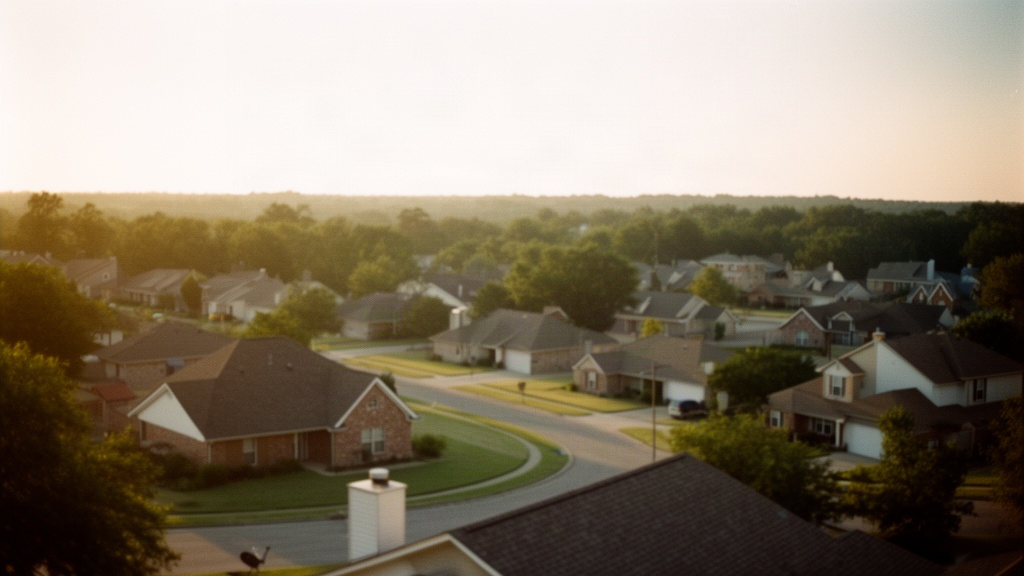
Fort Worth home prices have stabilized in 2026 after several years of rapid appreciation. The median sale price across the city sits in the low-to-mid $300,000s as of September 2026, a modest increase from the same period in 2025 but well below the double-digit annual gains the market posted in 2021 and 2022. That stabilization is meaningful: it signals a market that is functioning rather than overheating, which creates real opportunities on both sides of a transaction.
According to Norada Real Estate's Fort Worth market analysis, the Fort Worth metro has continued to attract net population inflow from higher-cost Texas metros and out-of-state buyers, which puts a durable floor under demand even as affordability pressure persists. That demand is not evenly distributed across zip codes, and understanding where it concentrates is the key to reading this market correctly.
Median Price Benchmarks Across the City
Price ranges vary considerably depending on which part of Fort Worth you are looking at. Entry-level homes in neighborhoods like Wedgwood and parts of the Eastside generally start in the high $180,000s to low $250,000s for three-bedroom houses built in the 1960s through 1980s. Mid-range properties in areas such as the TCU corridor, Ridglea Hills, and the Hulen corridor run from roughly $320,000 to $550,000. Upper-tier homes in Westover Hills and the custom-build sections of far north Fort Worth near the Alliance corridor can push well past $700,000 and into the millions.
Those price tiers are not just about size. They reflect lot size, construction era, proximity to Loop 820 and Interstate 30, and how much renovation has already been done. A 1,800-square-foot home in Fairmount with original hardwood floors and a renovated kitchen will price differently than a comparable square-footage house in a 1990s subdivision near Saginaw, even if both carry similar list prices on paper. Understanding what drives value in each submarket is where local knowledge earns its keep.
How Price Per Square Foot Varies by Area
Price per square foot is one of the most useful comparison tools in a market as geographically diverse as Fort Worth. In September 2026, established inner-city neighborhoods are averaging roughly $175 to $220 per square foot, while newer construction in the far north suburbs near Haslet and Justin is running $165 to $195 per square foot. The Fairmount Historic District and parts of the Near Southside, where walkability to the Magnolia Avenue corridor is a tangible feature, can push $225 per square foot or higher for well-maintained bungalows.
These figures shift quickly when a property has been updated versus when it carries deferred maintenance. A buyer comparing two homes purely on price per square foot without accounting for roof age, HVAC condition, and foundation status can easily misread the deal. This is one reason why a thorough inspection and a comparative market analysis from someone who knows Fort Worth's specific neighborhoods are worth every dollar.
2. Inventory and Market Conditions in September 2026
Fort Worth's inventory has expanded meaningfully in 2026, giving buyers more options than they had in 2023 or 2024. That said, the market has not tipped into full buyer's territory. Certain price bands and certain zip codes remain competitive, with well-priced listings still attracting multiple offers within the first week. The overall picture is a more balanced market than Fort Worth has seen in several years, which changes the negotiating calculus for both sides.
For a deeper look at how inventory levels have shifted across Tarrant County this year, the Fort Worth housing inventory levels article on this site breaks down the monthly supply data and what it means for whether sellers still hold the upper hand.
Supply Levels and What They Mean for Buyers
Tarrant County is currently carrying roughly three to four months of supply at the citywide level, up from under two months during the peak seller's market of 2022. A balanced market is generally defined as five to six months of supply, so Fort Worth has not fully crossed that threshold. What this means practically is that buyers have more time to think, more room to negotiate on price and concessions, and fewer situations where they are forced to waive inspections to compete. Sellers, on the other hand, need to price accurately from day one rather than testing the market with an aspirational number.
The inventory picture is not uniform across price points. Homes priced below $280,000 in Fort Worth continue to sell quickly because that segment is constrained by limited supply and persistent demand from first-time buyers and investors. Homes above $600,000 are sitting longer, with average days on market running four to six weeks in some cases. That upper-tier slowdown is giving buyers negotiating leverage they simply did not have two years ago.
Days on Market and Absorption Rate
The citywide median days on market in Fort Worth is running approximately 28 to 35 days in September 2026, compared to under 10 days during the frenzied pace of 2021. That number is an average, and it obscures meaningful variation. A move-in-ready home priced at $310,000 near the TCU area may go under contract in five days. A $475,000 home that needs a new roof and has been priced 8 percent above comparable sales may sit for 60 days before the seller adjusts. Reading those signals correctly is what separates a well-timed transaction from a frustrating one.
3. Fort Worth Neighborhoods: What the Housing Stock Actually Looks Like
Fort Worth spans more than 350 square miles, and the housing stock reflects that geographic range. You will find Craftsman bungalows from the 1920s sitting within two miles of brand-new master-planned communities with HOA amenities. Each submarket has its own price rhythm, its own inventory dynamics, and its own character defined by architecture, lot size, and proximity to the city's major employment and retail corridors.
Near Southside and Fairmount
The Near Southside sits roughly two miles south of downtown Fort Worth and is anchored by the Magnolia Avenue corridor, a stretch of independent restaurants, coffee shops, and retail that draws foot traffic daily. The Fairmount Historic District within it contains a dense collection of early 20th-century homes on relatively small lots, typically 5,000 to 7,000 square feet. Buyers here are purchasing architecture and walkability as much as square footage. Prices for renovated homes in Fairmount currently range from the mid-$300,000s to the low $500,000s depending on size and finish level. For a closer look at this neighborhood, the Fairmount neighborhood guide covers the details.
Alliance Corridor and Far North Fort Worth
The Alliance corridor along Interstate 35W north of Loop 820 is one of the most active new-construction zones in the entire Dallas-Fort Worth metroplex. Communities near Haslet, Justin, and the Alliance Town Center area feature homes built from 2018 through 2026, with floor plans ranging from 1,800 to 3,500 square feet on lots that typically run 6,000 to 10,000 square feet. Prices in this corridor start around $330,000 for a three-bedroom production build and climb past $550,000 for larger homes with premium lots backing to green space or ponds.
The Alliance area also benefits from proximity to the AllianceTexas employment campus, which hosts logistics, aviation, and manufacturing operations that employ tens of thousands of workers. That employment base supports sustained demand for housing in the surrounding communities. The new-construction developments in far north Fort Worth article on this site covers the specific subdivisions and builder activity in this corridor in detail.
Wedgwood and Southwest Fort Worth
Wedgwood is one of Fort Worth's established mid-century neighborhoods, with most of its housing stock built between 1955 and 1980. Homes here are predominantly single-story brick construction on generous lots that frequently run 8,000 to 12,000 square feet, giving buyers yard space that is hard to find at comparable price points in newer subdivisions. Current prices in Wedgwood range from the high $180,000s to the low $300,000s, making it one of the more accessible entry points into homeownership within Fort Worth's inner loop.
Southwest Fort Worth more broadly includes the Hulen corridor, which runs along Hulen Street from I-30 south toward Crowley Road. This stretch features a mix of 1980s and 1990s subdivisions alongside newer pockets of infill development. The area sits within a 15-to-20-minute drive of downtown Fort Worth via I-30 or Hulen Street during non-peak hours, and closer to 25 to 35 minutes during morning rush.
Ridglea Hills and the TCU Area
Ridglea Hills sits west of downtown along Camp Bowie Boulevard and features a mix of mid-century ranch homes and updated properties on tree-lined streets with mature oak canopy. Lot sizes in Ridglea Hills are generous by inner-city standards, often running a quarter acre or more. Prices currently range from the low $300,000s for original-condition homes to the mid-$600,000s for extensively renovated properties. The Ridglea Hills market guide on this site goes deeper on pricing and recent sales trends in that specific neighborhood.
The TCU area encompasses the blocks surrounding Texas Christian University on University Drive and extends into the Berkeley Place and Monticello neighborhoods. Housing stock here ranges from small cottages to substantial two-story homes, with prices from the mid-$200,000s to over $700,000 for the larger, fully updated properties. The proximity to Colonial Country Club, the Fort Worth Botanic Garden, and the Cultural District adds to the area's draw. For sellers in this corridor, the TCU area home-selling guide covers what to expect on pricing and timelines.
4. Timing the Fort Worth Market: When to Buy and When to List
Timing matters in Fort Worth, but it does not matter as much as pricing correctly and being financially ready to act. That said, understanding the seasonal rhythm of Tarrant County real estate helps buyers and sellers make more informed decisions about when to enter the market.
Seasonal Patterns in Tarrant County
Fort Worth's busiest listing season runs from late February through June, when inventory peaks and buyer competition is highest. July and August bring a slight slowdown as North Texas heat keeps some buyers inside, though serious buyers remain active. September through November represents a second, quieter wave of activity. Sellers who list in September often face less competition from other listings while still reaching motivated buyers who need to close before the end of the year for tax or relocation reasons.
December and January are the slowest months for new listings in Fort Worth, which cuts both ways. Buyers who search during the winter face less competition and sometimes find sellers more willing to negotiate. Sellers who list in winter reach a smaller pool but often a more serious one. The Fort Worth Report noted heading into 2026 that the local housing market was carrying stable expectations, which aligns with what agents are seeing on the ground: a market that rewards preparation over speculation.
Mortgage Rate Context for September 2026
Mortgage rates in September 2026 are running in the mid-to-upper 6 percent range for a 30-year fixed loan, depending on credit profile and loan type. That is meaningfully lower than the peak rates buyers faced in late 2023, but still above the historic lows of 2020 and 2021. The practical effect is that monthly payments on a $350,000 home are roughly $600 to $700 higher per month than they would have been at a 3 percent rate, which is why affordability remains a real constraint even as prices have leveled off.
Buyers who are waiting for rates to drop significantly before purchasing are taking on a different kind of risk: if rates do fall, demand typically surges and prices follow. The more durable strategy for most buyers is to find a home that fits the budget at current rates, knowing that a refinance is possible if rates move lower. Sellers, meanwhile, should recognize that rate-sensitive buyers are stretching budgets and respond by pricing homes competitively rather than padding for negotiation room.
5. What Buyers and Sellers Should Do Right Now
The Fort Worth, Texas this year real estate market guide for prices, neighborhoods and timing ultimately points to the same conclusion for both buyers and sellers: preparation and local knowledge outperform any attempt to perfectly time the market. Here is what that looks like in practice for each group.
Practical Steps for Buyers
Get pre-approved before you start touring homes. In Fort Worth's sub-$300,000 price band, listings still move in days and a pre-approval letter is the minimum required to be taken seriously. Know which neighborhoods fit your commute tolerance: a home in Saginaw or Keller may offer more square footage per dollar, but a 35-to-45-minute drive to downtown Fort Worth on I-35W during peak hours is a real daily commitment. The detailed Fort Worth home-buying process guide covers costs, timelines, and what to expect at each stage of the transaction.
Budget for Tarrant County property taxes from the start. The effective tax rate on a $400,000 home in Tarrant County can run $8,000 to $10,000 annually depending on the specific taxing entities that apply to the property's location. That figure adds meaningfully to the monthly cost of ownership and should factor into how much home you can comfortably carry at current mortgage rates.
Practical Steps for Sellers
Price your home based on what comparable properties have sold for in the last 60 to 90 days, not on what they sold for in 2022. Overpricing is the single most common mistake Fort Worth sellers make in the current market. A home that sits for 45 days and requires a price reduction will ultimately sell for less than a home that was priced correctly on day one, because buyers interpret time on market as a signal that something is wrong.
Invest in presentation before listing. In a market where buyers have more choices than they did two years ago, first impressions carry more weight. Fresh interior paint, professional photography, and a clean exterior go a long way toward generating strong early traffic. Sellers who are also planning to buy their next home in Fort Worth should think through the sequencing carefully; the Fort Worth home-selling guide walks through the full pricing and timeline process from list to close.
Sellers who are downsizing should pay particular attention to the current inventory gap in smaller, lower-maintenance homes. Demand for patio homes, townhomes, and smaller single-story properties in established Fort Worth neighborhoods is outpacing supply in several zip codes, which means that segment of the market is moving faster than the broader city average. The Fort Worth downsizing guide covers options, costs, and timing for homeowners thinking about making that move.
FAQ
Is September 2026 a good time to buy a home in Fort Worth, Texas?
September 2026 offers buyers in Fort Worth a more balanced set of conditions than the market has seen in several years. Inventory is higher than it was in 2022 and 2023, days on market have lengthened, and sellers in the upper price tiers are more willing to negotiate on price, concessions, and repairs. The main constraint for buyers remains affordability: mortgage rates in the mid-to-upper 6 percent range push monthly payments higher than many first-time buyers anticipated. Buyers who have their financing in order and understand the specific dynamics of the neighborhood they are targeting are well-positioned to find good value right now.
Which Fort Worth neighborhoods have the most homes for sale right now?
As of September 2026, the greatest concentration of active listings in Fort Worth is in the far north corridor near Alliance and Haslet, where new-construction builders have added significant inventory over the past two years. The mid-tier price range in areas like the Hulen corridor, Wedgwood, and parts of North Fort Worth near Loop 820 also carries a solid inventory of resale homes. The tightest supply, meaning the fewest homes available relative to buyer demand, remains in the entry-level segment below $280,000 across most of the city. Buyers targeting that price range should be prepared to move quickly and have their pre-approval ready before they start touring.
How do I know if a Fort Worth home is priced correctly in the current market?
The most reliable way to evaluate a Fort Worth listing's price is to compare it against homes that have actually closed in the same neighborhood within the last 60 to 90 days, adjusting for square footage, lot size, condition, and updates. List prices are not a reliable benchmark because they reflect seller expectations, not market reality. Homes that have been on the market for more than 30 days without a price reduction in the current Fort Worth market are often overpriced relative to what buyers are willing to pay. A local agent who runs a detailed comparative market analysis using recent closed sales in the specific submarket will give you the most accurate read on whether a given price is fair, aggressive, or inflated.