← Back to Blog
Market Trends
Fort Worth, Texas Would You Recommend I Call Today? Real Estate Market Guide: Prices, Neighborhoods and Timing
By Madison Mitchell
TK Realty
September 19, 2026 · 11 min read
If you are weighing a move in Fort Worth, Texas and wondering whether now is the right time to call an agent, this guide gives you a straight answer grounded in current market data. We cover what homes cost across different parts of the city right now in September 2026, how the major neighborhoods compare on price and housing stock, and what the timing picture looks like for both buyers and sellers. No fluff, no guesswork: just the local detail you need to make a confident decision.
1. What Is the Fort Worth Real Estate Market Doing Right Now?
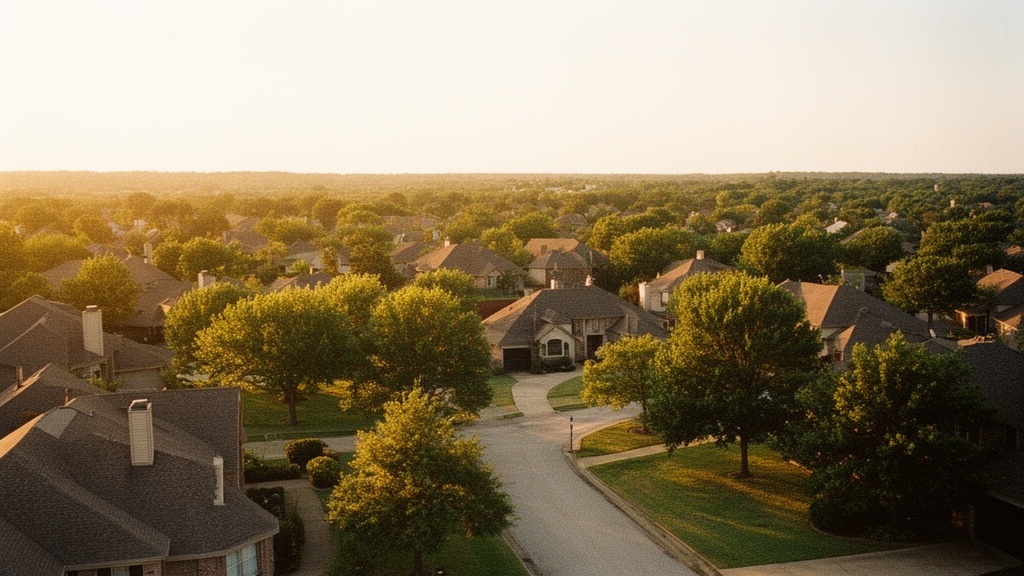
Fort Worth is in a measured, recalibrating market in September 2026, not a frenzy and not a collapse. After the sharp appreciation years of 2021 and 2022, prices stabilized through 2024 and have been inching upward again through 2026 as the city's population and job base continue to expand. The Dallas-Fort Worth metro is one of the few large metros in the country where new residents are still arriving in meaningful numbers, which keeps a floor under demand even when mortgage rates are elevated.
For context on where the broader market stands, HousingWire's analysis of the Dallas-Fort Worth reset describes the current environment as a market finding its footing rather than declining: sellers are adjusting expectations, buyers are negotiating more than they could two years ago, and well-priced homes are still moving. That framing fits Fort Worth's September 2026 picture accurately.
Where Prices Stand in September 2026
The citywide median sale price in Fort Worth sits at roughly $310,000 to $330,000 as of September 2026, depending on the data source and whether new construction is included. That figure covers a wide range: a 1,200-square-foot bungalow in Polytechnic Heights or Stop Six can be found in the $180,000s, while a newer four-bedroom home in Presidio or Heritage in North Fort Worth often lists between $420,000 and $550,000. The gap reflects both age of housing stock and distance from the urban core.
For a deeper look at what prices are doing week to week, the companion article What Are Home Prices Doing in Fort Worth Right Now in September 2026 tracks current median figures and year-over-year movement in more granular detail.
Inventory and Pace of Sales
Active listings in Fort Worth have risen compared to 2024 and early 2025, giving buyers more options than they had during the tightest stretch of the market. Tarrant County currently sits at roughly 2.5 to 3 months of supply, which is below the 6-month threshold economists associate with a balanced market. That means sellers still hold a modest edge, but buyers can negotiate on price reductions, closing cost contributions, and repair credits in a way that was nearly impossible in 2022.
Days on market varies sharply by price point and location. Homes priced under $350,000 in established neighborhoods with good highway access are still going under contract in 10 to 18 days on average. Homes priced above $500,000 are sitting longer, often 30 to 50 days, as the pool of qualified buyers at that level is smaller. If you want to see which zip codes are moving fastest right now, the article on Fort Worth zip codes with homes selling the fastest this month breaks that down by area.
2. Fort Worth Neighborhood Breakdown: Prices, Stock and Features
Fort Worth covers more than 350 square miles and contains dozens of distinct neighborhoods, each with its own housing stock, price range, and character. Knowing the differences before you start touring homes saves a lot of time. Below is a factual breakdown of the major areas, organized by geography.
Central and Near-Southside Fort Worth
The neighborhoods closest to downtown Fort Worth, including Fairmount, Mistletoe Heights, Ryan Place, and the Near Southside, contain some of the city's oldest and most architecturally varied housing. Craftsman bungalows, Tudor revivals, and early-20th-century foursquares sit on lots ranging from 5,000 to 9,000 square feet. Prices in Fairmount and Mistletoe Heights generally run from the mid-$300,000s to the upper $600,000s depending on size and renovation level. Ryan Place, with its larger lots and proximity to the Botanic Garden and the Cultural District, often pushes into the $500,000 to $900,000 range for fully updated homes.
The Near Southside is walkable to Magnolia Avenue's restaurants, coffee shops, and the Texas Health Harris Methodist hospital campus. Commute times from this area to downtown Fort Worth run roughly 5 to 12 minutes by car. For a detailed picture of daily life in one of these central neighborhoods, the article on living in the Fairmount neighborhood covers the housing stock, walkability, and what owning there actually looks like.
North Fort Worth and the Alliance Corridor
North Fort Worth has been the city's fastest-growing quadrant for the past decade, driven by the AllianceTexas development, the BNSF Railway headquarters, and a cluster of logistics and manufacturing employers along I-35W and SH-170. Master-planned communities like Heritage, Presidio, Copper Creek, and Fossil Creek offer newer construction, community pools, and trail systems. Typical home sizes run from 1,800 to 3,500 square feet, with prices generally landing between $380,000 and $600,000 for production builds. Custom homes in gated sections push well above that.
New construction is still active in this corridor. Builders including D.R. Horton, Lennar, and Perry Homes have active communities with base prices starting around $350,000 and move-in timelines of 6 to 10 months for spec inventory. The article on new construction developments in far north Fort Worth around Alliance lists what is currently under development and what buyers should know before signing a builder contract.
The growth reshaping this part of the metro is documented in detail in HousingWire's coverage of Fort Worth's westoplex expansion, which explains how the city's westward and northward growth is redrawing the DFW housing map and creating new demand centers well outside the traditional Loop 820 boundary.
West Fort Worth and the Benbrook Area
West Fort Worth, including the Ridglea Hills, Ridglea North, and Westover Hills areas, contains a mix of mid-century ranch homes, 1970s and 1980s brick houses, and some of the city's larger estate properties. Lot sizes in Ridglea Hills and Ridglea North typically run from 8,000 to 15,000 square feet, and prices range from the high $200,000s for dated but structurally sound ranches to the $700,000s and above for fully renovated homes with pools. The Camp Bowie corridor provides walkable access to restaurants, galleries, and the Kimbell Art Museum.
Benbrook, a separate city that borders Fort Worth to the southwest, offers access to Benbrook Lake and the Benbrook Stables, with home prices generally running from the low $200,000s to the mid-$400,000s. The commute from Benbrook to downtown Fort Worth via Hwy 183 or I-20 typically runs 20 to 35 minutes during morning peak hours depending on the specific origin point.
East and Southeast Fort Worth
East Fort Worth, including areas near Handley, Polytechnic Heights, and along the I-30 corridor, contains some of the city's most affordable housing stock. Homes here are predominantly post-war construction: small-frame houses and brick ranches from the 1940s through the 1970s, typically on lots of 6,000 to 10,000 square feet. Prices in these areas often start below $200,000, making them accessible entry points for first-time buyers willing to do some updating.
Southeast Fort Worth, including the Everman and Crowley areas along the US-287 corridor, has seen steady new construction activity at the $280,000 to $380,000 price point. These communities are roughly 15 to 25 minutes from the downtown Fort Worth core and offer newer homes with standard builder finishes at prices that are difficult to find closer to the center of the city.
3. Timing the Market: Should You Buy or Sell in Fort Worth Right Now?
Timing a real estate move is never about finding a perfect moment; it is about understanding where the market is and making an informed decision relative to your own situation. In Fort Worth in September 2026, the conditions for buyers and sellers are meaningfully different, so the right call depends on which side of the transaction you are on.
The Buyer's Timing Picture
Buyers in September 2026 have more leverage than at any point since 2019. Inventory is up, sellers are more willing to negotiate, and price reductions are appearing on listings that sat through the summer. The main headwind is mortgage rates, which have remained in the 6.5% to 7.2% range for a 30-year fixed loan through most of 2026. That rate environment compresses purchasing power compared to 2020 and 2021, but it has also cooled competition enough that buyers can conduct proper inspections, request repairs, and avoid waiving contingencies.
If you are buying in the $250,000 to $400,000 range in Fort Worth, you will find the widest selection of homes and the most motivated sellers right now. Above $500,000, the market is slower, which creates negotiating room but also means fewer competing offers to create urgency. Below $250,000, competition remains real because inventory at that price point is genuinely limited and investor activity is still present.
The Seller's Timing Picture
Sellers who price accurately from day one are still achieving strong results in Fort Worth. The key word is accurately. Homes that come to market 5% to 8% above comparable sales are sitting and eventually reducing, which costs sellers both time and perceived value. Homes priced at or just below recent comparable sales in the same subdivision or zip code are still receiving multiple offers in many parts of the city, particularly in North Fort Worth and the mid-range central neighborhoods.
September and October are historically active months in the Fort Worth market. The brutal Texas summer slows showings from June through August, and buyers who paused during the heat typically re-enter the market in September. If you are considering selling, listing in September or October puts you in front of motivated buyers before the holiday slowdown that typically begins in late November.
4. Costs and Financial Details Every Fort Worth Buyer and Seller Should Know
Understanding the full cost picture before you make a move prevents surprises at the closing table and helps you plan your finances accurately. Fort Worth has a few cost factors that are specific to Tarrant County and Texas in general that buyers and sellers from other states sometimes do not anticipate.
What Buyers Pay Beyond the Purchase Price
Closing costs for buyers in Fort Worth typically run between 2% and 3.5% of the purchase price, covering lender fees, title insurance, prepaid homeowners insurance, and escrow setup. On a $350,000 home, that means budgeting $7,000 to $12,250 in addition to your down payment. Texas does not have a state income tax, but property taxes are among the highest in the country, and Tarrant County is no exception. The effective tax rate on a $400,000 home in Fort Worth typically lands between $8,000 and $10,000 per year depending on the specific jurisdiction and any applicable exemptions.
For a full breakdown of what buyers pay at the closing table in Fort Worth, the article on buyer closing costs in Fort Worth in 2026 covers every line item with current figures. And if you want to understand the property tax picture in detail before you buy, the article on property taxes on a $400,000 home in Tarrant County in 2026 gives you the numbers you need.
What Sellers Net After Costs
Sellers in Fort Worth should plan for total transaction costs of roughly 8% to 10% of the sale price, which includes agent commissions, title insurance, any seller-paid closing cost concessions, and minor pre-listing repairs or staging. On a $350,000 sale, that works out to $28,000 to $35,000 in total costs before you subtract any remaining mortgage balance. Knowing this number before you list helps you set a realistic price target and understand what you will walk away with.
One cost sellers sometimes overlook is the homestead exemption reset for the buyer. When a property sells, the buyer must reapply for the homestead exemption with the Tarrant Appraisal District, and the appraised value can be reassessed upward to reflect the sale price. This does not directly cost the seller anything, but it is worth understanding if a buyer raises it as a concern during negotiation.
5. What to Expect from the Fort Worth Market Through the Rest of 2026
The Fort Worth real estate market is expected to remain active but measured through the end of 2026. Population growth from both domestic migration and corporate relocations continues to add households to the metro. Major employers in the area, including American Airlines, BNSF Railway, Lockheed Martin, and a growing roster of logistics and distribution companies along the Alliance corridor, provide a stable employment base that underpins housing demand.
Mortgage rate movement is the biggest wildcard. If rates drop meaningfully toward 6% or below before year-end, expect a surge in buyer activity that could push prices upward and tighten inventory quickly. If rates stay in the 6.5% to 7% range, the current measured pace is likely to continue through December 2026. Either way, Fort Worth's underlying demand story, driven by job creation, infrastructure investment, and continued migration from higher-cost states, remains intact.
Fort Worth also benefits from a diversified housing pipeline. Unlike some Texas cities that have become heavily dependent on a single employer or sector, the city's economy spans aerospace and defense, healthcare, transportation, education, and a growing tech presence. The Panther Island development along the Trinity River, the continued build-out of the Dickies Arena entertainment district, and the medical district expansion near the Medical City Fort Worth campus are all adding economic activity and long-term residential demand to different parts of the city.
FAQ
Is it a buyer's market or a seller's market in Fort Worth right now in September 2026?
Fort Worth currently sits in a mild seller's market, with roughly 2.5 to 3 months of supply in Tarrant County as of September 2026. That is below the 6-month level that economists define as balanced, which means sellers still hold a modest edge. However, the gap has narrowed considerably compared to 2022 and early 2023, and buyers are successfully negotiating price reductions, closing cost contributions, and repair credits on homes that have been on the market for more than three weeks. The market is not uniform: homes under $350,000 in well-located neighborhoods move quickly, while homes above $500,000 are sitting longer and giving buyers more room to negotiate.
What price range should I expect for a three-bedroom home in Fort Worth in 2026?
A three-bedroom home in Fort Worth covers a wide price range depending on location, age, and condition. In established central neighborhoods like Fairmount, Ryan Place, or Ridglea Hills, a three-bedroom home in good condition typically lists between $350,000 and $600,000 as of September 2026. In North Fort Worth master-planned communities like Heritage or Presidio, newer three-bedroom homes generally run from $380,000 to $520,000. In east or southeast Fort Worth and the Benbrook area, three-bedroom homes can be found from the low $200,000s to the mid-$300,000s depending on age and updates. New construction three-bedroom homes along the Alliance and Crowley corridors are currently starting around $310,000 to $360,000 from production builders.
How long does it take to close on a home in Fort Worth, and what does the process look like?
A standard purchase in Fort Worth using conventional financing typically closes in 30 to 45 days from the date a contract is executed. The timeline covers the option period (usually 7 to 10 days for inspections and negotiations), the appraisal ordered by the lender (which currently takes 10 to 14 days to complete in Tarrant County), and the final underwriting and title work. Cash purchases can close in as few as 10 to 14 days. FHA and VA loans sometimes add a few days due to additional lender requirements. For a step-by-step walkthrough of the entire Fort Worth closing process with current timelines, the detailed guide on how long it takes to close on a house in Fort Worth covers every stage from contract to keys.