← Back to Blog
Market Trends
Anderson, South Carolina Real Estate Market Guide: Prices, Neighborhoods and Timing
By Maria Kozak
North Group Real Estate · DRE# 100103
September 20, 2026 · 11 min read
If you are buying, selling, or relocating to Anderson, South Carolina, this real estate market guide covers what you need to know: current prices, how the different parts of town compare on housing stock and features, and how to read the market so your timing works in your favor. Anderson has drawn national attention as part of one of the country's most active housing corridors, and understanding the local details separates a confident decision from a costly one.
1. Why Anderson, SC Has Become a Serious Real Estate Market
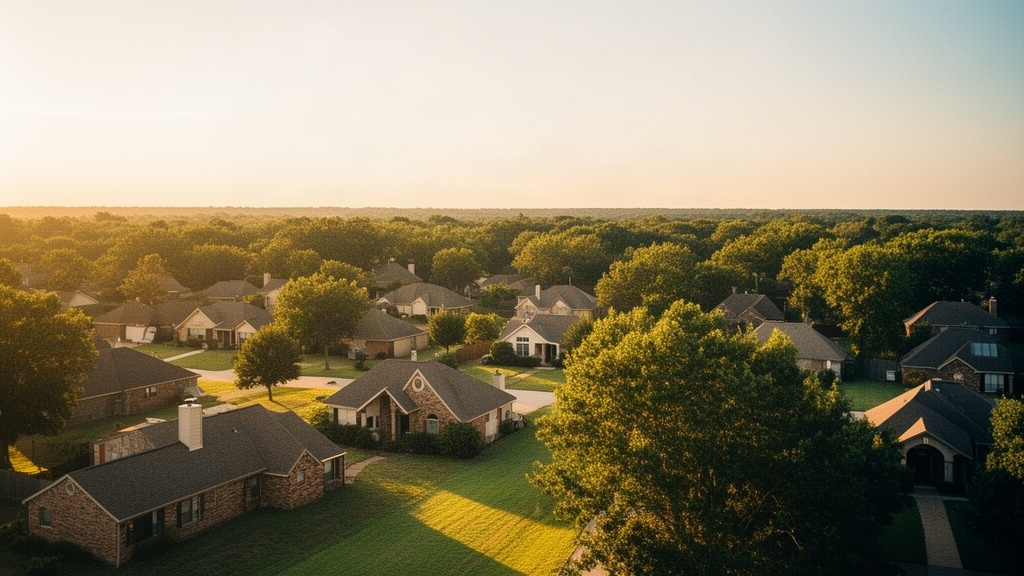
Anderson, South Carolina sits at the center of one of the most active housing markets in the country. The Greenville-Anderson metro was named a top housing hot spot by the National Association of Realtors, a designation based on above-average listing views, strong employment growth, and migration inflows. That recognition reflects something buyers and sellers in Anderson have already noticed on the ground: this market moves.
National Recognition and Regional Context
The South Carolina REALTORS announced that the Greenville-Anderson area earned its top housing hot spot ranking based on a combination of affordability relative to coastal metros, strong job creation in manufacturing and logistics, and consistent population growth. Anderson specifically benefits from its position at the southwestern end of this corridor, where land is more available and prices remain lower than in Greenville proper.
Anderson County's population has grown steadily, and the city of Anderson sits at roughly 30,000 residents with the broader county approaching 230,000. That scale matters: Anderson is large enough to support a full range of services, healthcare, retail, and employment, but small enough that commutes within the city rarely exceed fifteen minutes.
What Is Driving Demand in Anderson
Several overlapping forces are pushing demand in Anderson right now. Interstate 85 runs through the county, connecting Anderson to Greenville in roughly 30 to 40 minutes and to Atlanta in under two hours. That access makes Anderson a practical base for people working across a wide geographic range. Major employers including Michelin, Bosch, and AnMed Health anchor the local economy, and smaller manufacturers have continued to expand operations along the I-85 corridor.
Lake Hartwell, which borders Anderson County to the west and south, adds another layer of demand. Waterfront and water-access properties draw buyers from across the Southeast, and that segment of the market operates on its own pricing logic compared to standard residential neighborhoods. For a detailed look at that segment, see the Lake Hartwell home buying guide.
2. Anderson SC Home Prices: What the Numbers Show Right Now
As of September 2026, the median home price in Anderson, SC sits in the low-to-mid $270,000 range for standard residential properties, with significant variation based on age, location, and lot size. That figure represents meaningful appreciation over the past two years, though the pace of growth has moderated compared to the sharp run-up seen between 2021 and 2023. For a granular breakdown of what prices are doing this month, the Anderson SC home prices September 2026 article covers the current data in detail.
Median Prices and Price Per Square Foot
Price per square foot in Anderson currently runs between $135 and $175 for most resale homes, depending on the neighborhood and condition. Newly built homes command a premium, often landing between $175 and $210 per square foot. Historic homes in the downtown core can push higher when they have been fully renovated, while older homes in need of work in outlying areas of the county can fall below $110 per square foot.
Entry-level inventory, meaning homes priced under $200,000, has tightened considerably. That segment now represents a small fraction of active listings, and properties in that range tend to go under contract quickly. The $220,000 to $320,000 range is where the bulk of activity happens, and competition in that band remains real.
Price Variation Across Property Types
Townhomes and condominiums in Anderson are a smaller segment of the market than single-family homes, but they have grown as builders have added attached product to meet demand from buyers who prefer lower maintenance. Townhome prices generally range from $180,000 to $250,000. Single-family homes on larger lots, particularly those with half an acre or more, carry a premium that can push prices well above the median.
Lakefront properties on Lake Hartwell sit in a completely different price tier, with waterfront homes commonly listed between $450,000 and well over $1 million depending on footage, dock access, and lot depth. Lake-access properties without direct frontage fill a middle range, typically $300,000 to $500,000.
How Anderson Compares to Surrounding Areas
Greenville's median home price is now well above $350,000, making Anderson a meaningful value for buyers who can tolerate the commute. Clemson, roughly 25 miles to the west, has its own pricing dynamics tied to the university, with a competitive rental market that can complicate buying. Seneca and Walhalla, further into Oconee County, offer lower prices but fewer employment options locally. Anderson strikes a balance: more affordable than Greenville, more employment-dense than the smaller towns to the west.
3. Anderson Neighborhoods: Housing Stock, Features and Price Ranges
Anderson's residential landscape covers a wide range of housing types, from pre-war bungalows to brand-new subdivisions with HOA amenities. Understanding what each part of the city offers in terms of physical housing stock, lot sizes, and proximity to services helps buyers narrow their search before they ever walk through a door. For a full breakdown of every major area, the Anderson SC neighborhoods guide goes deeper on each one.
Downtown Anderson and the Historic Core
Downtown Anderson centers on the intersection of Main Street and Whitner Street, where the historic courthouse square anchors a walkable commercial district. Within a half-mile radius, you find a mix of Victorian-era homes, craftsman bungalows built between 1900 and 1940, and a handful of mid-century properties on smaller in-fill lots. Lot sizes in this area typically run from 0.1 to 0.3 acres.
Prices in the historic core vary widely based on renovation status. A fully updated craftsman bungalow with original hardwood floors, a renovated kitchen, and updated systems can list in the $280,000 to $380,000 range. An unrenovated property of similar size on the same street might be priced at $160,000 to $200,000, representing a different kind of opportunity for buyers willing to put in work.
Midtown and the Boulevard Corridor
The area along North Boulevard and the streets branching off it toward Pearman Dairy Road contains a dense collection of mid-century ranch homes built primarily in the 1950s through 1970s. These are typically three-bedroom, one-to-two-bath homes on lots of 0.2 to 0.5 acres, with carports or single-car garages. Prices in this corridor generally run from $185,000 to $265,000 for move-in-ready homes.
This part of Anderson is close to AnMed Health's main campus on North Fant Street, which is relevant for buyers who work in healthcare or want proximity to medical services. The area also has straightforward access to US-29 and SC-28, making cross-town movement efficient.
North Anderson and the Whitehall Area
North Anderson, including the Whitehall and Midway Road corridors, contains a large concentration of newer subdivisions built between the late 1990s and today. Homes here tend to be larger, ranging from 1,800 to 3,200 square feet, on lots of 0.25 to 0.75 acres. Brick exteriors, two-car garages, and community amenities like pools and tennis courts appear frequently in this part of the market.
Prices in North Anderson generally start around $260,000 and run to $450,000 for larger homes in established subdivisions. The proximity to I-85 via SC-81 makes this corridor popular with buyers who commute to Greenville or to the manufacturing plants along the interstate. Grocery stores, restaurants, and retail along Clemson Boulevard are within a short drive.
Lake Hartwell Proximity and the Western Edge
The western portions of Anderson County, particularly along SC-187 and the roads feeding toward Hartwell Dam and the Clemson area marinas, contain a mix of year-round residences and recreational properties. Lot sizes here are often larger, with many parcels running one to five acres. The housing stock ranges from modest lake cottages built in the 1960s and 1970s to custom-built homes with deep-water docks constructed in the past decade.
4. Reading the Anderson SC Market: Inventory, Days on Market and Timing
Market timing in Anderson depends on understanding inventory levels, how long homes are sitting before going under contract, and where new construction is adding supply. These three factors together tell you whether you are operating in conditions that favor buyers, sellers, or somewhere in between.
Supply Conditions in September 2026
Active inventory in Anderson has increased modestly compared to the near-zero supply conditions of 2022 and early 2023, but the market has not swung to a buyer's market across the board. Well-priced homes in the $220,000 to $310,000 range still attract multiple offers, particularly those with updated kitchens and mechanicals. Homes priced above $400,000 are sitting longer, sometimes 45 to 75 days, as buyer pools thin at that price point.
The national picture from NAR's Housing Hot Spots research shows that markets like Greenville-Anderson continue to outperform national averages on listing activity and price stability even as mortgage rates have moderated from their 2023 peaks. That structural demand means Anderson is unlikely to see the kind of price corrections that have hit more overheated coastal markets.
Seasonal Patterns and When to Move
Anderson follows a broadly predictable seasonal rhythm. Listing activity peaks in March through June, when inventory is highest and buyer competition is most intense. July and August slow slightly as families with school-age children finalize moves. September, where the market stands right now, is a transitional month: some buyers who missed spring are still active, and sellers who did not move their homes in summer are reconsidering pricing.
November through January is historically the quietest period for listings in Anderson. Buyers who search during this window face less competition, and sellers who list in winter are often motivated. That combination can create room for negotiation on price and terms that simply does not exist during the spring rush.
New Construction and Its Effect on Resale
New construction has added meaningful supply to Anderson's market in 2026, particularly in the northern and eastern parts of the county. Builders have been active along the SC-81 corridor and in areas near Williamston Road. New homes in these developments typically start around $280,000 and can reach $450,000 for larger plans with premium lots.
New construction matters to resale buyers and sellers because it creates an alternative that affects pricing expectations. A resale home priced at $320,000 is competing against a new home at $295,000 a few miles away, and buyers will weigh the trade-offs between an established neighborhood and a new build. For a current map of active developments, the new construction neighborhoods guide for Anderson SC in 2026 covers what is being built and where.
5. Practical Guidance for Buyers and Sellers in Anderson SC
Knowing the market conditions is only useful if you translate them into a concrete strategy. The right approach for a buyer looks different from the right approach for a seller, and both depend on where you are in the price range and what part of Anderson you are targeting.
What Buyers Should Prioritize Right Now
Get pre-approved before you start touring homes. In the $220,000 to $310,000 range, sellers in Anderson are still receiving multiple offers on well-maintained properties, and an offer without a pre-approval letter will not be taken seriously. Pre-approval also clarifies your actual budget, which matters because property taxes, HOA fees, and insurance costs in Anderson can add $300 to $600 per month to your housing payment depending on the home.
Be clear about your commute requirements before you fall in love with a neighborhood. Anderson's geography means that a home in the far southwestern corner of the county near Lake Hartwell can be 25 to 30 minutes from downtown Anderson and 50 to 60 minutes from central Greenville. A home near I-85 in North Anderson cuts that Greenville commute to 30 to 40 minutes. Mapping your actual drive during peak hours before making an offer is worth the time.
Research schools and services directly through official sources. Anderson County operates multiple school attendance zones, and boundaries do not always follow what you might expect from a map. The Anderson County School District and the City of Anderson School District each serve different parts of the area. You can look up attendance zone assignments through each district's official website or through the Anderson County school districts boundary guide for instructions on how to verify your specific address.
What Sellers Need to Know Before Listing
Pricing is the single most important decision you will make as a seller in Anderson right now. The days of listing above market and waiting for an offer are largely over in the $350,000-plus segment. Homes that come out of the gate priced correctly, based on a genuine comparative market analysis rather than wishful thinking, are going under contract faster and with fewer concessions than homes that start high and chase the market down.
Condition matters more than it did two years ago. When buyers had almost no choices, they accepted deferred maintenance and dated finishes. With modestly more inventory available in 2026, buyers have enough options to be selective. Fresh paint, clean landscaping, and functioning mechanicals are baseline expectations. A pre-listing inspection can surface issues before they become negotiating leverage for a buyer.
Timing your list date to the spring window, specifically late February through April, gives you the largest pool of active buyers in Anderson. If you cannot wait for spring, September is a reasonable secondary window. The buyers still active in September have often been searching for months and are motivated to close before the end of the year.
FAQ
Is Anderson, SC a buyer's market or a seller's market right now in September 2026?
Anderson is operating in mixed conditions as of September 2026. The sub-$310,000 price range still favors sellers, with well-priced homes attracting multiple offers and limited days on market. Above $380,000, conditions have shifted: buyers have more choices, homes are sitting longer, and sellers are more willing to negotiate on price and concessions. Where you land in that spectrum depends on your specific price point and the part of Anderson you are targeting.
How much do homes cost in Anderson, SC compared to Greenville?
As of September 2026, the median home price in Anderson sits in the low-to-mid $270,000 range, while Greenville's median has climbed well above $350,000. That gap of roughly $80,000 to $100,000 at the median level is one of the primary reasons buyers priced out of Greenville look to Anderson. The trade-off is commute time: Anderson to downtown Greenville runs 30 to 40 minutes via I-85, depending on traffic and your specific origin point in Anderson County.
What should someone relocating to Anderson, SC know before buying a home?
Relocating buyers should understand that Anderson County contains two separate school districts, Anderson County School District and the City of Anderson School District, with attendance zones that do not always match city limit boundaries. Flood zone status is also worth checking before making an offer, particularly for properties near Lake Hartwell, Rocky River, or other waterways in the county. Property tax rates in Anderson County are among the more competitive in Upstate South Carolina, but the specific millage rate depends on whether the property is inside or outside city limits. Working with a local agent who knows the county's geography and micro-market pricing differences will save you significant time and money in the search process.