← Back to Blog
Market Trends
Anderson, South Carolina Should I Call First: Real Estate Market Guide to Prices, Neighborhoods and Timing
By Maria Kozak
North Group Real Estate · DRE# 100103
September 20, 2026 · 10 min read
If you are wondering whether to call a real estate agent before you start searching homes in Anderson, South Carolina, the short answer is yes, and this guide explains exactly why. This Anderson, South Carolina real estate market guide covers current prices, what different parts of the city look like on the ground, and how to think about timing your move so you are not leaving money on the table.
1. What the Anderson, SC Market Looks Like Right Now
Anderson is a seller's market that has softened slightly from its 2022 peak but remains competitive. Median home prices in Anderson have held firmly above the $230,000 range through most of 2026, with certain pockets near Lake Hartwell and newer construction corridors pushing well past $350,000. The city sits in one of the most watched housing corridors in the Southeast, which keeps demand steady even when national headlines talk about slowdowns.
Where Prices Stand in September 2026
According to current market data, Redfin's 2026 Anderson housing market overview shows median sale prices in Anderson, SC have appreciated meaningfully over the past three years, with the city remaining more affordable than Greenville while still attracting strong buyer interest. Entry-level homes in established neighborhoods typically list between $180,000 and $250,000. Move-up homes on larger lots or with recent renovations commonly fall between $275,000 and $400,000. Lakefront and luxury properties along Lake Hartwell or in gated communities can reach $600,000 and above.
Days on market in Anderson currently average in the low-to-mid twenties for well-priced homes, meaning a correctly priced listing rarely sits. For buyers, that pace means preparation matters more than speed. For sellers, it means overpricing by even five percent can push a home past the critical first two weeks and into a price reduction cycle.
For a detailed breakdown of what prices are doing block by block right now, see the companion article What Are Home Prices Doing in Anderson South Carolina Right Now in September 2026 for current figures and trend data.
What the Broader Region Says About Demand
Anderson does not operate in isolation. The Greenville-Anderson metro was named a top housing hot spot by the National Association of Realtors, a designation that reflects the area's job growth, relative affordability compared to coastal markets, and consistent in-migration from states like Florida, Ohio, and New York. That designation has continued to draw attention through 2026, keeping buyer pools larger than what a city of Anderson's size would typically see.
You can read the full context behind that recognition at the South Carolina Realtors announcement on the Greenville-Anderson hot spot designation. Anderson benefits directly from this regional momentum because buyers priced out of Greenville proper frequently look south along I-85 toward Anderson, where comparable square footage costs noticeably less.
2. A Closer Look at Anderson's Neighborhoods and Housing Stock
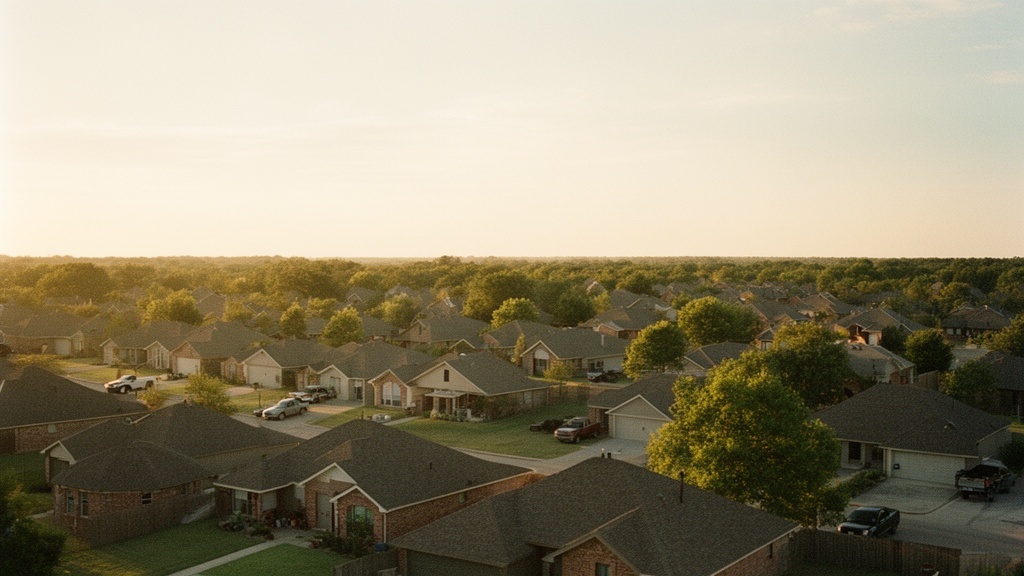
Anderson's housing stock is genuinely varied, which is one reason buyers from different budgets and backgrounds keep landing here. You will find 1920s bungalows on tree-lined streets near downtown, ranch homes from the 1960s and 1970s on quarter-acre lots in established subdivisions, vinyl-sided colonials from the 1990s and 2000s in suburban corridors, and brand-new construction in planned communities along the Highway 28 and Highway 81 corridors. Each pocket has a different price profile and a different set of trade-offs.
Downtown and Historic Districts
The blocks closest to the Anderson Arts Center and the downtown square feature some of the city's oldest homes, many of them Craftsman bungalows and Victorian-era structures on smaller lots ranging from 5,000 to 8,000 square feet. These properties often carry historic character, original hardwood floors, and front porches that face walkable streets. Prices in this corridor typically start around $180,000 for a home needing updates and can reach $320,000 or more for a fully renovated property. The trade-off is that lot sizes are modest and parking can be limited.
Restaurants, coffee shops, the REP Theatre, and McCelvey Center events are within walking distance. The Anderson Civic Center and the Anderson County Museum are also nearby, which makes this part of the city feel more urban than most of Anderson's footprint.
Established Subdivisions and Mid-Century Neighborhoods
Moving outward from downtown, areas like Homeland Park, Concord, and the neighborhoods surrounding Whitehall Road offer ranch-style and split-level homes on lots that commonly run from a quarter acre to half an acre. These homes were built primarily between 1955 and 1985. Many have been updated with new roofs, HVAC systems, and kitchens, while others present renovation opportunities. Prices in this band of the city generally run from $160,000 to $280,000 depending on condition and lot size.
For a thorough breakdown of what each neighborhood offers in terms of housing stock, lot characteristics, and proximity to amenities, the guide What Are the Different Neighborhoods in Anderson, SC and What Is Each One Like to Live In covers the full picture.
Outer Areas and Rural Parcels
Beyond the city limits, Anderson County opens into rural stretches where one to five acre parcels are common. Communities like Starr, Iva, and Williamston sit within Anderson County and offer detached homes with larger land footprints at prices that often fall below the city median. The trade-off is longer drives to grocery stores, medical facilities, and Interstate 85. Buyers who prioritize land and privacy over walkability frequently explore these outer areas.
Lake Hartwell adds another distinct category entirely. Waterfront and water-access homes along the lake's Anderson County shoreline carry a significant premium over comparable inland properties, with prices commonly ranging from $400,000 to well over $1 million depending on water frontage, dock access, and lot size. If you are considering the lake, the article What Does the Area Around Lake Hartwell in Anderson SC Look Like for Buying a Home and What Are Prices Like Currently goes into detail on what to expect.
3. Timing: When to Buy and When to Sell in Anderson
Timing in Anderson follows a seasonal rhythm that is worth understanding before you list or make an offer. The market is not uniform throughout the year, and knowing the peaks and slow spots can save a buyer thousands of dollars or help a seller avoid sitting on a listing longer than necessary.
Seasonal Patterns in Anderson
Spring, specifically March through May, is the busiest period for new listings and buyer activity in Anderson. Sellers who list in late February or early March often capture the largest pool of active buyers. Competition among buyers is highest during this window, which means multiple-offer situations are more common and sale prices frequently come in at or above list price.
Summer in Anderson stays active, partly because the lake draws seasonal interest and partly because families with school-age children want to close before the academic year starts. Activity typically dips in late November through January, which creates a window where motivated sellers may be more flexible and buyer competition is lower. Buyers who can close during the winter months sometimes negotiate better terms, though inventory is also thinner during that period.
Right now in September 2026, the market is transitioning out of peak summer activity. Some sellers who did not close by August are adjusting prices, and buyers who missed spring have another opportunity before the holiday slowdown. This shoulder season can be a productive time to act if you are prepared.
What Inventory Levels Mean for Your Strategy
Inventory in Anderson has increased modestly compared to the historic lows of 2021 and 2022, but the market still leans toward sellers in most price ranges. Below $250,000, competition among buyers remains intense because that price point captures both first-time buyers and investors. Above $400,000, buyers have more negotiating room and homes tend to sit slightly longer before going under contract.
New construction is adding supply in several Anderson corridors, which gives buyers in the $280,000 to $450,000 range more options than they had two years ago. If you want to understand what is being built and where, the article Are There Any New Construction Neighborhoods or Developments Being Built in Anderson SC in 2026 maps out the active developments.
4. Why You Should Call a Local Agent Before You Do Anything Else
The single most common mistake buyers and sellers make in Anderson is treating the agent call as the last step rather than the first. Online portals like Zillow and Redfin show you what has been entered into the MLS, but they do not show you which listings have known issues, which sellers have already dropped their price twice, or which streets have infrastructure projects scheduled. A local agent with active transactions in Anderson knows things the algorithm cannot surface.
What an Agent Sees That Online Listings Don't Show
In a market moving at the pace Anderson is currently running, the gap between listing date and offer deadline can be under 72 hours for well-priced homes. An agent who is already tracking your criteria can alert you the moment a property hits the MLS, sometimes before it appears on consumer-facing websites. That head start is not trivial when you are competing against other prepared buyers.
On the seller side, a local agent can tell you what comparable homes actually closed for, not just what they listed for. In Anderson, list-to-sale ratios vary meaningfully by neighborhood and price range. Pricing a home correctly the first week is worth more than any cosmetic upgrade you might make before listing.
How Pre-Approval and Agent Guidance Work Together
Calling an agent first does not mean skipping your lender conversation. A good local agent will walk you through the sequence: get pre-approved with a lender who can close on time in South Carolina, understand your actual budget including property taxes and insurance, then start touring homes. In Anderson County, property tax rates and homeowner's insurance costs for lake-adjacent properties can differ substantially from inland homes, and those numbers affect what you can realistically afford.
Maria Kozak of North Group Real Estate works in Anderson, South Carolina and brings direct knowledge of the local market, from the price per square foot in specific subdivisions to the quirks of purchasing a home with a private well or septic system in the county's rural stretches. That kind of on-the-ground knowledge is what separates a smooth transaction from a stressful one.
5. Practical Steps to Get Started in the Anderson Market
Whether you are buying or selling, the path forward in Anderson's real estate market follows a clear sequence. Skipping steps early tends to create delays and surprises later. Here is what the process looks like from the starting point.
For Buyers
Step one is the agent call, not the home search. Before you scroll listings, connect with a local agent who can explain what your budget realistically gets you in Anderson right now, which areas have the housing stock that matches your needs, and what the offer process looks like in the current market. This conversation takes thirty minutes and saves weeks of misdirected searching.
Step two is pre-approval with a lender who is familiar with South Carolina transactions. Anderson sellers and their agents take pre-approval letters seriously. A pre-qualification is not the same thing and will not carry the same weight in a competitive offer situation. Once you have a pre-approval in hand, your agent can set up automated MLS alerts so you see new listings the moment they are entered.
Step three is touring with intention. In Anderson, it helps to physically drive the streets around a home before making an offer. The city has pockets where one block differs meaningfully from the next in terms of lot size, tree canopy, traffic volume, and proximity to commercial strips. Your agent can flag these things, but seeing them in person adds a layer of certainty that photos cannot provide.
For Sellers
Sellers should start with a comparative market analysis at least sixty days before they plan to list. This gives you time to make targeted improvements that actually move the needle on price, rather than spending money on updates that buyers in your price range will not pay a premium for. In Anderson's sub-$300,000 market, fresh paint, updated light fixtures, and clean landscaping consistently deliver a stronger return than kitchen remodels.
Pricing strategy is the most consequential decision a seller makes. In Anderson's current market, homes priced at or slightly below comparable sales tend to generate multiple offers and close above list price. Homes priced optimistically tend to sit, accumulate days on market, and ultimately sell for less than they would have at a correct opening price. Your agent's job is to show you the data and help you make that call with clear eyes.
For a full look at what is currently available in Anderson across all price ranges and property types, see the Homes for Sale in Anderson, SC 2026 overview to get a sense of what the active inventory looks like.
FAQ
Is Anderson, SC a buyer's market or a seller's market right now?
As of September 2026, Anderson leans toward sellers in most price ranges, particularly below $300,000 where inventory is tightest and buyer competition is strongest. Above $400,000, buyers have more room to negotiate and homes tend to stay on the market longer before going under contract. The market has moderated from the extreme conditions of 2021 and 2022, but it has not shifted to a full buyer's market. Monitoring days on market and list-to-sale ratios by price range is the most reliable way to understand conditions in a specific segment, which is something a local agent can pull for you in real time.
How does Anderson, SC compare in price to Greenville?
Anderson consistently offers lower median home prices than Greenville, which is one reason buyers who work in Greenville frequently look at Anderson as a more affordable alternative. The commute from Anderson to downtown Greenville runs roughly 35 to 45 minutes depending on traffic along I-85, which many buyers find acceptable given the price difference. In Greenville, median prices in many neighborhoods have pushed past $350,000 to $400,000, while comparable square footage in Anderson often falls in the $230,000 to $300,000 range. That gap has made Anderson one of the more active markets in the Upstate region throughout 2026.
Do I really need to call an agent before I start looking at homes in Anderson?
In a market moving at Anderson's current pace, calling an agent first is genuinely the more efficient path, not just a sales pitch. An agent can set you up with MLS alerts that surface listings faster than consumer portals like Zillow, explain what your budget realistically gets you in specific parts of the city, and help you avoid homes with known issues that online listings do not disclose. For sellers, an early agent conversation means you go into the market with a pricing strategy based on actual comparable sales rather than guesswork. The first call is informational and carries no obligation; it simply means you start with better information than the average buyer or seller walking in cold.