
← Back to Blog
Market Trends
Kansas City, Kansas Do People Actually Trust Real Estate Market Guide: Prices, Neighborhoods and Timing
By Maria Solis, LICENSED REAL ESTATE PROFESSIONAL & ADVISOR
The Brand KC · DRE# 00251872
September 3, 2026 · 10 min read
If you have been wondering whether the Kansas City, Kansas real estate market guide you keep reading online actually reflects what is happening on the ground right now, you are not alone. Buyers, sellers, and people relocating to KCK in September 2026 are asking sharper questions than ever: Are prices still rising? Which neighborhoods have real inventory? And is now a reasonable time to act? This guide answers all of those questions with local data, specific price ranges, and honest context about timing.
1. Why Trust Is the Real Issue in the KCK Market Right Now
Skepticism about real estate data is warranted. National headlines about housing often do not reflect what is happening in a specific zip code, and Kansas City, Kansas sits in a unique position: it shares a metro with Kansas City, Missouri, so aggregated metro data frequently blurs the two markets in ways that confuse buyers and sellers on the Kansas side of the state line.
What Is Driving Skepticism
Several things are feeding distrust right now. First, the gap between list prices and final sale prices has widened in parts of Wyandotte County compared to 2024, which means buyers who anchored to asking prices found themselves surprised at the negotiating table. Second, some national platforms still display outdated automated valuations that lag actual closed sales by weeks or months. Third, inventory has shifted unevenly across KCK neighborhoods, so a buyer looking in one part of the city may see a completely different supply picture than a buyer looking two miles away.
What the Data Sources Actually Show
The most reliable public source for the Kansas City metro is the Kansas City Regional Association of REALTORS, which publishes monthly closed-sale data broken down by county and price band. That data confirms what agents working in KCK are seeing on the ground: the market is not crashing, but it is also not the frenzied seller's market of 2021 and 2022. It is a transitional market, and transitional markets require more careful interpretation than either extreme.
For broader context on how the Kansas City metro compares to national trends, Norada Real Estate's Kansas City housing market forecast for 2025 and 2026 is a useful starting point, though it covers the full metro rather than Wyandotte County specifically. Always cross-reference metro-level data with county and neighborhood-level figures before drawing conclusions about KCK.
2. What Prices Look Like in Kansas City, Kansas in September 2026
Prices in Kansas City, Kansas remain meaningfully lower than the Missouri side of the metro. That gap has held steady through 2026 and continues to attract buyers who are priced out of neighborhoods like Waldo, Brookside, or Prairie Village. For a detailed breakdown of current median figures, see the average home price guide for Kansas City, Kansas in September 2026 on this site.
Median Sale Prices by Area
As of September 2026, entry-level single-family homes in KCK are generally trading in the $130,000 to $175,000 range for properties built before 1960 in areas like Armourdale and parts of Argentine. Mid-range homes, typically post-war bungalows and ranch-styles in better-maintained corridors, are selling in the $175,000 to $265,000 range. Renovated properties and newer construction near the Village West and Legends Outlets corridor, closer to the Kansas Speedway, are pushing into the $280,000 to $370,000 range, reflecting the investment that has flowed into that part of Wyandotte County over the past decade.
Condominiums and townhomes, which make up a smaller share of KCK's housing stock than detached single-family homes, are currently priced between $140,000 and $230,000 depending on condition and location. The historic Strawberry Hill neighborhood, perched above the Missouri River with its distinctive Victorian and Craftsman homes, continues to attract buyers willing to pay a premium for character, with renovated properties there often landing between $220,000 and $310,000.
Price Reductions and What They Signal
Price reductions are more common in September 2026 than they were eighteen months ago. This is not unique to KCK: reporting from HousingWire has noted that Kansas City homebuyer activity has slowed and roughly 45% of listings have reduced their prices at some point during the listing period. That figure covers the broader metro, but the pattern holds in Wyandotte County. For buyers, this means negotiating power has returned in many price bands. For sellers, it means pricing accurately from day one matters more than it did in 2021.
A price reduction does not automatically mean a property has something wrong with it. In many cases, the original list price was simply set too high relative to what comparable homes were actually closing at. Buyers should look at the final sale price, not the original list price, when assessing true market value in KCK.
3. Neighborhood Inventory and Housing Stock: What Is Actually Available
Inventory in Kansas City, Kansas is not uniform. Some pockets have more homes sitting on the market than at any point since 2019, while others still see multiple offers within days of listing. Understanding which part of KCK you are shopping in changes the strategy entirely.
Central KCK and Older Established Areas
The older core of Kansas City, Kansas, including areas near downtown KCK, the historic Strawberry Hill district, and the neighborhoods running south toward Central Avenue, is dominated by pre-1950 housing stock. These are mostly two-story frame homes, brick bungalows, and the occasional Victorian that has survived the past century in varying states of upkeep. Lot sizes in this corridor tend to run between 4,000 and 7,000 square feet. Inventory here has been relatively stable through 2026, with homes in move-in condition still moving faster than the broader market average.
For a deeper look at one of KCK's most historically layered areas, the Armourdale area real estate market guide covers pricing, housing stock, and what buyers should know before making an offer in that specific corridor.
Argentine, Rosedale and the Southwest Corridor
Argentine sits along the Kansas River and carries a mix of working-class residential blocks and light industrial edges. The housing stock here is predominantly post-war ranch homes and small Cape Cods, many of them on larger lots than you would find closer to downtown. Rosedale, which climbs the bluffs south of Argentine and borders the University of Kansas Medical Center campus, has a slightly different character: more foot traffic, proximity to 39th Street amenities just across the state line, and a mix of older homes alongside some more recent infill construction.
Both areas offer some of the most accessible price points in the KCK market right now. Buyers who are flexible on cosmetic condition and willing to do some updating can find properties in the $130,000 to $190,000 range in these corridors, which is difficult to find anywhere else within a comparable distance of downtown Kansas City.
New Development Near the Speedway District
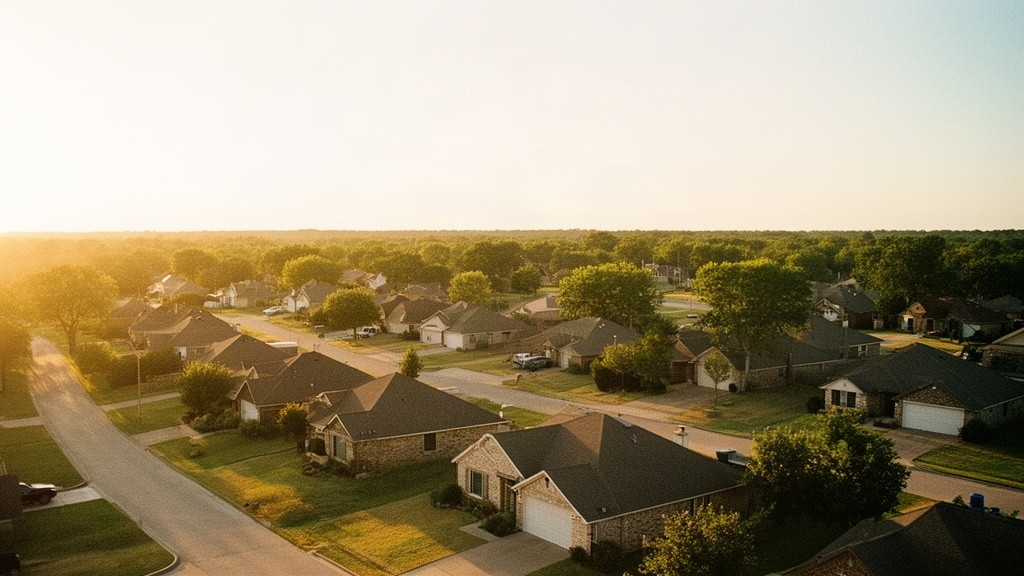
The western edge of Wyandotte County, anchored by the Kansas Speedway, Sporting Kansas City's Children's Mercy Park, and the Village West retail district, represents the most significant new construction activity in KCK. Subdivisions in this area offer three and four-bedroom homes with attached garages, open floor plans, and HOA-maintained common areas, a very different product from the older housing stock in central KCK. Prices for new builds in this corridor currently start around $280,000 and can reach $400,000 or more for larger lots and upgraded finishes.
The commute from this part of KCK to downtown Kansas City, Missouri runs roughly 20 to 30 minutes via I-70, depending on traffic. Access to I-435 also makes the Johnson County employment corridor reachable in 25 to 35 minutes, which broadens the appeal of this area for buyers who work on either side of the metro.
4. Timing the Kansas City, Kansas Market: When to Buy and When to Sell
There is no universally correct time to buy or sell in KCK, but timing does affect your leverage. September 2026 sits at an interesting inflection point: summer activity has cooled, fall inventory is beginning to shift, and buyers who stayed on the sidelines through the spring rush are now finding more room to negotiate.
Seasonal Patterns in KCK
Kansas City, Kansas follows a seasonal pattern that is broadly consistent with the Midwest. Listing activity peaks in April through June, when sellers want to catch buyers who are trying to close before the school year ends. By late August and into September, new listings slow down, but serious buyers remain active. Homes that did not sell over the summer often see price adjustments in September and October, which creates real opportunity for buyers who are prepared to move quickly on a well-priced property.
For sellers, listing in September is not a disadvantage if the home is priced correctly. Buyer competition is lower, but so is seller competition. A well-prepared home that is priced at or slightly below the most recent comparable sales can still generate strong interest from buyers who have been searching for months and are ready to commit.
Interest Rate Context in September 2026
Mortgage rates in September 2026 remain elevated compared to the historic lows of 2020 and 2021, though they have pulled back from the peaks seen in late 2023. The current rate environment has compressed purchasing power for buyers in every price range, which is one reason price reductions have become more common across KCK. Buyers who are pre-approved and understand their true monthly payment at today's rates are in a stronger negotiating position than buyers who are still working from assumptions based on rates from two or three years ago.
How Days on Market Affects Your Decision
Days on market (DOM) is one of the most useful signals in the KCK market right now. When a home has been listed for more than 30 days without going under contract, it almost always indicates one of three things: the price is too high, there is a condition issue the market has rejected, or the marketing has not reached the right buyers. Understanding which of those three applies to a specific listing tells you how to approach the negotiation. For a detailed look at how DOM has shifted through 2026, the days on market analysis for Kansas City, Kansas in fall 2026 covers the specifics.
5. How to Verify Market Information Before You Commit
The best protection against bad market information is knowing which sources are worth trusting and which are not. For the Kansas City, Kansas real estate market, a short list of reliable sources and a good local agent will take you further than any algorithm.
Sources Worth Checking Yourself
The Wyandotte County Appraiser's office publishes property records and assessed values that reflect actual transaction history, not algorithmic estimates. The Kansas City Regional Association of REALTORS releases monthly market statistics that include median prices, average days on market, and months of supply broken down by county. The Kansas Department of Revenue also maintains transfer tax records that can help you verify what a property actually sold for, independent of what was listed publicly.
For school district information, the Kansas State Department of Education maintains its own data portal where you can review enrollment, programs, and other details for Unified School District 500, which serves most of Kansas City, Kansas. This is the appropriate place to research school-related questions, and those decisions are personal ones that each family should evaluate directly.
What a Local Agent Adds That No Website Can
Public data tells you what happened. A local agent tells you what is happening right now and what is likely to happen next. In Kansas City, Kansas, that distinction matters because the market moves at different speeds in different corridors. A home in Strawberry Hill and a home near 78th and State Avenue may be a few miles apart but behave very differently in terms of buyer demand, inspection outcomes, and appraisal risk.
Maria Solis of The Brand KC works specifically in Kansas City, Kansas and the surrounding Wyandotte County market. She tracks closed sales, active listings, and price reduction patterns in real time, which means the advice she gives is grounded in what is actually closing today, not what closed six months ago. If you are trying to figure out whether a specific property is priced fairly, whether your home is ready to list, or which part of KCK fits your budget and priorities, that kind of on-the-ground knowledge is not something any website or algorithm can replicate.
For a broader overview of how Wyandotte County fits into the regional picture, the Wyandotte County real estate market guide provides useful county-level context alongside the KCK-specific data covered here.
FAQ
Is the Kansas City, Kansas real estate market reliable for buyers right now in September 2026?
The KCK market is active and transparent if you use the right data sources. Closed sale records from the Wyandotte County Appraiser and monthly statistics from the Kansas City Regional Association of REALTORS give buyers an accurate picture of what homes are actually selling for, not just what they are listed at. The market has shifted toward buyers in many price bands compared to 2021 and 2022, with more price reductions and longer days on market in some corridors. That shift creates real opportunity for prepared buyers, but it also means that automated online valuations, which lag actual closings, can be misleading. Working with a local agent who tracks closed sales in real time is the most reliable way to assess whether a specific property is priced fairly.
What neighborhoods in Kansas City, Kansas have the most homes for sale right now?
Inventory distribution in KCK is uneven as of September 2026. The older central corridors, including areas near Strawberry Hill, Argentine, and Rosedale, have seen relatively stable inventory with a mix of entry-level and mid-range homes. The western Wyandotte County corridor near the Kansas Speedway and Village West has the most active new construction, with builders offering homes in the $280,000 to $400,000 range. The Armourdale area and parts of central KCK continue to offer some of the lowest price points in the market, though many of those homes require updating. Inventory levels shift month to month, so checking with a local agent for current active listing counts by area gives you the most accurate picture.
How do I know if a home in Kansas City, Kansas is priced correctly before making an offer?
The most reliable method is comparing the home to recent closed sales, not current listings, of similar properties within roughly half a mile and the same price band. Closed sales from the past 60 to 90 days reflect what buyers were actually willing to pay in current market conditions. You can access some of this data through the Wyandotte County Appraiser's website, which records actual transfer amounts. A local agent can pull a full comparable sales analysis from the MLS, which includes details like days on market, original versus final list price, and any seller concessions that affected the net price. In September 2026, with roughly 45% of metro listings having reduced their price at some point, paying close attention to the difference between original list price and final sale price is especially important.