← Back to Blog
Market Trends
Charlotte, North Carolina Right Now Real Estate Market Guide: Prices, Neighborhoods and Timing
By Mark Weinberg
September 9, 2026 · 9 min read
This Charlotte, North Carolina right now real estate market guide covers what prices look like in September 2026, which neighborhoods are seeing the most activity, and how to think about timing whether you are buying, selling, or relocating. The market here has shifted meaningfully over the past eighteen months, and the details matter more than the headlines.
1. Where Charlotte Home Prices Stand Right Now
The Charlotte metro median home price sits at approximately $415,000 in September 2026. That figure represents a gain of roughly 4.5 percent compared to September 2025, a pace that is slower than the double-digit appreciation years of 2021 and 2022, but still meaningfully positive. The market is not stalling; it is normalizing around a stronger baseline.
Median Price and Price Per Square Foot
Price per square foot across the broader Charlotte MSA currently averages around $215 to $230, depending on the submarket and the age of the home. New construction in the outer suburbs tends to price closer to $185 to $200 per square foot, while renovated infill homes in established neighborhoods inside the 485 loop routinely clear $250 to $300 per square foot. Understanding that spread is critical before you start comparing listings side by side.
North Carolina's overall housing market remains more affordable than the national average, a factor that continues to draw corporate relocations and individual buyers to the Charlotte area. A HousingWire analysis of North Carolina affordability data found the state's median home price running roughly 20 percent below the national median, giving Charlotte a structural price advantage over comparable metros in the Southeast and Mid-Atlantic.
How Prices Vary Across the Metro
The Charlotte metro spans Mecklenburg County and several surrounding counties including Union, Cabarrus, Gaston, and Iredell, and prices diverge sharply across that geography. Homes in Mecklenburg County proper average closer to $450,000 to $470,000, while Union County communities like Waxhaw and Weddington tend to average in the $480,000 to $550,000 range for single-family homes on larger lots. Gaston County, anchored by Gastonia roughly 25 miles west of Uptown, offers entry points in the $280,000 to $340,000 range for buyers who can absorb the commute.
2. Inventory and Market Conditions in September 2026
Charlotte's housing inventory has improved compared to the historic lows of 2022 and 2023, but supply remains constrained relative to demand. Active listings across the Charlotte metro currently sit at roughly 2.4 to 2.8 months of supply, which places the market in mild seller's territory. A balanced market is typically considered 4 to 6 months of supply, so buyers are still competing for well-priced homes, particularly below $500,000.
Months of Supply and What It Means
At the $600,000 and above price point, inventory has loosened more noticeably, with some segments approaching 4 months of supply. That means buyers in the upper price bands have more room to negotiate on price, inspection concessions, and closing timelines than they did two years ago. Sellers in that range need to price accurately from day one rather than testing the market with an aspirational number.
Days on Market and Offer Dynamics
The median days on market for Charlotte area homes is currently around 28 to 35 days, up from the 10 to 14 day averages seen during the peak frenzy years. Homes priced correctly and presented well still move quickly, often receiving multiple offers within the first weekend. Homes that sit past 45 days are almost always overpriced relative to the current market, not simply unlucky.
Escalation clauses have become less common in 2026 than they were in 2022, but waived inspections are still occasionally used by buyers competing for move-in-ready homes under $400,000. Most experienced buyer's agents in Charlotte are now recommending inspection contingencies again, particularly for homes built before 2000 where deferred maintenance is more likely.
3. Active Neighborhoods and What the Housing Stock Looks Like
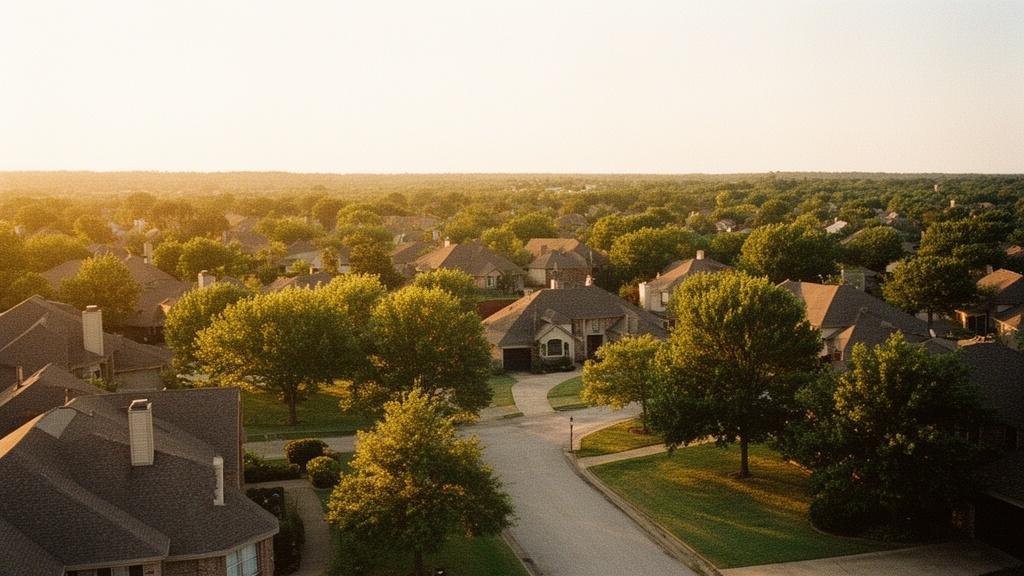
Charlotte's neighborhoods each carry a distinct physical character, price range, and commute profile. Understanding those differences before you start touring homes saves weeks of misdirected searching. Here is what the major submarkets look like on the ground right now.
Inside the 485 Loop
The neighborhoods inside Interstate 485, including Dilworth, Myers Park, Eastover, Elizabeth, and Cotswold, contain some of Charlotte's oldest and most architecturally varied housing stock. Bungalows from the 1920s and 1930s sit alongside postwar ranches and more recent infill construction on tree-lined streets. Median prices in Dilworth currently run from $550,000 to $700,000 for a renovated three-bedroom home. Myers Park, with its larger lots and proximity to Freedom Park and the Little Sugar Creek Greenway, regularly sees single-family homes priced from $800,000 into the multi-millions.
Cotswold and the Eastover area offer a mix of mid-century ranch homes and newer townhomes, with price points generally ranging from $450,000 to $650,000. These areas sit within 10 to 15 minutes of Uptown Charlotte by car during off-peak hours, and several are walkable to retail corridors along Selwyn Avenue and Providence Road.
South Charlotte and the Ballantyne Corridor
South Charlotte, stretching from SouthPark down through Ballantyne near the South Carolina state line, is dominated by planned subdivisions built from the 1990s through the mid-2010s. Homes here typically feature brick or hardboard exteriors, two-car garages, and lots ranging from 0.15 to 0.4 acres. The SouthPark area, anchored by SouthPark Mall and a dense concentration of office space, has median prices in the $600,000 to $850,000 range. Ballantyne, about 18 miles from Uptown, offers larger homes at slightly lower per-square-foot prices, with medians generally in the $500,000 to $700,000 range.
NoDa, Plaza Midwood, and the Inner East Side
NoDa, Charlotte's arts district along North Davidson Street, and Plaza Midwood to the southeast, are characterized by smaller lots, older craftsman and cottage-style homes, and a walkable retail environment. Both neighborhoods have seen significant renovation activity over the past decade. Typical home prices in NoDa range from $380,000 to $550,000 for a three-bedroom home, with newer townhome developments pushing toward $450,000 to $600,000. Plaza Midwood, centered on Central Avenue, runs a similar range and includes a mix of original 1940s and 1950s cottages alongside newer infill.
Steele Creek, Berewick, and the Southwest
The southwest quadrant of Charlotte, including Steele Creek, Berewick, and the communities along the York Road corridor, has been one of the metro's most active new construction zones over the past five years. New single-family homes here typically range from $330,000 to $480,000, with builders offering a range of floorplans on lots that run from 0.1 to 0.25 acres. The area sits roughly 15 to 20 miles from Uptown via Interstate 485 and has direct access to Lake Wylie and the Catawba River for outdoor recreation.
4. Timing the Market: What Buyers and Sellers Should Know
Timing in Charlotte's real estate market is less about finding a perfect moment and more about understanding the seasonal rhythms that affect competition and pricing. September sits at a useful inflection point: the peak spring and summer buying season has passed, but the market has not yet slowed to its winter pace. That creates specific opportunities depending on which side of the transaction you are on.
What the Data Says About Seasonal Patterns
Charlotte's listing activity typically peaks in April and May, with the highest volume of new listings and the most competitive offer environments. By September, new listing counts drop by roughly 20 to 25 percent compared to the spring peak, which means buyers face less competition but also see fewer options. Sellers who list in September are often motivated, which can create room for negotiation that was not available in April. For a deeper look at how the spring versus fall dynamic plays out for sellers specifically, the article on selling in spring versus fall in Charlotte breaks down the price and timing data in detail.
Mortgage Rate Reality in September 2026
Thirty-year fixed mortgage rates are currently hovering in the 6.4 to 6.8 percent range for well-qualified buyers, down from the 7.2 to 7.5 percent range that characterized much of 2024 and 2025. That improvement in rates has expanded the pool of active buyers in Charlotte without triggering the kind of frenzied demand that wiped out inventory in 2021. The practical effect is that buyers who were priced out eighteen months ago are re-entering the market, keeping demand steady even as new listings tick up slightly.
For buyers weighing whether to act now or wait for rates to fall further, the calculus involves more than the rate itself. If rates drop another half point in 2027, prices in Charlotte will likely absorb much of that purchasing power improvement through appreciation. The article on whether to buy now or wait in Charlotte walks through that trade-off in detail.
When Sellers Have the Most Leverage
Sellers in Charlotte currently have the most leverage in the $300,000 to $500,000 price band, where inventory is thinnest and buyer demand from first-time and move-up purchasers is concentrated. Homes in this range that are priced within 2 to 3 percent of comparable sales and presented in clean, move-in condition are still closing in under 30 days. Above $600,000, sellers should expect longer marketing times and be prepared for buyers to request repairs or closing cost contributions.
5. Relocating to Charlotte: What to Expect Before You Arrive
Charlotte continues to attract corporate relocations and individual movers from higher-cost metros, particularly from the Northeast and from California. The National Association of Realtors has recognized Charlotte as one of the country's notable homebuying markets, citing the combination of job growth, relative affordability, and population momentum. You can review that analysis directly in the NAR Housing Hot Spots 2026 report. For buyers moving from a $700,000 median market, the Charlotte price structure can feel like a significant adjustment, and understanding how geography and commute time interact with price is essential.
Commute Times and Geographic Context
Charlotte is a car-dependent city, and commute time is one of the most important variables in choosing where to live. Uptown Charlotte, the central business district, is roughly 10 to 12 miles from SouthPark, 14 miles from Ballantyne, 18 miles from Waxhaw, and 25 miles from Gastonia. In light traffic those distances translate to 20 to 35 minutes. During peak morning commute hours on Interstate 77 or Interstate 485, the same trips can run 45 to 60 minutes. The LYNX Blue Line light rail connects Uptown to the south Charlotte corridor as far as I-485 at South Boulevard, offering a car-free option for residents near those stations.
What Your Budget Gets You by Area
A $400,000 budget in Charlotte in September 2026 gets you meaningfully different homes depending on location. In NoDa or Plaza Midwood, that budget covers a renovated two or three-bedroom cottage of 1,200 to 1,600 square feet on a small lot. In Steele Creek or the Berewick area, the same budget reaches a new construction four-bedroom home of 2,000 to 2,400 square feet with a two-car garage. In Gastonia or Concord, $400,000 buys a larger home on a half-acre or more. The trade-off is always commute distance and access to Uptown amenities.
Relocating buyers often underestimate how much the Charlotte metro has spread out. Visiting in person before committing to a specific submarket is strongly advisable. Driving the actual commute route during rush hour, visiting the grocery stores and parks nearest to a target neighborhood, and spending time in the area on a weekday morning will tell you things that no online listing can. If you are relocating and need a structured way to evaluate Charlotte's submarkets, the article on finding a buyer's agent in Charlotte explains what to look for in local representation when you are coming from out of town.
FAQ
What is the median home price in Charlotte, North Carolina right now?
As of September 2026, the median home price across the Charlotte metro is approximately $415,000, representing roughly 4.5 percent appreciation compared to September 2025. Prices vary significantly by submarket: Mecklenburg County proper averages closer to $450,000 to $470,000, while outer county communities in Gaston and Cabarrus offer entry points in the $280,000 to $340,000 range. New construction in the southwest and northeast suburbs tends to price lower per square foot than renovated infill homes inside the 485 loop. Understanding those differences before you start searching prevents you from comparing homes that are not actually competing with each other.
Is Charlotte's housing market still competitive for buyers in September 2026?
The market remains mildly competitive, with roughly 2.4 to 2.8 months of supply across the metro, which is below the 4 to 6 months that would indicate a balanced market. Homes priced below $500,000 and presented in move-in condition are still moving in under 30 days and sometimes drawing multiple offers. Above $600,000, buyers have more negotiating room and sellers are more likely to consider concessions on price or repairs. Mortgage rates in the 6.4 to 6.8 percent range have kept demand steady without recreating the frenzied conditions of 2021 and 2022. Working with an agent who tracks active listings daily in your target submarket gives you a real advantage in this environment.
Which Charlotte neighborhoods have the most housing activity right now?
Activity is concentrated in several distinct submarkets as of September 2026. The $330,000 to $480,000 new construction segment in Steele Creek and Berewick continues to see strong absorption from buyers priced out of closer-in neighborhoods. NoDa and Plaza Midwood on the inner east side are active in the $380,000 to $550,000 range, driven by the area's walkable retail corridor and proximity to Uptown. South Charlotte from SouthPark through Ballantyne remains busy in the $500,000 to $700,000 range. For schools, you should consult the Charlotte-Mecklenburg Schools district website and North Carolina Department of Public Instruction directly, as those are personal decisions best researched through official sources rather than rankings.