← Back to Blog
Neighborhoods
The Stadium District of Tacoma, Washington Real Estate Market Guide: Prices, Neighborhoods and Timing
By Marquelle Butler
September 5, 2026 · 12 min read
The Stadium District of Tacoma, Washington real estate market guide covering prices, neighborhoods and timing is exactly what buyers, sellers, and relocating households need before making a move in this historic corner of the city. Perched on the bluff above downtown Tacoma, the Stadium District is one of the most architecturally distinct pockets in Pierce County, where Victorian-era craftsmen sit alongside brick apartment buildings and sweeping views of Commencement Bay. This guide breaks down what homes actually cost right now, how the market behaves across different property types, and what the calendar means for your timing.
1. What Makes the Stadium District Different From the Rest of Tacoma
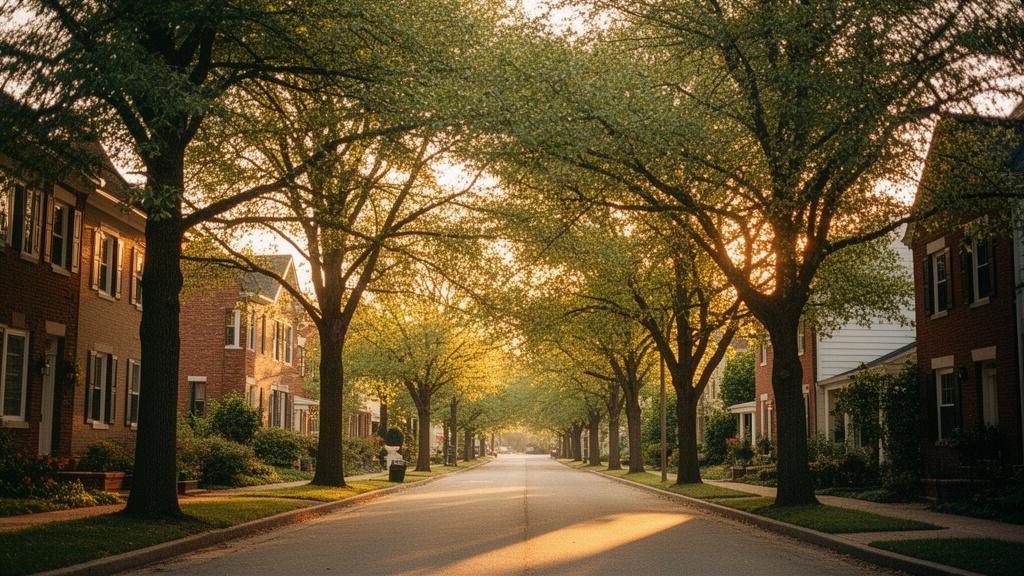
The Stadium District occupies a specific geographic identity that sets it apart from every other part of Tacoma. It sits on the north slope of Tacoma's downtown bluff, bounded roughly by North 4th Street to the south, North 11th Street to the north, Tacoma Avenue to the east, and Sprague Avenue to the west. The result is a compact, walkable grid of streets where the elevation gives many homes direct sightlines toward Commencement Bay and, on clear days, the Olympic Mountains.
Location, Views and Physical Character
The neighborhood takes its name from Stadium High School, the French chateau-style building completed in 1906 that anchors the district's visual identity. The school's turrets and stone facade are visible from much of the surrounding blocks, and the adjacent Stadium Bowl, a natural amphitheater carved into the hillside, hosts outdoor events throughout the year. Wright Park, a 27-acre Victorian-era park designed by the Olmsted Brothers, sits at the eastern edge of the district and draws residents year-round for its conservatory, mature tree canopy, and open lawn space.
The streetscape is dense and walkable by Tacoma standards. North 1st Street and the surrounding blocks connect residents to downtown Tacoma's restaurant and arts corridor within a 10 to 15 minute walk. The Tacoma Link light rail extension and existing bus routes on Stadium Way and Division Avenue provide transit options into downtown and toward the Tacoma Dome Station, where Sounder commuter rail connects to Seattle in roughly 60 minutes.
The Housing Stock in Detail
The Stadium District's housing stock is almost entirely pre-World War II construction, and that shapes every aspect of the buying and selling experience here. Queen Anne Victorians, Craftsman bungalows, and Colonial Revival homes from the 1890s through the 1930s dominate the single-family inventory. Lot sizes tend to run narrow and deep, typically 4,000 to 6,000 square feet, with homes sitting close to the sidewalk. Interior square footage varies widely: a modest bungalow might offer 1,100 square feet while a fully restored Victorian can exceed 3,500 square feet across three stories.
Multi-unit properties are woven throughout the neighborhood. Brick apartment buildings from the 1910s and 1920s, converted Victorian duplexes, and smaller four-plexes appear on nearly every block. This mix makes the Stadium District relevant to investors and owner-occupants who want rental income alongside their primary residence. Condominiums exist but represent a smaller share of the market compared to Tacoma's downtown core.
2. Stadium District Home Prices in September 2026
Prices in the Stadium District currently run above Tacoma's citywide median, reflecting the neighborhood's historic character, walkability, and view premiums. Buyers should approach this market with a clear understanding of how property type, condition, and specific block location drive price differences that can be significant even within a few hundred feet of each other. For a broader look at what homes cost across Tacoma right now, the average home price in Tacoma Washington September 2026 guide provides useful citywide context.
Single-Family Prices
As of September 2026, single-family homes in the Stadium District are trading in a range of roughly $525,000 to $875,000 depending on size, condition, and renovation history. A 1,200 to 1,500 square foot Craftsman bungalow in need of cosmetic updates tends to list in the low-to-mid $500,000s. A fully restored Victorian with updated systems, original millwork, and bay views regularly pushes past $750,000. The top of the market, reserved for the largest lots and most comprehensively renovated homes, has cleared $900,000 in recent transactions.
Price per square foot in the Stadium District currently averages between $310 and $380 for single-family homes, though view premiums and historic designation can push that figure higher. Homes on the upper blocks of North 4th through North 7th Streets, where Commencement Bay views are most consistent, command a measurable premium over comparable properties one or two blocks back from the view corridor.
Condos and Multi-Unit Properties
Condominiums in and immediately around the Stadium District generally range from $275,000 for a one-bedroom unit in a converted historic building to $450,000 or more for a larger two-bedroom with updated finishes and parking. HOA fees vary considerably. Buildings with older mechanical systems, elevators, or deferred maintenance can carry monthly fees of $400 to $700, which affects purchasing power and should be factored into any offer analysis.
Small multi-unit properties, meaning duplexes through four-plexes, are priced as investment assets. A duplex in the Stadium District currently trades in the $550,000 to $750,000 range depending on unit size and gross rents. Buyers pursuing these properties should run careful cap rate analysis because Tacoma's rental market, while active, has seen rent growth moderate through 2026 compared to the sharp increases of 2021 through 2023.
How Stadium District Compares to the Broader Tacoma Market
Tacoma's citywide median home price sits in the low-to-mid $400,000s as of September 2026, meaning Stadium District single-family homes carry a premium of roughly 25 to 40 percent over the city median. That gap has been relatively stable over the past two years, suggesting the neighborhood's premium is structural rather than speculative. The Tacoma real estate market guide covering prices, neighborhoods and timing offers a useful comparison across Tacoma's other districts if you are weighing multiple areas.
Washington's broader housing market has seen inventory shifts that affect Tacoma directly. According to HousingWire's reporting on Washington state housing inventory trends, the state has experienced a 13 percent drop in available inventory alongside rising price cut activity, a combination that signals a market in transition rather than a clear seller's or buyer's market. In the Stadium District, that translates to fewer homes to choose from but also more sellers willing to negotiate on terms when a property sits longer than 30 days.
3. The Neighborhoods Within and Around the Stadium District
The Stadium District is a defined neighborhood but its edges blend into adjacent areas, and where you land within or near the district meaningfully affects your commute, your walkability score, and your property type options. Understanding the internal geography helps buyers target the right blocks and helps sellers understand how to position their home relative to comparable sales.
The Core Blocks Around Stadium High School
The blocks immediately surrounding Stadium High School and the Stadium Bowl, roughly North 4th through North 8th Streets between Tacoma Avenue and Sprague Avenue, represent the geographic and architectural heart of the district. Homes here tend to be larger, older, and more likely to carry historic significance. Many are listed on the Tacoma Register of Historic Places or contribute to the Stadium-Seminary Historic District, which was added to the National Register of Historic Places. That designation can open doors to historic preservation tax incentives but also imposes constraints on exterior modifications that buyers should research carefully before purchasing.
Wright Park at the eastern boundary adds a significant amenity anchor. The park's W.W. Seymour Botanical Conservatory, open year-round, and its network of paved paths make the eastern edge of the Stadium District particularly active on weekends. Properties within a one-block walk of the park perimeter have historically attracted strong buyer interest and tend to move faster than the neighborhood average when priced correctly.
The Edges: Where Stadium District Meets Its Neighbors
To the north, the Stadium District transitions into the North End, Tacoma's longest-established residential corridor stretching toward Point Defiance. The North End carries its own distinct market dynamics, covered in detail in the North End Tacoma real estate market guide. Properties on the northern fringe of the Stadium District, particularly along North 11th and North 12th Streets, share characteristics with both neighborhoods and can be positioned to either audience depending on their features.
To the south, Stadium District properties within a few blocks of downtown Tacoma benefit from proximity to the Museum of Glass, the Tacoma Art Museum, and the growing restaurant and bar scene along Pacific Avenue and Foss Waterway. This southern edge also sits closest to the Tacoma Link light rail stops, making it one of the more transit-accessible residential locations in the city. Buyers who commute to Seattle or the Tacoma central business district should give serious weight to blocks within a 10 minute walk of a light rail station.
4. Market Conditions and Timing for Buyers
Buyers in the Stadium District in September 2026 are navigating a market that has softened from the frenzied pace of 2021 and 2022 but has not swung into clear buyer's territory. Homes priced accurately for their condition and location are still selling within 20 to 35 days. Overpriced listings, particularly those testing the upper end of the range without the renovation quality to support it, are sitting longer and seeing price reductions.
Inventory Levels Right Now
Active inventory in the Stadium District at any given time is thin, typically 8 to 18 single-family homes listed simultaneously across the entire neighborhood. That low number reflects the neighborhood's physical size and the fact that many long-term owners hold their properties for decades. When a well-maintained home does come to market, it often attracts multiple inquiries in the first week. Buyers who are not pre-approved and ready to move quickly risk losing properties to more prepared competitors even in a softer overall market.
New construction in the Stadium District is essentially nonexistent given the neighborhood's historic designation and built-out lot coverage. If you are specifically interested in new builds in Tacoma, the guide to new housing developments and construction projects in Tacoma covers where that activity is actually happening across the city.
What Buyers Should Expect in Negotiations
The negotiation environment in September 2026 is more balanced than it has been in several years, but it is not uniform across all properties. Move-in-ready homes with updated kitchens, bathrooms, and mechanical systems are still seeing competitive offer situations. Homes requiring significant work, particularly those with deferred maintenance on older systems like knob-and-tube wiring, galvanized plumbing, or aging roofs, are giving buyers more room to negotiate on price or request seller credits.
Inspection contingencies are more commonly accepted now than they were in 2021 and 2022, when many buyers waived them entirely. In a neighborhood of 100-year-old homes, a thorough inspection is not optional. Issues like foundation settling, moisture intrusion at basement walls, and outdated electrical panels appear regularly in Stadium District inspections and can affect the final purchase price or require repair negotiations before closing.
The Best Windows to Buy
September itself is one of the more practical months to buy in the Stadium District. The spring and early summer listing surge has passed, which means less competition for the homes still on the market. Sellers who did not sell in May or June are often more motivated by September, and that motivation shows up in their willingness to negotiate. The inventory that remains in September tends to include both genuinely good homes that were priced too high initially and properties that have now had price corrections to more realistic levels.
The slower window from November through January typically brings the fewest active listings but also the least buyer competition. Buyers willing to search during the winter months can sometimes find motivated sellers who need to close before year-end for financial or personal reasons. The tradeoff is limited selection, and in a neighborhood with only a handful of active listings at any time, that can mean waiting weeks for the right property to appear.
5. Selling a Home in the Stadium District: What Sellers Need to Know
Selling a historic home in the Stadium District requires a different approach than selling a newer property in other parts of Tacoma. The buyer pool for a fully restored Victorian is specific, and reaching that pool requires marketing that leads with the architectural story, the views, and the neighborhood's walkability rather than just square footage and bedroom count.
Pricing Strategy for Historic Homes
Pricing a Stadium District home accurately is complicated by the wide variation in comparable sales. A 1920s bungalow with original windows and a 1970s kitchen is not comparable to a 1910 Victorian with a full renovation completed in 2023, even if both are on the same block and within 200 square feet of each other. Sellers who try to price off surface-level comps without accounting for condition, systems age, and finishes tend to sit on the market longer than necessary, which in a small neighborhood creates a visible stale-listing problem.
The Norada Real Estate market analysis for Tacoma notes that the market has seen meaningful price cut activity in 2026, which reflects sellers initially overpricing and then correcting. Stadium District sellers can avoid that pattern by working with an agent who has specific transaction experience in the neighborhood and can build a defensible price from the ground up rather than anchoring to wishful numbers. For a broader look at what the selling process involves across Tacoma, the guide to selling a home in Tacoma covers pricing strategy, timeline, and what to expect from offer to close.
Presentation and Disclosure Considerations
Historic homes require honest, thorough disclosure, and Stadium District sellers should approach that process proactively rather than reactively. Washington State's seller disclosure form requires disclosure of known material defects, and in a 100-year-old home there are almost always items to address. Sellers who complete a pre-listing inspection and address or disclose findings upfront tend to have smoother transactions because buyers are not blindsided during their own inspection period.
Photography and presentation matter more in the Stadium District than in almost any other Tacoma neighborhood because the homes have genuine visual stories to tell. Original fir floors, built-in cabinetry, coffered ceilings, bay windows with water views: these are the details that drive buyer interest and justify premium pricing. Professional photography that captures these features in natural light, combined with accurate floor plans and detailed listing descriptions, consistently outperforms listings that treat historic homes like generic boxes.
When to List for Maximum Exposure
March through June is historically the strongest listing window for Stadium District sellers, aligning with Tacoma's broader spring market surge. Buyer activity picks up significantly in March as households who paused their search over winter re-enter the market with urgency. Homes listed in late March or April benefit from the full wave of spring buyer demand, which in a low-inventory neighborhood like the Stadium District can produce multiple offers on correctly priced properties.
Sellers who cannot wait for spring should not assume fall or winter listings are doomed. The buyers active in September through November tend to be more serious and further along in their decision process than casual spring browsers. A well-prepared Stadium District home listed in September with strong photography, accurate pricing, and clean disclosure documents can still attract motivated buyers and close efficiently before the end of the year.
FAQ
What is the typical price range for a single-family home in the Stadium District of Tacoma in 2026?
As of September 2026, single-family homes in the Stadium District of Tacoma generally range from roughly $525,000 on the lower end for smaller bungalows needing updates, up to $875,000 or more for fully restored Victorians with water views and comprehensive renovations. Price per square foot averages between $310 and $380 for single-family properties, with view premiums and historic designation pushing that figure higher on specific blocks. The wide range reflects the significant variation in condition, size, and renovation quality across the neighborhood's largely pre-World War II housing stock. Buyers should work with an agent who has direct Stadium District transaction experience to interpret comparable sales accurately, because surface-level price comparisons between homes in very different conditions can be misleading.
How does the Stadium District's historic designation affect buying or selling a home there?
The Stadium-Seminary Historic District is listed on the National Register of Historic Places, and many individual properties are also on the Tacoma Register of Historic Places. For sellers, the designation can be a marketing asset because buyers seeking architectural character actively seek out these homes, and it may open eligibility for historic preservation tax incentives at the state or federal level. For buyers, the designation imposes restrictions on exterior modifications, meaning changes to facades, windows, rooflines, and other character-defining features require review and approval from the appropriate preservation authority. Buyers planning significant exterior renovations should research these requirements before purchasing to ensure their planned improvements are permissible. An agent familiar with the neighborhood can help identify which specific properties carry designation status and what that means practically for a given transaction.
Is September a good time to buy or sell in the Stadium District of Tacoma?
September is a reasonable time for buyers in the Stadium District because the spring and early summer competition has subsided, and sellers whose homes did not sell during peak season are often more motivated to negotiate on price or terms. The inventory that remains in September includes both homes that were overpriced earlier and have since been reduced to more realistic levels, and genuinely good properties that simply did not find the right buyer during the busier months. For sellers, spring remains the strongest listing window, but a well-prepared home listed in September with accurate pricing and professional presentation can still attract serious buyers and close before year-end. The key in either direction is preparation: buyers should be pre-approved and ready to move quickly given how thin Stadium District inventory is at any time, and sellers should invest in presentation and honest disclosure to stand out in a market where buyers have regained the ability to be selective.