← Back to Blog
Market Trends
Louisville KY Real Estate Market Guide: Prices, Neighborhoods, Timing
By Missy Klein, Licensed Real estate Broker in Kentucky and Florida
Missy Klein Realty
September 1, 2026 · 11 min read
If you are buying, selling, or relocating and need a clear Louisville, KY real estate market guide covering prices, neighborhoods, and timing, this is the page to bookmark. Louisville's housing market has its own rhythms, its own price tiers, and its own geography, and understanding all three before you make a move will save you time, money, and frustration. Here is what you need to know as of September 2026.
1. Where Louisville Home Prices Stand Right Now
Louisville's median home price sits at approximately $265,000 as of September 2026. That figure has held relatively steady through 2026 after a period of sharper appreciation between 2020 and 2023. The city has not seen the dramatic corrections that hit some coastal markets, but it has also cooled from the frenzied pace of that earlier cycle.
Citywide Median and Price Tiers
Louisville's price range is wide, which is one of the market's defining characteristics. Entry-level homes in areas like Shively, Valley Station, and parts of the West End typically start in the $130,000 to $190,000 range. Mid-tier homes throughout St. Matthews, Crescent Hill, Germantown, and the Highlands corridor generally run from $250,000 to $420,000. The East End suburbs of Prospect and Anchorage, along with gated communities near Oldham County, push well past $500,000 and can exceed $1 million for larger estates on acreage.
For a broader data picture, Norada Real Estate's Louisville housing market forecast tracks median price trends and inventory levels across Jefferson County and the surrounding metro. Cross-referencing that data with what you are seeing on active listings gives you a realistic baseline before you make an offer or set a list price.
How Louisville Compares to Its Own Recent History
In September 2023, Louisville's median price was closer to $245,000. The roughly 8 percent gain over three years is meaningful but far more moderate than what buyers experienced in 2021 and 2022, when multiple-offer situations on homes priced under $300,000 were common within the first 48 hours of listing. Today, buyers in most price bands have a bit more breathing room, though well-maintained homes in walkable pockets still move quickly.
2. A Neighborhood-by-Neighborhood Look at Louisville Housing Stock
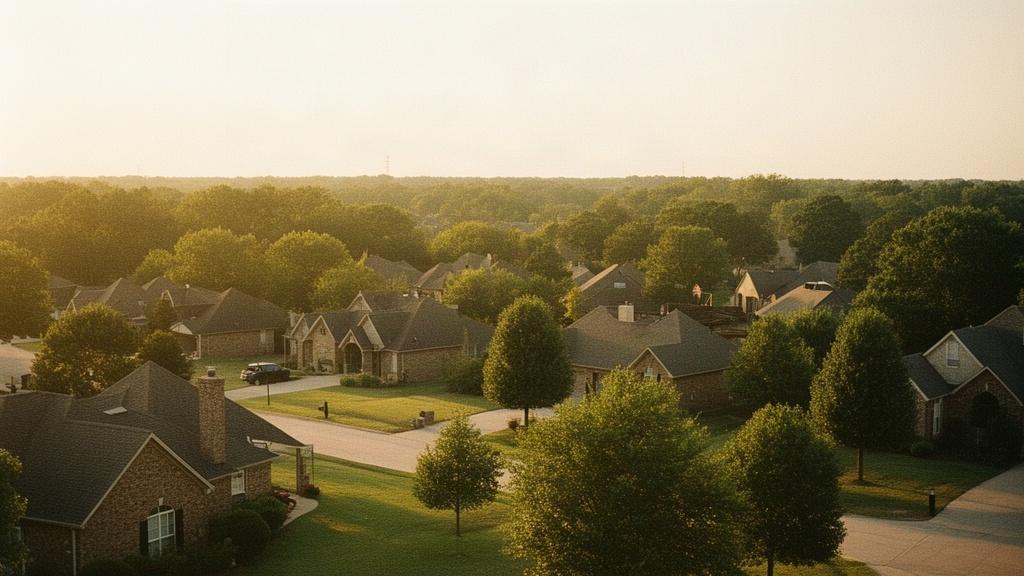
Louisville's neighborhoods each carry a distinct architectural character and price profile. Understanding the physical differences between them helps you narrow your search before you spend weekends driving across the city. The metro spans Jefferson County and reaches into Oldham, Bullitt, and Shelby counties, so geography matters as much as price when you are planning your commute and daily life.
East End Corridors: Anchorage, Prospect, and Middletown
The East End stretches along River Road and US-42 toward Oldham County. Anchorage is a small incorporated city within Jefferson County featuring large lots, mature trees, and homes that average well above $700,000. Prospect sits just to the north and west, with a mix of newer construction subdivisions and established neighborhoods; median prices there cluster between $450,000 and $650,000. Middletown, closer to I-265 and the Gene Snyder Freeway, offers more affordable options in the $280,000 to $380,000 range on smaller lots, and it has seen consistent demand because of its access to the outer loop.
Commute times from Prospect to downtown Louisville run approximately 25 to 35 minutes via US-42 or River Road under normal traffic conditions. The tradeoff is larger homes and lot sizes compared to closer-in neighborhoods at similar or lower price points.
The Highlands, Cherokee Triangle, and Bardstown Road Corridor
The Highlands is one of Louisville's most walkable urban neighborhoods, running along Bardstown Road from Eastern Parkway south toward Taylorsville Road. Housing stock here is predominantly Victorian-era and early 20th-century single-family homes, many of which have been carefully maintained or renovated. Lot sizes are compact, typically 40 to 60 feet wide. Prices in Cherokee Triangle and the core Highlands corridor generally range from $320,000 to $550,000, with renovated craftsman bungalows at the lower end and large Victorian doubles or single-family homes at the upper end.
If you want a deeper look at this corridor, the Bardstown Road area buyer's guide on this site covers the specific blocks, price ranges, and things to look for when touring homes in this stretch.
St. Matthews and Crescent Hill
St. Matthews sits roughly 5 miles east of downtown and is anchored by Shelbyville Road and Lexington Road. The housing stock ranges from 1940s and 1950s brick ranches and Cape Cods to newer infill construction on teardown lots. Median prices in St. Matthews hover around $310,000 to $390,000, with renovated homes on larger lots pushing past $450,000. Crescent Hill, just to the west along Frankfort Avenue, features similar brick bungalows and Tudor-style homes from the 1920s through the 1940s, often priced between $280,000 and $420,000.
The St. Matthews buyer's guide on this site goes deeper into what to expect when shopping this neighborhood, including lot sizes, renovation considerations, and how competition has played out in recent months.
NuLu, Germantown, and Schnitzelburg
NuLu, the New Louisville arts district along East Market Street, has attracted significant condo and townhome development over the past decade. Condos in NuLu typically range from $220,000 for a one-bedroom unit to $500,000 or more for larger loft-style spaces. Germantown and Schnitzelburg, directly south of downtown along Goss Avenue and Texas Avenue, offer some of Louisville's most affordable urban housing: small shotgun houses and brick row homes frequently priced between $160,000 and $280,000. These neighborhoods are within 10 to 15 minutes of downtown by car and even closer by bicycle along the Louisville Loop trail system.
Buyers interested in condo living in this corridor can find detailed guidance in the NuLu condos buyer's guide, which covers HOA considerations, building types, and what the buying process looks like for attached properties.
West Louisville and Shively
West Louisville encompasses neighborhoods like Portland, Russell, Parkland, and California, featuring a mix of Victorian-era two-story homes, brick bungalows, and mid-century ranches. Prices here represent some of the lowest entry points in the city, with many homes listed between $90,000 and $180,000. Shively, an independent city within Jefferson County located along Dixie Highway southwest of downtown, offers primarily 1950s and 1960s brick ranch homes in the $140,000 to $220,000 range. Both areas are within 10 to 20 minutes of downtown depending on the specific block.
3. Louisville Real Estate Market Guide: Reading the Current Conditions
The Louisville market in September 2026 sits in a moderate, balanced-to-slightly-seller-favored position in most price bands under $350,000. Above $500,000, buyers have more negotiating room and sellers often need to price carefully to attract offers. Understanding which conditions apply to your specific price point and neighborhood is the most important piece of market intelligence you can have before you act.
Inventory and Days on Market
Active listings in the Louisville metro have increased compared to the tight inventory of 2021 and 2022, but supply remains below the historical norm of five to six months. As of September 2026, the metro is running roughly two to three months of supply in the sub-$350,000 range and closer to four months above $500,000. The average days on market for a well-priced home under $300,000 is approximately 18 to 28 days. Homes that sit longer than 45 days are typically overpriced for their condition or location, and that is often a signal that price reductions are coming.
Mortgage Rate Reality in September 2026
Mortgage rates have moderated from their 2023 peak but remain higher than the historic lows of 2020 and 2021. A 30-year fixed rate in the 6.2 to 6.8 percent range is what most buyers are working with as of this month. On a $265,000 purchase with 10 percent down, that translates to a principal and interest payment of roughly $1,570 to $1,650 per month before taxes and insurance. Buyers who locked in rates during 2020 and 2021 are understandably hesitant to sell and take on a new loan at today's rates, which is one reason inventory remains constrained.
The National Association of Realtors has noted that seasonal windows offer buyers real advantages when inventory briefly rises and competition softens. That pattern holds in Louisville, and timing your search around it can make a measurable difference in both price and selection.
4. Timing Your Move in the Louisville Market
Timing matters in Louisville, and the city's seasonal patterns are predictable enough to plan around. The market does not behave identically to national averages because Louisville has its own employment base, its own weather patterns, and its own local demand drivers, including the University of Louisville, Norton Healthcare, Humana, and UPS, which together employ tens of thousands of people and generate steady relocation activity year-round.
When Buyers Have More Leverage
November through February is Louisville's slowest listing period. Fewer buyers are actively searching, which means sellers who do list during those months are often more motivated. Homes that have been sitting since the fall frequently see price reductions in January. If you are flexible on your move-in date and can close during winter months, you are more likely to negotiate concessions on price, closing costs, or repairs than you would be in April or May.
September itself sits at an interesting inflection point. The summer rush has faded, families who needed to move before the school year have already closed, and sellers who did not sell in the spring and summer are often more willing to negotiate. It is one of the more underrated months for buyers who are ready to act quickly.
When Sellers Typically See the Most Competition
March through June is Louisville's peak listing season. Buyer demand surges as the weather improves and people want to be settled before summer. Homes listed in late March or April in the $250,000 to $350,000 range routinely attract multiple offers within the first week if they are priced correctly and show well. Sellers who list during this window typically see shorter days on market and stronger final sale prices relative to list price.
Sellers who wait until July or August often find the market cooling as buyer fatigue sets in after a competitive spring. If you are planning to sell in 2027, beginning your preparation in January or February, including repairs, decluttering, and a pre-listing consultation, gives you the best shot at a strong spring result.
5. What Buyers and Sellers Should Do Right Now
Knowing the market conditions is only useful if you translate that knowledge into concrete next steps. Whether you are buying or selling in Louisville right now, the actions that move the needle are specific and sequential.
Steps for Buyers Entering the Louisville Market
Get pre-approved before you tour a single home. In a market where well-priced homes under $300,000 can go under contract in under two weeks, a pre-approval letter is not optional. It tells sellers you are a serious buyer and it tells you exactly what price range to focus on. Contact at least two lenders and compare not just rates but also origination fees and loan products, because the spread between lenders can add up to thousands of dollars over the life of a loan.
Map your commute before you fall in love with a neighborhood. Louisville's inner loop neighborhoods like Crescent Hill, Germantown, and the Highlands put you within 15 minutes of most downtown employers. Middletown and Fern Creek add 20 to 30 minutes. The East End suburbs can reach 35 to 45 minutes during morning rush hour on US-42 if there is an incident on the bridge. Drive the route yourself at the time you would actually be commuting.
Research the details that matter most to your household independently. For school district boundaries and performance data, go directly to the Jefferson County Public Schools website or the Kentucky Department of Education. For neighborhood-level data, use the Louisville Metro Government's open data portal. The Louisville KY homes and school districts guide on this site walks through exactly how to do that research before you commit to a specific area.
Steps for Sellers Preparing to List
Price your home based on closed sales from the past 60 to 90 days, not list prices. List prices tell you what sellers hoped to get. Closed prices tell you what buyers actually paid. In a market where some segments are softening, there is often a gap between those two numbers, and overpricing by even 3 to 5 percent can cost you weeks on market and ultimately a lower final price than if you had listed correctly from day one.
Invest in the repairs and updates that move the needle in Louisville's market. Fresh interior paint in neutral tones, updated light fixtures, and a professionally cleaned and staged home consistently outperform unrenovated listings at the same price point. Buyers in Louisville are savvy; they have seen enough homes to know when a property has been well cared for versus when deferred maintenance is being hidden under staging.
If you are relocating to Louisville and need broader context on what life in the city looks like before you start shopping, the Louisville relocation guide on this site covers everything from utility setup to neighborhood geography in one place.
FAQ
Is Louisville a buyer's market or a seller's market in September 2026?
Louisville is a mixed market in September 2026. Homes priced under $350,000 in established inner-loop neighborhoods still favor sellers, with limited inventory and relatively short days on market. Above $500,000, buyers have more negotiating room, and sellers in that range are often open to concessions on price or closing costs. The most accurate answer depends on the specific neighborhood and price point you are targeting, which is why a comparative market analysis from a local agent is more useful than any single headline number.
What is the typical price range for homes in Louisville, KY?
Louisville's housing market spans a wide range. Entry-level homes in areas like Shively and parts of West Louisville start around $130,000 to $190,000. Mid-tier homes in neighborhoods like St. Matthews, Crescent Hill, Germantown, and the Highlands typically run from $250,000 to $420,000. The East End suburbs of Prospect and Anchorage regularly see prices above $500,000, with larger estate properties exceeding $1 million. The citywide median as of September 2026 sits at approximately $265,000, making Louisville considerably more affordable than most major metros of comparable size.
What time of year is best to buy or sell a home in Louisville?
For sellers, listing in late March through May gives you the best chance of attracting multiple offers and a strong sale price, as that is when buyer demand peaks in Louisville. For buyers who want more negotiating leverage, November through February tends to bring less competition, and sellers who have been on the market through the fall are often more motivated to negotiate. September sits at a useful middle point: the summer rush has faded but serious buyers are still active, and sellers who did not sell in spring and summer are frequently more flexible on terms.