
← Back to Blog
Buying
Relocating to Mount Holly, NJ from Out of State: Neighborhoods, Costs and Timelines
By Nicholas Dougray, REALTOR® | Salesperson
Pat McKenna Realtors brokered by eXp Realty LLC · ## 2669416
September 23, 2026 · 11 min read
Relocating to Mount Holly, NJ from out of state is a big move, and most people doing it have never set foot in Burlington County before they start making offers. This guide covers the neighborhoods, real costs, and realistic timelines you need to plan your move with confidence, so you are not piecing it together from outdated Zillow estimates and Reddit threads.
1. Why People Are Relocating to Mount Holly, NJ Right Now
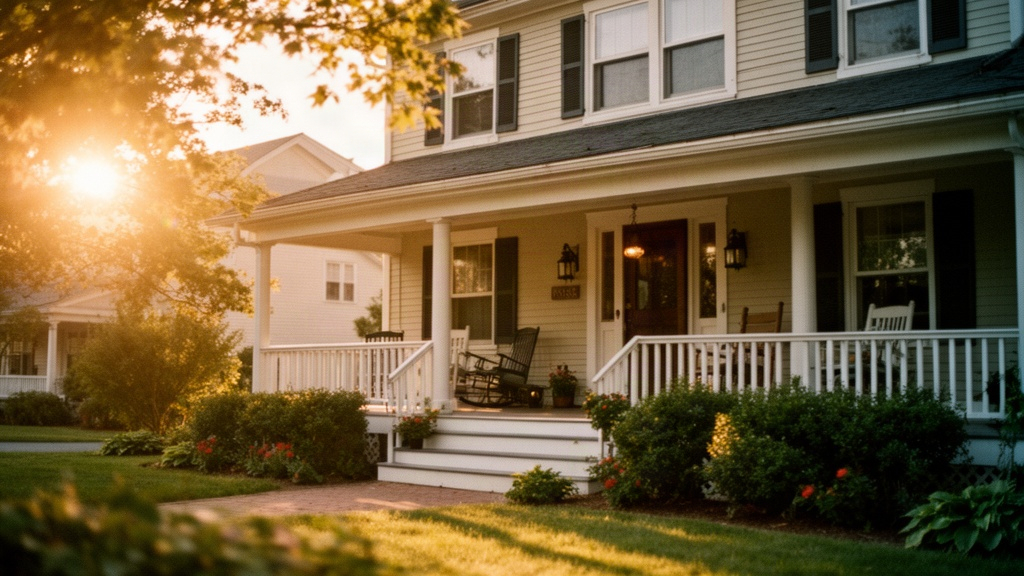
Mount Holly draws out-of-state buyers for a specific set of reasons that come up repeatedly. Home prices are meaningfully lower than in most Philadelphia suburbs, the commute into Center City is manageable, and the town itself has a physical character that newer suburbs do not: a walkable historic downtown, brick rowhouses, Federal and Victorian architecture, and Rancocas Creek running along its southern edge.
Philadelphia Access Without Philadelphia Prices
Mount Holly sits roughly 18 miles northeast of Philadelphia. Driving via I-295 South takes around 30 to 40 minutes in typical morning traffic. NJ Transit's River LINE light rail connects nearby Mount Holly Station to Camden, where PATCO Speedline service carries riders into Center City in under an hour total. For buyers priced out of Haddonfield, Cherry Hill, or Moorestown, Mount Holly offers a realistic alternative with a shorter price tag and a different kind of neighborhood character.
For more detail on commute options, see the full breakdown in How Far Is Mount Holly NJ from Philadelphia and What Are the Commute Options Right Now.
Job Relocation and Remote Work Patterns
Burlington County's proximity to Joint Base McGuire-Dix-Lakehurst, the Amazon fulfillment network along Route 38, and a growing cluster of logistics and healthcare employers in the corridor between Moorestown and Lumberton brings a steady stream of transferring workers into this market. Remote workers relocating from higher-cost states like New York, Massachusetts, and California have also been active buyers here through 2025 and into 2026, attracted by New Jersey's relatively lower housing costs compared to their origin markets, even accounting for the state's property taxes.
According to NAR research on job relocation trends and their impact on local real estate markets, mid-size suburban markets within commuting distance of major metros consistently absorb a disproportionate share of relocating buyers, which tracks closely with what is happening in Burlington County right now.
2. Understanding Mount Holly's Neighborhoods Before You Buy
Mount Holly is a compact borough of about 2.7 square miles, which means the differences between areas are more about housing stock, lot size, and walkability than about long distances. Out-of-state buyers often arrive expecting distinct named neighborhoods the way larger cities have them. Mount Holly works differently: the character shifts block by block, and knowing those distinctions before you tour saves real time.
The Historic Core
The area around High Street, Garden Street, and Mill Street contains Mount Holly's densest concentration of pre-Civil War architecture. You will find Federal-style rowhouses from the early 1800s, Victorian-era two-story homes on narrow lots, and a handful of detached colonials within a few blocks of the Burlington County Courthouse and the historic Mount Holly Inn. Lot sizes here are typically small, often under 4,000 square feet, and homes frequently share walls or sit close to the sidewalk line. The tradeoff is walkability: the farmers market, local restaurants on Garden Street, and the library are all within a five-minute walk.
Buyers interested in this area should be aware that many homes fall within or adjacent to Mount Holly's Historic District, which carries specific renovation and exterior modification rules. The full picture on what those restrictions mean in practice is covered in What Is the Historic District in Mount Holly NJ Like and Does Buying a Home There Come With Any Restrictions.
The Residential Blocks North and West of Downtown
Moving north and west from the historic core, the housing stock shifts toward mid-century Cape Cods, split-levels, and post-war ranches built primarily between the 1940s and 1970s. Lots are generally larger here, often in the 6,000 to 9,000 square foot range, with driveways and detached garages more common. These streets tend to be quieter, set back from the commercial activity of downtown, and often attract buyers who want more parking and yard space without leaving the borough.
Areas Near Rancocas Creek
The southern edge of Mount Holly borders Rancocas Creek, and homes in this zone offer a distinctly different feel from the rest of the borough. Some properties back directly to the creek or sit near the Rancocas Creek trail system, which connects to a broader network of preserved open space in Burlington County. Mill Race Village, a planned community in this part of town, offers townhomes and single-family homes with a more uniform, maintenance-oriented character than the older stock closer to downtown.
If waterfront proximity or trail access is a priority, the detailed breakdown in Who Should I Call If I Want to Buy a Home Near Rancocas Creek in Mount Holly is worth reading before you start scheduling tours.
Surrounding Townships Within Easy Reach
Out-of-state buyers relocating to this area often expand their search into Westampton, Lumberton, Hainesport, and Medford Lakes once they understand how close those townships are. Westampton, which borders Mount Holly to the north and west, has newer construction and larger lots. Hainesport, directly east across Route 541, has a mix of ranches and colonials on generous parcels. Lumberton, about 10 minutes south on Route 38, offers newer subdivisions with more square footage per dollar. Each of these municipalities has its own tax rate and school district, so they are worth comparing side by side as part of your relocation research.
3. What It Actually Costs to Buy a Home in Mount Holly
The cost picture for out-of-state buyers relocating to Mount Holly involves four distinct buckets: the purchase price, property taxes, closing costs, and moving expenses. Each one has real numbers attached, and each one surprises buyers who have only looked at listing prices.
Home Prices as of September 2026
Median home prices in Mount Holly currently sit in the low-to-mid $300,000s, with the range running from roughly $180,000 for smaller attached rowhouses in the historic core up to $450,000 or more for larger detached homes with updated interiors and more land. Condos and townhomes, particularly in communities like Mill Race Village, typically trade in the $200,000 to $310,000 range depending on size and condition. Compared to Burlington Township, Moorestown, or Medford, Mount Holly's prices are generally lower for comparable square footage, which is a key reason out-of-state buyers land here.
Property Taxes
New Jersey's property taxes are among the highest in the country, and Mount Holly is no exception. The effective tax rate in Mount Holly Borough runs approximately 3.1% to 3.4% of assessed value. On a $300,000 home, that translates to roughly $9,300 to $10,200 per year, or about $775 to $850 per month added to your housing costs. Buyers relocating from states like Texas, Florida, or the Carolinas often experience sticker shock here, so factoring taxes into your total monthly payment from day one is essential.
The full breakdown of how Mount Holly's tax rate compares and what you would pay at various price points is in What Is the Property Tax Rate in Mount Holly NJ and How Much Would I Pay on a $350,000 Home.
Closing Costs and Upfront Cash
Closing costs in New Jersey typically run between 2% and 4% of the purchase price for buyers, covering lender fees, title insurance, attorney fees, recording charges, and prepaid items like homeowners insurance and the initial escrow deposit for taxes. On a $320,000 purchase, that is roughly $6,400 to $12,800 due at closing in addition to your down payment. New Jersey also requires buyers to have an attorney present at closing, which is a cost that buyers from states without this requirement sometimes miss in their early budgeting.
Out-of-state moving costs add another layer. A full-service long-distance move from the Southeast or Midwest to South Jersey typically runs $4,000 to $9,000 depending on volume and distance, with peak summer rates running higher. Building a buffer of at least $2,000 to $3,000 beyond your estimated closing costs is a reasonable cushion for the unexpected expenses that come with any interstate move.
4. Your Relocation Timeline: How Long This Actually Takes
Out-of-state buyers relocating to Mount Holly typically need 90 to 150 days from the moment they start seriously researching to the day they get keys. That range compresses if you are flexible on price and property type, and it stretches if you need to sell a home in your current state first or if the Mount Holly inventory is thin in your price range when you are ready to move.
Phase One: Research and Pre-Approval
Allow two to four weeks for the research and pre-approval phase. This covers identifying your price range, getting pre-approved with a lender licensed in New Jersey, and doing enough neighborhood research to know which parts of Mount Holly and the surrounding area match your priorities. Do not skip the pre-approval step before booking a trip to tour homes. Sellers in this market expect buyers to be pre-approved before they will accept a showing request, particularly for well-priced listings.
Phase Two: Active Search and Offer
The active search phase for out-of-state buyers in Mount Holly typically runs three to eight weeks. Inventory in the borough is limited by its physical size: there are only so many homes here at any given time, and the under-$350,000 segment moves quickly. Plan one or two dedicated in-person trips to tour homes rather than trying to schedule showings around a single weekend visit. Buyers who tour six to ten homes in a focused two-day trip make faster, more confident decisions than those who try to stretch the search over multiple casual visits.
Phase Three: Contract to Close
Once you have an accepted offer, New Jersey's attorney review period begins immediately. This is a three-business-day window during which either party's attorney can disapprove or modify the contract. It is standard in New Jersey and not a sign that the deal is in trouble. After attorney review closes, the contract enters the inspection and mortgage commitment phase, which typically takes three to four weeks. Closing follows, usually 30 to 45 days after the contract is fully executed, putting the total contract-to-close window at 45 to 60 days in most cases.
Planning Around Your Lease or Current Sale
If you are selling a home in another state simultaneously, the timing coordination becomes the hardest part of the relocation. Most sellers in Mount Holly will not accept an offer that is contingent on the sale of an out-of-state property, particularly in a market where multiple offers on desirable listings are still common. Options include closing on your current home before making offers here, securing a bridge loan, or negotiating a delayed closing or post-settlement occupancy agreement once your offer is accepted. Each approach has tradeoffs that are worth discussing with a local agent before you start touring.
5. Practical Steps for Out-of-State Buyers in Mount Holly
Relocating from out of state adds logistical layers that local buyers do not face. These are the steps that consistently separate smooth relocations from stressful ones in the Mount Holly market.
Get Pre-Approved with a Lender Licensed in New Jersey
Your lender must be licensed to originate mortgages in New Jersey, which not every national or regional lender is. Out-of-state buyers who show up with a pre-approval letter from an unlicensed lender have lost deals because of it. Ask your lender directly whether they are licensed in NJ before you get the pre-approval letter. Local lenders and regional banks with NJ operations are generally the safest choice for buyers unfamiliar with the state's requirements.
Plan a Dedicated Trip to Tour Homes
Virtual tours and video walkthroughs are useful for narrowing your list, but they consistently misrepresent lot size, street noise, and the feel of the block. Plan at least one two-day trip to Mount Holly dedicated entirely to touring homes. Drive the streets at different times of day. Walk from the prospective home to downtown, to the nearest park, to the nearest grocery store. That ground-level context is what prevents buyer's remorse after a remote purchase.
Understand New Jersey's Attorney Review Period
New Jersey is one of a small number of states that requires attorney review as a standard part of every residential real estate transaction. The three-business-day review window starts the moment the contract is signed by all parties. Your attorney can disapprove the contract entirely, request modifications, or let it stand. Budget $800 to $1,500 for a real estate attorney in Burlington County. Skipping this step is not an option: it is built into the standard contract form used statewide.
Account for the Inspection Process
Older housing stock in Mount Holly means inspections often surface items that newer construction would not. Knob-and-tube wiring, cast iron drain lines, older roofs, and oil tank remnants are all common findings in pre-1970 homes. Budget $400 to $600 for a general home inspection, plus additional costs if a radon test, sewer scope, or oil tank sweep is warranted. Many Burlington County homes were heated with oil at some point, and a buried tank that was improperly decommissioned can create an environmental liability that affects both the mortgage and the title.
Coordinate Your Move-In Date
New Jersey closings typically happen in the morning, and keys are handed over the same day. If your moving truck is arriving from out of state, coordinate it to arrive the day after closing at the earliest. Same-day closings and same-day moves across state lines almost always create timing conflicts. Some buyers arrange short-term furnished rentals in the Mount Holly or Westampton area for one to two weeks around their closing date to give themselves a buffer, particularly when the closing date shifts during the mortgage process.
For a full picture of how the current market affects your timeline as a buyer, the Mount Holly NJ Real Estate Market Guide: Prices, Neighborhoods and Timing covers current conditions in detail.
FAQ
Is it possible to buy a home in Mount Holly, NJ without visiting in person?
It is technically possible, and some out-of-state buyers have done it successfully during periods of extremely limited inventory, but it carries real risk in a market with older housing stock. Homes in Mount Holly's historic core and mid-century residential blocks frequently have conditions that video tours do not capture: street noise from nearby Route 541, lot grades that affect drainage, or deferred maintenance that only becomes visible during an in-person walkthrough. Most experienced buyers' agents, including Nicholas Dougray, will encourage at least one in-person visit before submitting an offer. If a trip is truly impossible, a trusted local representative walking through the home on your behalf via live video is a better alternative than relying solely on listing photos.
How does relocating to Mount Holly compare to buying in a surrounding township like Westampton or Hainesport?
The comparison comes down to housing type, lot size, and price per square foot rather than any single factor. Mount Holly Borough offers older character homes, walkable access to downtown amenities, and generally lower price points for attached or smaller detached homes. Westampton and Hainesport have newer construction on larger lots, with more ranch-style and colonial homes built from the 1980s onward. Each municipality has its own tax rate, so the effective annual tax bill can differ by several hundred dollars per year on a similarly priced home. Buyers relocating from out of state benefit most from touring homes in two or three of these areas before committing to one, since the physical differences are harder to appreciate without seeing them side by side. Nicholas Dougray covers all of these areas and can help you structure a focused tour that makes the comparison concrete.
What should I research independently when relocating to Mount Holly, NJ?
Three areas in particular require your own independent research rather than relying on a real estate agent: schools, commute experience, and community fit. For school information, the New Jersey Department of Education's School Performance Reports at nj.gov/education are the primary official source, and Burlington City School District and the Mount Holly-area districts publish their own data directly. For commute experience, NJ Transit's real-time trip planner and Google Maps in traffic mode at your actual commute time of day will give you a more accurate picture than any estimate. For community fit, spending time in downtown Mount Holly on a weekday morning and a Saturday afternoon before you buy is the most reliable research method available. A good agent gives you the real estate facts; the personal decisions are yours to make with your own eyes and your own data.