
← Back to Blog
Market Trends
Austin, Texas This Year Real Estate Market Guide: Prices, Neighborhoods and Timing
By Rohma Khan
Remax
September 25, 2026 · 9 min read
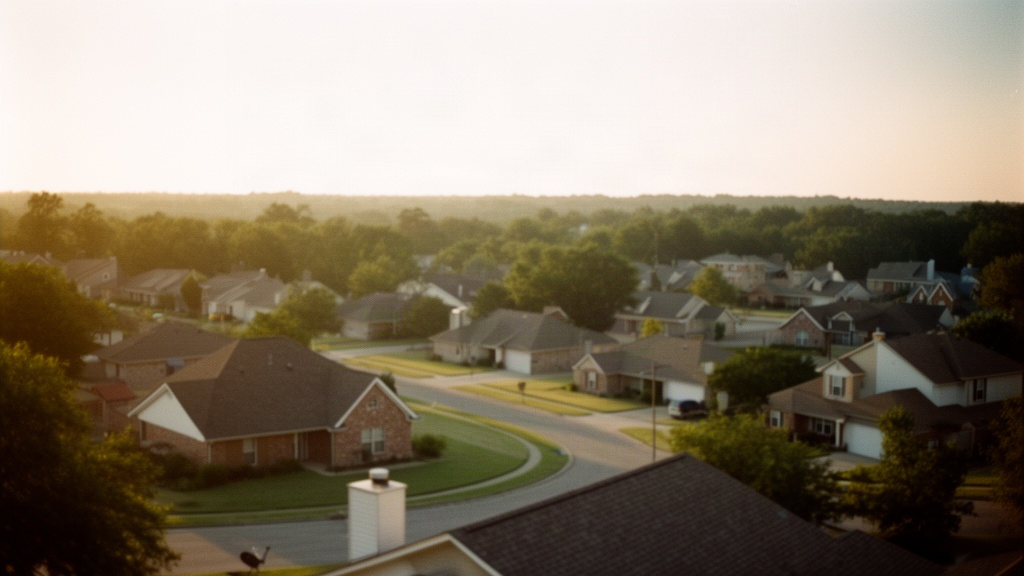
Austin, Texas this year is a real estate market that rewards preparation. Prices have shifted considerably from the pandemic-era peaks, inventory has climbed, and the timing calculus for buyers and sellers looks meaningfully different than it did two or three years ago. This guide covers what you actually need to know: where prices stand right now, how different parts of the city are moving, and how to think about timing your next move.
1. Where Austin Home Prices Stand Right Now
The Austin metro median home price in September 2026 sits at approximately $465,000 for single-family homes, down from the mid-$550,000s seen at the height of the 2022 frenzy. That correction has largely stabilized. Prices are not in free fall, but they are also not appreciating at the double-digit annual rates that defined 2020 through early 2022. The market has found a more sustainable floor, and most well-priced homes are still moving.
Median Price and What It Reflects
A $465,000 median covers an enormous range of product. A 1,200-square-foot bungalow in East Austin, a 2,400-square-foot new build in Pflugerville, and a 1,900-square-foot townhome near The Domain can all land within $50,000 of each other depending on finishes, lot size, and condition. The median is a useful anchor but it does not tell you what a specific address is worth.
Condos and townhomes are averaging closer to $330,000 to $380,000 across the metro in September 2026, with units inside Loop 1 (MoPac) running higher. New construction in master-planned communities in Georgetown, Hutto, and Kyle is coming in between $310,000 and $430,000 depending on the builder tier and lot premium.
How Prices Vary Across the Metro
The Austin metro spans Travis, Williamson, Hays, and Bastrop counties, and price per square foot varies sharply by location. Central Austin zip codes like 78704 (South Congress, Bouldin Creek, Travis Heights) and 78701 (Downtown) still command $400 to $600 per square foot for updated product. Suburban areas like Pflugerville and Cedar Park are running $200 to $270 per square foot. That gap is smaller than it was at the peak but still significant.
2. Inventory, Days on Market and What They Mean for You
Austin currently carries roughly 3.8 to 4.2 months of inventory across the metro, which puts it in balanced to slightly buyer-favorable territory. At the 2022 peak, inventory dropped below one month. The return toward four months means buyers have real choices and sellers need to price competitively from day one.
Supply Has Shifted the Balance
New construction has played a large role in rebuilding supply. Builders in the Hays County corridor (Buda, Kyle, San Marcos) and in Williamson County (Round Rock, Georgetown, Liberty Hill) delivered thousands of units over the past 18 months, giving buyers in those submarkets significant negotiating leverage. Incentives like rate buydowns, closing cost contributions, and free upgrades remain common at new-build communities as of September 2026.
Days on market for the broader Austin metro currently average 52 to 60 days, compared to under 10 days during the 2021 to 2022 frenzy. Homes priced accurately and presented well are still moving in 20 to 35 days in most central zip codes. Overpriced listings are sitting, sometimes for 90 days or more, which is why pricing strategy matters more now than at any point in the last five years.
What Buyers and Sellers Should Watch
For buyers, the current inventory level means you can take time to inspect thoroughly, negotiate repairs, and include contingencies that would have been laughed out of a 2021 offer. For sellers, it means that the first 14 days on market are still the most critical. A home that gets a price reduction in week three signals distress to buyers and tends to sell for less than a home that was priced right from the start. If you are planning to sell, read through the detailed breakdown of what consistently gets Austin sellers the highest sale price before you list.
3. Key Austin Neighborhoods and Their Price Ranges
Austin's neighborhoods each have distinct housing stock, price points, and commute profiles. Here is a factual breakdown of what you will find in the major submarkets as of September 2026, so you can match your budget and priorities to the right part of the city.
Central and Inner East Austin
Inner East Austin (78702, 78721) is defined by older craftsman bungalows from the 1920s through 1950s, heavily renovated or replaced by modern infill construction. Lot sizes typically run 5,000 to 7,000 square feet. Renovated bungalows start around $550,000 to $700,000; new construction townhomes and detached homes run $650,000 to $900,000. The area sits roughly 2 to 4 miles from Downtown Austin, and commute times to the Capitol area by car average 10 to 20 minutes outside of peak hours.
Travis Heights, just south of Downtown across the Congress Avenue bridge, features hilly terrain, mature live oaks, and a mix of 1930s to 1960s cottages alongside newer construction. Median prices in Travis Heights currently run $700,000 to $950,000 for single-family homes. For a deeper look at that specific area, the Travis Heights market guide covers pricing and inventory in detail.
North Austin and the Domain Corridor
The Domain area in North Austin (78758, 78759) has seen significant high-rise and mid-rise condo development alongside established single-family neighborhoods. Single-family homes in the neighborhoods surrounding The Domain, including Gracywoods, Balcones Woods, and Milwood, run $450,000 to $650,000 for homes built in the 1970s through 1990s on lots of 7,000 to 10,000 square feet. Condos in the Domain proper start around $300,000 and reach $600,000 for larger units. The area is approximately 10 to 12 miles from Downtown Austin.
Cedar Park and Round Rock, both about 20 to 25 miles north of Downtown via US-183 or I-35, offer newer subdivisions with homes ranging from $380,000 to $600,000. Round Rock in particular has a large inventory of 2000s-era brick homes on quarter-acre lots that appeal to buyers who want more square footage for their dollar.
South Austin and the Buda to Kyle Corridor
South Austin's 78745 and 78748 zip codes offer a mix of 1970s ranch-style homes, newer infill, and some new construction. Prices in 78745 (South Lamar, Manchaca Road corridor) currently range from $420,000 to $650,000 for single-family homes. The area sits 5 to 8 miles from Downtown, and many streets have walkable access to Barton Creek Greenbelt trailheads.
Buda and Kyle, roughly 18 to 28 miles south of Downtown via I-35, have absorbed a large share of Austin's growth. New construction communities here are priced from $290,000 to $420,000, with builder incentives still common. The trade-off is a longer commute: peak-hour drive times to Downtown Austin from Kyle average 45 to 65 minutes on I-35.
Westlake Hills and Lakeway
Westlake Hills sits immediately west of Austin city limits, roughly 8 to 10 miles from Downtown via Loop 360 or Bee Caves Road. The housing stock consists primarily of custom and semi-custom homes on wooded hillside lots, many with Hill Country views. Entry-level homes in Westlake Hills start around $1.1 million; larger estates on acreage regularly exceed $3 million. Lakeway, another 10 miles further west on Lake Travis, offers more price variety: $600,000 to $1.5 million covers most of the market there.
4. Timing the Austin Market in 2026
Timing in real estate is never perfectly predictable, but Austin does have seasonal patterns that are worth understanding before you list or make an offer. The Austin, Texas this year real estate market guide picture on timing is more nuanced than a simple buy-now or wait message.
Best Windows to Buy
November through February historically brings fewer competing buyers in Austin while inventory remains visible. Sellers who list in winter are often more motivated, and builders are more willing to negotiate on incentives to hit year-end sales targets. If you are buying with a 30 to 60 day close timeline, getting under contract in November or December can mean closing into a home before the spring market pushes prices up again.
Right now in September 2026, the market is transitioning out of the summer season. Inventory tends to stay elevated through October before dipping. That makes the next six to eight weeks a reasonable window for buyers who want selection without the full spring competition. Before you make an offer, make sure you understand the full cost picture, including what closing costs to expect on an Austin home purchase so there are no surprises at the table.
Best Windows to Sell
March through June is Austin's peak selling season. Buyer demand peaks as relocating employees try to close before summer, and families with children try to settle before the school year starts. Homes listed in late February or early March consistently see the most showings and the strongest offers.
If you are planning a spring 2027 listing, the preparation work starts now. Deferred maintenance, paint, landscaping, and pre-listing inspections all take time. Sellers who use the fall and winter months to prepare their home tend to net more in the spring than those who rush to list in March without having done the groundwork.
5. What the Broader Trends Mean for Austin Buyers and Sellers
Austin did not escape the national recalibration that followed the pandemic housing boom, and understanding that context helps buyers and sellers set realistic expectations for 2026.
The Pandemic Correction Is Still Unfolding
Austin was one of the most dramatic examples of pandemic-era price inflation in the country, and the correction has been equally pronounced. As HousingWire's ongoing coverage of pandemic housing market effects has documented, cities that saw the sharpest appreciation between 2020 and 2022 have also seen the most significant price normalization since. Austin fits that pattern precisely. The city is not distressed; it is recalibrating to a price level that better reflects local income fundamentals and mortgage payment affordability.
For buyers who sat out the frenzy, that normalization is an opportunity. For sellers who bought at or near the 2022 peak, it requires pricing discipline and realistic expectations about equity. The sellers who are succeeding right now are those who understand what the market will bear in September 2026, not what their neighbor's home sold for in April 2022.
Mortgage Rates and Affordability
Mortgage rates remain the single biggest variable shaping buyer behavior in Austin right now. Rates on a 30-year fixed loan are hovering in the mid-to-upper 6 percent range as of September 2026, which means the monthly payment on a $465,000 home at 80 percent LTV is approximately $2,450 to $2,600 excluding taxes and insurance. That is meaningfully higher than it was when rates were sub-3 percent, which is why many move-up buyers are choosing to stay put rather than trade their locked-in rate for a new one.
That rate lock-in effect is one reason existing home inventory has not flooded back into the market despite the correction. It also means buyers who do need to move are largely buying with more cash, larger down payments, or adjustable-rate products. If you are relocating to Austin from out of state and working through all of the financial variables, the complete cost of living breakdown for Austin is a useful companion to this guide.
Austin's long-term employment base continues to support housing demand. Major employers including Apple, Tesla, Samsung, Dell, and a dense cluster of tech and life sciences firms are still headquartered or have major operations in the metro. Job growth has moderated from the 2021 to 2022 pace but remains positive, which puts a floor under demand even as rates keep some buyers on the sidelines.
FAQ
Is Austin, Texas a buyer's market or a seller's market right now in September 2026?
Austin is currently in balanced to slightly buyer-favorable territory, with roughly 3.8 to 4.2 months of inventory across the metro. That means buyers have more negotiating room, more time to conduct due diligence, and more ability to include contingencies than they did during the 2021 to 2022 frenzy. Sellers can still achieve strong prices, but only when homes are priced accurately and presented well from day one. Overpriced listings are sitting for 90 days or more in many parts of the city, so the days of pricing high and waiting for multiple offers are largely over in most submarkets.
What is the average home price in Austin, Texas in 2026?
The metro-wide median single-family home price in Austin is approximately $465,000 as of September 2026, down from the mid-$550,000s seen at the 2022 peak. That median spans a wide range: central Austin zip codes like 78704 and 78702 see single-family homes priced from $550,000 to well over $1 million, while suburban areas in Williamson and Hays counties offer new construction starting closer to $290,000 to $350,000. Condos and townhomes across the metro are averaging $330,000 to $380,000. Price per square foot is a more useful comparison tool than the overall median when you are evaluating a specific property against its neighbors.
When is the best time to buy or sell a home in Austin, Texas?
For sellers, March through June is historically Austin's strongest season: buyer demand peaks as corporate relocations accelerate and families try to settle before the school year. Homes listed in late February or early March consistently receive the most showings and the strongest offers. For buyers, November through February tends to bring less competition and more motivated sellers, and builders are often more willing to negotiate incentives near year-end. Right now in September 2026, the market is transitioning out of summer, and inventory is still elevated, which gives buyers a reasonable window of selection before the spring market heats up again.