← Back to Blog
Neighborhoods
Travis Heights Austin Real Estate Market Guide: Prices, Neighborhoods and Timing
By Rohma Khan
Remax
September 5, 2026 · 11 min read
Travis Heights is one of Austin's most distinctive inner-city neighborhoods, sitting just south of Lady Bird Lake with bungalows from the 1920s lining streets that slope toward South Congress Avenue. This Travis Heights Austin real estate market guide covers current prices, what the housing stock actually looks like, how the neighborhood connects to the rest of the city, and what buyers and sellers need to know about timing in September 2026.
1. What Makes Travis Heights Different from Other Austin Neighborhoods
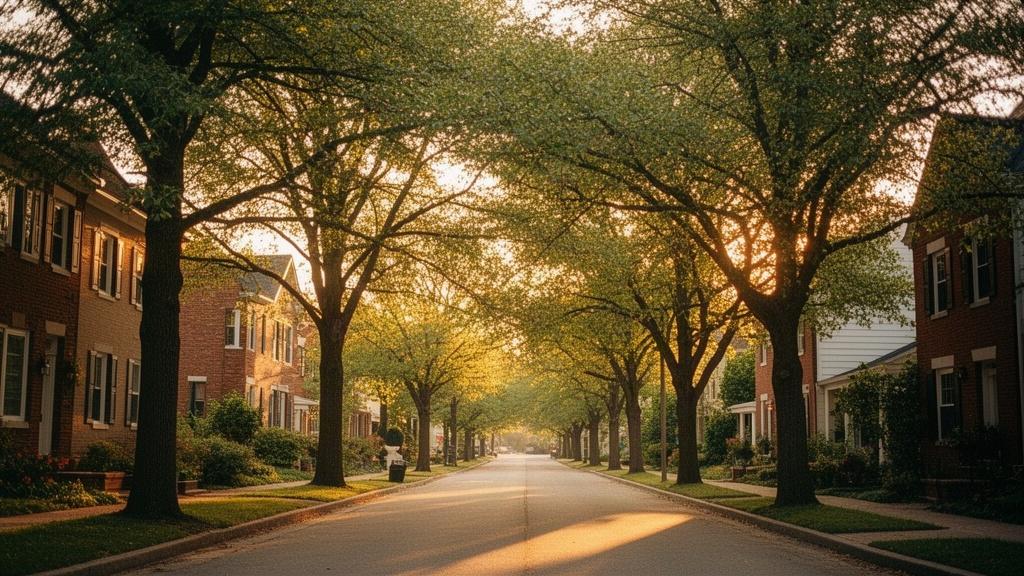
Travis Heights sits in a genuinely singular position in Austin. It occupies the elevated terrain directly south of Lady Bird Lake, between South Congress Avenue to the west and South 1st Street to the east, with Riverside Drive forming its northern boundary. The topography is real: streets like Newning Avenue and Kenwood Avenue climb noticeably as you move south from the lake, giving many properties elevated sightlines and a sense of separation from the city noise below.
The neighborhood is roughly 1.5 miles from the Congress Avenue Bridge and about 2 miles from the Texas State Capitol, making it one of the closest residential areas to downtown Austin that still has intact blocks of historic housing. That combination of proximity and preserved character is central to understanding the Travis Heights real estate market.
Location and Physical Layout
Travis Heights borders Bouldin Creek to the northwest and transitions into Fairview Park and Dawson to the south and southeast. The neighborhood is compact, covering roughly 0.6 square miles, which means most residents can walk from one end to the other in about 15 minutes. Blunn Creek runs through the eastern portion of the neighborhood, feeding into Little Stacy Park and Big Stacy Park, which anchor the southern end of the residential grid.
The street grid is irregular by Austin standards. Several blocks follow the natural contours of the hillside rather than a strict north-south alignment, which contributes to the neighborhood's visual variety and also means lot sizes and orientations vary considerably from block to block. This irregularity has a direct effect on home values: two properties on the same street can have meaningfully different lot dimensions, privacy levels, and views.
Housing Stock and Architecture
The dominant building type in Travis Heights is the Craftsman bungalow, most built between 1910 and 1945. These are typically one- to one-and-a-half-story homes with front porches, wood siding, and original hardwood floors. Square footage runs from roughly 900 to 1,800 square feet on the smaller historic examples, with lot sizes commonly between 5,000 and 8,000 square feet. A meaningful share of these homes have been renovated or expanded, so interior finishes range from fully original to fully rebuilt behind a historic facade.
Alongside the bungalows, Travis Heights has a notable stock of mid-century ranch homes from the 1950s and 1960s, plus a smaller number of newer infill constructions and duplexes. The neighborhood is zoned with a mix of single-family and two-family designations, so it is not unusual to find a renovated duplex next to a century-old bungalow. Buyers should verify current zoning with the City of Austin before assuming any specific development rights.
2. Travis Heights Home Prices and Market Conditions in September 2026
Travis Heights home prices in September 2026 reflect a market that has corrected from its 2022 peak but remains substantially above pre-pandemic levels. The neighborhood commands a premium over the broader Austin median because of its location, lot scarcity, and the relative difficulty of replicating historic character through new construction. For broader Austin price context, see the average home price in Austin for September 2026.
Current Price Ranges by Property Type
Entry-level inventory in Travis Heights is limited. The lowest-priced detached homes currently on the market are typically smaller bungalows needing renovation, listed in the low-to-mid $600,000s. Move-in-ready Craftsman homes with updated kitchens and bathrooms generally list between $750,000 and $1.1 million depending on square footage, lot size, and whether the property has a garage or accessory structure. Fully renovated or architecturally significant homes on larger lots push past $1.3 million.
Condominiums and townhomes in the Travis Heights area, particularly along the South Congress corridor near the neighborhood's western edge, range from approximately $400,000 to $650,000 for one- and two-bedroom units. Duplexes, which can be purchased as investment properties or owner-occupied with a rental unit, list between $750,000 and $1.2 million depending on the condition of both units and the lot configuration.
Price per square foot for single-family homes in Travis Heights currently runs between $450 and $650 for updated properties, with outliers above that range for homes with lake views or exceptional renovation quality. Raw land and tear-down lots are rare but do appear occasionally, typically priced between $350,000 and $550,000 for standard-sized lots.
Days on Market and List-to-Sale Dynamics
Travis Heights homes are sitting longer than they did during the 2021 and 2022 frenzy. Across Austin broadly, the market has increasingly relied on price cuts as homes sit longer, and Travis Heights is not immune to that trend. Correctly priced homes in strong condition are moving in 30 to 55 days. Overpriced listings or homes with deferred maintenance are accumulating 90 or more days on market before sellers adjust.
List-to-sale price ratios in Travis Heights currently average around 96 to 98 percent for well-priced properties, meaning buyers have meaningful room to negotiate without insulting sellers. Multiple-offer situations still occur on homes priced below $800,000 in excellent condition, but they are no longer the default outcome. Sellers who price at or slightly below recent comparable sales are seeing the strongest results.
3. The Travis Heights Neighborhood in Detail
Understanding Travis Heights at the block level matters because the neighborhood is not uniform. Prices, noise levels, lot sizes, and proximity to commercial activity shift noticeably from one street to the next. Buyers who treat the neighborhood as a single homogeneous area often miss meaningful distinctions that affect both daily life and long-term value.
Streets, Blocks, and What You Find Where
The blocks closest to South Congress Avenue, particularly along Johanna Street, Newning Avenue, and the western portions of Academy Drive, sit within easy walking distance of the South Congress retail and restaurant corridor. This proximity adds convenience but also means more foot traffic and ambient noise from the avenue. Properties here tend to be priced at the higher end of the neighborhood range because of walkability.
Moving east toward Blunn Creek, the streets become quieter and more heavily canopied. Kenwood Avenue, Leland Street, and the blocks surrounding Little Stacy Park and Big Stacy Park have a noticeably different character: deeper lots in some cases, more tree cover, and direct park access. Homes on or immediately adjacent to the park greenbelt carry a consistent premium of roughly 10 to 15 percent over comparable homes a few blocks away.
The northern edge of Travis Heights, near Riverside Drive, is the most transitional part of the neighborhood. Some blocks here have older commercial uses, multifamily buildings, and properties in mixed condition. Buyers targeting this edge of the neighborhood typically find lower entry prices but should budget carefully for renovation and verify the specific zoning and flood zone status of any parcel.
Parks, Amenities, and Daily Errands
Big Stacy Park and Little Stacy Park are the neighborhood's primary green spaces. Big Stacy has a heated outdoor pool operated by the City of Austin, open year-round, along with tennis courts and a large open lawn. Little Stacy is smaller and more naturalistic, with Blunn Creek running through it and several mature live oaks providing shade. Both parks are within walking distance of most Travis Heights addresses.
The South Congress Avenue corridor, running along the western boundary of Travis Heights, provides the neighborhood's commercial spine. Within a half-mile walk, residents have access to multiple grocery options including a Whole Foods Market on South Lamar (about a 10-minute walk or 3-minute drive), independent coffee shops, restaurants ranging from tacos to sit-down dining, and the Ann and Roy Butler Hike-and-Bike Trail along Lady Bird Lake. The trail connects to a 10-mile loop around the lake, accessible via the South Congress Bridge.
For everyday errands, residents typically use the H-E-B on South Congress at Oltorf Street, about 1.5 miles south of the neighborhood center, or the Central Market on North Lamar, roughly 3 miles north. The neighborhood itself has no large-format retail, which is consistent with its residential character and zoning.
4. Commutes and Connectivity from Travis Heights
Travis Heights offers commute times that are short by Austin standards, though Austin traffic remains a real variable. The neighborhood's position just south of Lady Bird Lake puts it within 10 to 15 minutes of downtown Austin by car during off-peak hours. During peak morning and evening commutes, the same trip can stretch to 20 to 30 minutes depending on the route and destination.
Getting Downtown and to Major Employers
The Congress Avenue Bridge is the most direct route from Travis Heights into downtown Austin, putting residents roughly 1.5 miles from the central business district. The South 1st Street Bridge offers an alternative for those heading to the Seaholm District or the west side of downtown. For employees working in the Domain area in North Austin, the commute runs approximately 12 to 14 miles and takes 25 to 40 minutes depending on I-35 or MoPac traffic.
The University of Texas at Austin campus is approximately 3 miles north of Travis Heights, a 10 to 15 minute drive or a 15 to 20 minute bike ride via the hike-and-bike trail and Guadalupe Street. The Austin-Bergstrom International Airport is about 7 miles southeast, typically a 15 to 25 minute drive depending on time of day.
Public Transit and Walkability
Capital Metro bus routes serve Travis Heights along South Congress Avenue and South 1st Street. The Route 1 (South Congress) runs frequently and connects the neighborhood to downtown Austin and points north. For residents who work downtown or in the South Lamar corridor, the bus is a practical option that avoids parking costs and bridge traffic entirely.
Walkability scores for Travis Heights typically range from 75 to 90 out of 100 depending on the specific address, with higher scores on blocks closest to South Congress. Bikeability is strong for flat or downhill routes toward the lake and South Congress; the hills heading south and east require more effort. Many residents use e-bikes for the hillier segments of their daily routines.
5. Timing the Travis Heights Market: When to Buy or Sell
Timing in Travis Heights follows Austin's broader seasonal patterns, but the neighborhood's limited inventory creates its own dynamics. Because Travis Heights has a small, finite housing stock with relatively low turnover, the window of available homes at any given moment is narrow. Buyers who wait for a perfect season may simply find nothing to buy.
Seasonal Patterns in Travis Heights
Spring, specifically March through May, is historically the period when the most Travis Heights listings hit the market. Sellers prefer to list when the neighborhood's mature trees are full and the properties photograph well. Buyers competing in spring face the most competition but also the most choice. Summer listings, particularly July and August, tend to sit longer and attract fewer competing offers, which can work in a buyer's favor.
Fall, particularly September and October, is a secondary active period. Sellers who missed the spring window often list in early fall before the holiday slowdown. September 2026 specifically is showing a modest uptick in new listings relative to August, consistent with this pattern. Buyers who are ready to move quickly can find motivated sellers who have already adjusted prices after a slow summer.
November through January is the slowest period for Travis Heights transactions. Inventory drops, but so does buyer competition. Sellers who list in this window are often genuinely motivated, and buyers willing to act during the holidays sometimes negotiate terms that would not be available in a spring market.
What the Broader Austin Market Signals for Buyers and Sellers
The Austin market in 2026 is giving buyers more leverage than at any point since 2019. Austin has been among the metros where household growth over the past decade has been exceptional, ranking as one of the fastest-growing areas for households in the country, but the pace of new construction in the broader metro has helped rebalance supply and demand. Travis Heights, with its protected historic character and limited buildable land, has not seen the same supply increase as suburban submarkets. That constraint tends to floor prices even in a softer broader market.
For sellers, the current environment rewards accurate pricing from day one. Homes that launch at a price supported by recent comparable sales are moving; homes that test the market at aspirational prices are accumulating days on market and ultimately selling for less than they would have at a correct initial price. If you are thinking about selling in Travis Heights, the Austin home selling guide covering pricing, timeline, and expectations is a useful starting point for understanding what the process looks like right now.
For buyers, the current market in Travis Heights means longer due diligence windows, inspection contingencies that sellers are actually accepting, and the ability to negotiate closing cost contributions in many transactions. These are conditions that did not exist in 2021 and 2022. Buyers who are pre-approved and know their target blocks can act decisively when the right property appears, which remains important in a neighborhood where the right home may not appear again for months.
If you are comparing Travis Heights to adjacent neighborhoods like Barton Hills, the Barton Hills market guide covers how that neighborhood's pricing and inventory compare, which can help you calibrate your budget and expectations across the South Austin market.
FAQ
What is the typical home price in Travis Heights, Austin, right now?
In September 2026, move-in-ready single-family homes in Travis Heights generally list between $750,000 and $1.1 million, with smaller homes needing work starting in the low-to-mid $600,000s and larger or architecturally significant properties exceeding $1.3 million. Price per square foot for updated homes runs roughly $450 to $650. Condos and townhomes near the South Congress corridor offer a lower entry point, typically between $400,000 and $650,000. These figures reflect a market that has moderated from its 2022 peak but remains well above pre-pandemic levels due to the neighborhood's location and limited supply.
How long are homes sitting on the market in Travis Heights?
Correctly priced, well-maintained homes in Travis Heights are currently selling in approximately 30 to 55 days. Overpriced listings or properties with significant deferred maintenance are taking 90 or more days before sellers reduce the price. List-to-sale price ratios for well-priced homes are averaging around 96 to 98 percent, meaning buyers have real negotiating room in most transactions. The neighborhood still sees occasional multiple-offer situations on competitively priced homes under $800,000 in excellent condition, but these are no longer typical.
Is Travis Heights a good area to research for relocation to Austin?
Travis Heights is one of Austin's most established inner-city neighborhoods, with a distinct housing stock of Craftsman bungalows, proximity to Lady Bird Lake and the hike-and-bike trail, and walkable access to the South Congress commercial corridor. It sits roughly 1.5 miles from downtown Austin, with commute times of 10 to 15 minutes off-peak by car and frequent bus service along South Congress Avenue. Prospective buyers and relocators should research schools through the Austin Independent School District's own website and review any other factors important to their household directly through official sources. For a broader picture of how Travis Heights compares to other Austin submarkets, the full Austin real estate market overview is a useful companion resource.