← Back to Blog
Market Trends
do other Milwaukee, Wisconsin real estate market guide: prices, neighborhoods and timing
By Roxanne Martens, REALTOR®
Boardwalk Realty · DRE# 110763
September 26, 2026 · 12 min read
If you are buying, selling, or relocating in Milwaukee, Wisconsin, understanding the local real estate market right now means more than watching a national headline. This Milwaukee, Wisconsin real estate market guide breaks down current prices, the housing stock across the city's west side neighborhoods, and the timing factors that actually move the needle for buyers and sellers in September 2026.
1. Where Milwaukee Home Prices Stand Right Now
Milwaukee home prices are elevated compared to two years ago, but they have not moved at the same pace as coastal markets. As of September 2026, the citywide median sale price for single-family homes sits in the low-to-mid $200,000s, with attached condos and duplexes pulling the blended average closer to the $230,000 to $250,000 range depending on the quarter's mix. That figure reflects a market that has appreciated steadily without the dramatic swings seen in Sun Belt metros.
Citywide Median and What It Reflects
The median price tells only part of the story in Milwaukee. According to Norada Real Estate's Milwaukee market analysis, Milwaukee has sustained year-over-year price growth through 2025 and into 2026, driven by constrained inventory rather than a surge in demand. That distinction matters because it means prices are holding firm, but sellers who overprice relative to comparable sales are still sitting longer than they expect.
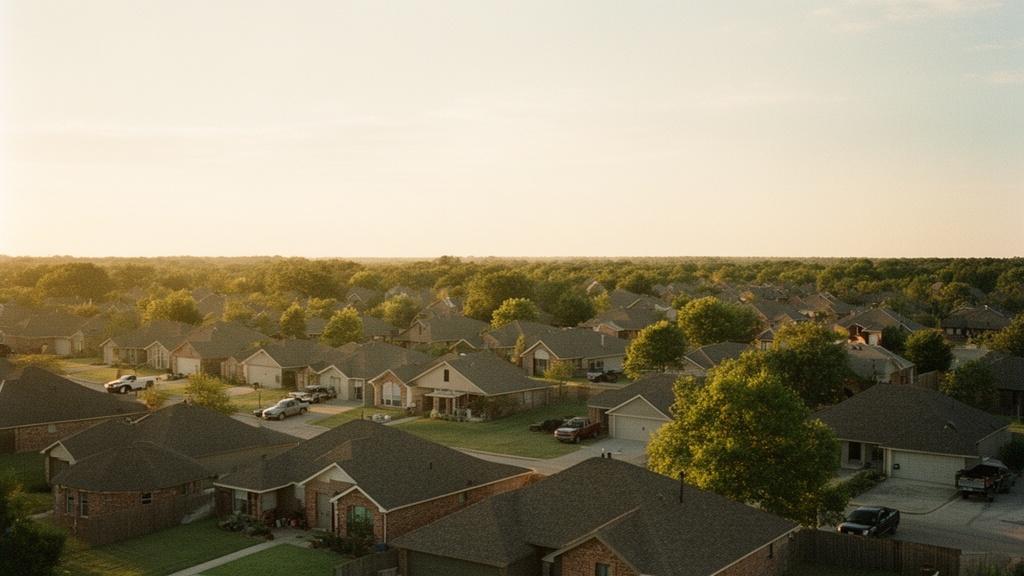
The city's housing stock skews older. The majority of Milwaukee's single-family homes were built between 1900 and 1960, which means buyers are typically purchasing brick bungalows, Craftsman foursquares, and two-story frame houses rather than new construction. That older stock keeps entry-level prices accessible relative to peer Midwest cities, but it also means buyers need to budget for deferred maintenance that shows up at inspection.
How the West Side Compares to the Broader City
Milwaukee's west side neighborhoods generally trade in a price range that runs from the upper $100,000s for smaller bungalows needing work, up to the mid-$300,000s for fully updated foursquares or larger two-stories on oversized lots. That spread is wider than it sounds. A 1,200-square-foot bungalow in need of a kitchen update and a 2,400-square-foot updated Craftsman with a two-car garage can both exist within a few blocks of each other, which is why price-per-square-foot analysis matters more here than headline medians.
2. West Side Neighborhoods: Housing Stock, Lot Sizes and Price Ranges
Milwaukee's west side covers a large swath of the city and includes some of its most architecturally distinctive residential streets. Each neighborhood has its own character in terms of housing type, lot configuration, and price point, so understanding the differences is essential before making an offer.
Washington Heights and Concordia
Washington Heights sits roughly between North 40th Street and North 60th Street, bounded loosely by West Vliet Street to the south and West Burleigh Street to the north. The housing stock here is predominantly brick bungalows and two-story frame homes built in the 1920s through 1940s, most sitting on 30-foot to 40-foot lots with detached garages. Finished basements are common. Prices in Washington Heights currently range from roughly $160,000 for a smaller bungalow needing cosmetic work to $280,000 or more for a fully updated two-story with a renovated kitchen and newer mechanicals.
Concordia, directly to the south, has a similar architectural profile but includes a higher proportion of larger Victorian-era homes on some blocks. The neighborhood borders the Concordia University Wisconsin campus, which means the streetscape mixes residential blocks with institutional buildings. Lot sizes here occasionally run wider than the Washington Heights standard, giving some properties more outdoor space than the price tag suggests.
Story Hill and the Merrill Park Corridor
Story Hill is one of the more topographically distinct neighborhoods on the west side, with streets that rise and fall along the bluff overlooking the Menomonee Valley. Homes here tend to be larger than the west side average, with more Craftsman and Prairie-influenced architecture from the 1910s and 1920s. Lot sizes are generous by Milwaukee standards, and many properties have views of the valley or the downtown skyline. Prices in Story Hill currently range from the mid-$200,000s to well over $400,000 for the larger, fully updated homes on the ridge.
The Merrill Park corridor, running along West National Avenue toward the valley, offers a denser mix of housing including smaller bungalows, two-flats, and some newer infill construction. This area sits within a short drive or bike ride of Miller Park (now American Family Field) and the Menomonee River Parkway, which connects to an extensive trail network. Entry-level prices in Merrill Park can start below $150,000 for properties needing significant updating.
Miller Valley and Burnham Park
Miller Valley sits in the Menomonee Valley corridor and carries an industrial heritage that has gradually given way to residential and mixed-use redevelopment. Housing here is sparser than in the bungalow-belt neighborhoods to the north, but prices reflect that: smaller homes and two-flats in this area can trade in the $130,000 to $200,000 range, making it one of the more accessible entry points on the west side.
Burnham Park, further south along the river, has a mix of post-war ranch homes and bungalows on wider lots than you find in the denser north-side grid. The neighborhood borders the Root River Parkway trail system, and some blocks have direct parkway access. Prices here currently run from the mid-$100,000s to the low $200,000s for move-in-ready properties.
3. What Drives Milwaukee Real Estate Timing
Timing a Milwaukee real estate transaction is less about finding a perfect moment and more about understanding the seasonal rhythms and market signals that shift leverage between buyers and sellers. Milwaukee follows Midwest seasonal patterns, but the specifics matter for anyone trying to plan a move strategically.
Seasonal Patterns in the Milwaukee Market
The Milwaukee market accelerates sharply in late March and peaks through June. Inventory rises in spring, but buyer demand rises faster, which is why multiple-offer situations are most common from April through early July. By August, the pace softens slightly as families finalize school-year plans. September, which is where the market sits right now, is a transitional month: there are still active buyers in the market, but competition has eased from the spring peak, and sellers who list now often face fewer competing properties than they would in June.
Winter inventory in Milwaukee drops significantly from November through February. Fewer homes come to market, but the buyers who are active in winter tend to be serious and pre-approved. Sellers who list in January or February face less competition from other listings, which can work in their favor on price even though overall volume is lower.
Interest Rate Sensitivity in a Midwest Market
Because Milwaukee's median price is lower than coastal markets, monthly payment swings from rate changes are more manageable in absolute dollar terms, but they still move buyer behavior. A half-point rate change on a $220,000 loan is roughly $65 per month. That is meaningful for first-time buyers stretching their budgets, and it explains why pre-approval activity in Milwaukee picks up quickly when rates dip even modestly. Buyers who are ready to move fast when rates shift tend to have an advantage in this market.
Days on Market as a Timing Signal
Watching days-on-market data by neighborhood is one of the clearest ways to gauge whether conditions favor buyers or sellers at any given moment. When well-priced west side homes are going under contract in under ten days, sellers hold most of the leverage. When average days on market stretch past 30, buyers have more room to negotiate on price, inspection repairs, and closing costs. Right now in September 2026, days on market across Milwaukee's west side are running in the 15-to-25-day range for correctly priced homes, which reflects a market that is competitive but not frantic. For a deeper look at current days-on-market data across the city, see this breakdown of how long Milwaukee homes are sitting before going under contract.
4. Practical Guidance for Buyers in This Market
Buying in Milwaukee's west side neighborhoods in September 2026 requires preparation that goes beyond having a pre-approval letter. The homes that move quickly are priced correctly and often draw multiple offers within the first week. Buyers who are not ready to act within 24 to 48 hours of a showing frequently lose properties they want.
Pre-Approval and Earnest Money Expectations
In Milwaukee's current market, a pre-approval from a local lender carries more weight than a letter from an online lender in many sellers' eyes. Local lenders are known quantities to listing agents, and sellers feel more confident that the deal will close. Earnest money on west side properties typically runs one to two percent of the purchase price. On a $230,000 home, that means $2,300 to $4,600 in earnest money due within two to three days of an accepted offer.
Buyers relocating from out of state sometimes underestimate Wisconsin's specific purchase contract structure. Wisconsin uses a WB-11 Residential Offer to Purchase form that has specific timelines for inspection, financing, and title review that differ from contracts in other states. Understanding those deadlines before you write an offer matters. For a full walkthrough of the Wisconsin purchase process, the article on buying a home in Wisconsin from offer to closing covers each step and timeline in detail.
What Inspection Realities Look Like on Older Stock
Buying a 1920s or 1930s Milwaukee bungalow means accepting that the inspection report will be long. Knob-and-tube wiring remnants, aging cast-iron drain lines, original plaster walls, and single-pane windows are common findings on west side properties. The question is not whether these items appear on the report; it is which ones represent immediate safety concerns versus long-term capital improvements to budget for.
Buyers who have a realistic sense of renovation costs before they make an offer are in a much stronger position. A furnace replacement in Milwaukee currently runs $4,000 to $7,000 installed. A full electrical panel upgrade runs $2,500 to $5,000. Knowing those numbers lets you write an offer that accounts for what you are taking on, rather than being surprised at inspection and having to renegotiate from a weaker position.
5. Practical Guidance for Sellers in This Market
Sellers on Milwaukee's west side have had the advantage of low inventory for several years, but that does not mean every listing performs equally. Homes that are priced accurately and presented well still outperform homes that are overpriced or under-prepared, even in a tight market.
Pricing Strategy When Inventory Is Tight
The temptation in a low-inventory market is to price aggressively and wait for a buyer to meet you. In Milwaukee's west side market right now, that strategy works only if your comparable sales genuinely support the price. Buyers in this price range are often working with pre-approvals that leave little room to stretch, and appraisers working for lenders will not support a price that comparables do not justify. A home that sits for three or four weeks in this market signals to buyers that something is wrong, even if the only issue is price.
The stronger strategy for most sellers is to price at or just below the top of the comparable range, generate early showing activity, and let competition do the work. Multiple offers on a correctly priced west side home are still common in September 2026, particularly for properties in the $180,000 to $280,000 range where buyer demand is deepest. For a detailed look at how to price and prepare a Milwaukee home for sale, the guide on selling a home in Milwaukee in 2026 covers the full process.
Preparing a Pre-War Home for the Market
Milwaukee buyers shopping the west side are accustomed to older homes, but they still respond strongly to properties that feel cared for. Fresh paint in neutral colors, cleaned and refinished hardwood floors, updated light fixtures, and a clean basement go a long way. These are not expensive improvements, but they change how buyers perceive the property in photos and in person.
Sellers should also consider addressing any obvious deferred maintenance items before listing rather than waiting for the buyer's inspector to flag them. A leaking gutter, a cracked chimney cap, or a water heater that is past its service life will show up on the inspection report and give buyers a reason to renegotiate. Fixing these items proactively keeps the transaction cleaner and reduces the chance of a deal falling apart after the inspection contingency period.
6. How Milwaukee's Market Structure Differs From Other Cities
Milwaukee's real estate market has structural characteristics that set it apart from most other American cities of similar size. Understanding those characteristics helps buyers and sellers calibrate their expectations rather than applying assumptions from other markets.
A Durable Housing Stock With Staying Power
Milwaukee's pre-war brick construction is one of the most durable housing types in the country. Solid brick exterior walls, old-growth hardwood floors, and plaster construction mean that well-maintained Milwaukee bungalows hold up for generations. The trade-off is that the systems inside those walls, electrical, plumbing, and HVAC, age at the same rate as everywhere else and require ongoing investment. Buyers who understand this distinction can see past cosmetic wear to evaluate the structural quality underneath.
Wisconsin Haven Realty's analysis of the Greater Milwaukee market notes that the city's housing stock is built differently than most of America, with a concentration of pre-1950 construction that gives the market a different risk and value profile than Sun Belt cities built primarily after 1980. That context matters when buyers are comparing Milwaukee to other relocation options.
Two-Flats and the Investment Dimension
Milwaukee has an unusually high concentration of two-flat and three-flat properties scattered throughout its residential neighborhoods. These owner-occupied rental hybrids give buyers the option to live in one unit and rent the other, which changes the affordability math significantly. A two-flat in Washington Heights or Concordia that sells for $230,000 to $280,000 might generate $1,000 to $1,300 per month in rental income from the second unit, which offsets a meaningful portion of the mortgage payment. For buyers interested in this approach, the investment property guide for Milwaukee covers the specifics of how these deals underwrite in the current market.
If the two-flat or multi-unit path interests you, the detailed breakdown in the Milwaukee investment property guide explains what makes these properties work, what to watch for, and how local financing typically structures on owner-occupied multi-units.
Property Taxes and What Buyers Often Underestimate
Wisconsin's property tax structure means Milwaukee city properties carry a higher effective tax rate than many suburban alternatives. On a $230,000 Milwaukee city home, annual property taxes commonly run between $5,000 and $7,000 depending on the assessed value and the specific tax district. That translates to $415 to $580 per month added to the housing cost, which is a meaningful number when calculating total monthly payments. Buyers coming from lower-tax states are frequently surprised by this figure and should factor it into their budget before setting a purchase price ceiling.
FAQ
What is the typical price range for a single-family home on Milwaukee's west side right now?
As of September 2026, west side single-family homes range broadly from the upper $100,000s for smaller bungalows needing cosmetic or mechanical updates, up to the mid-$300,000s for larger, fully renovated properties in neighborhoods like Story Hill. The most active price range, where the majority of transactions occur, is between $180,000 and $280,000. Properties in that range are drawing the most buyer competition and are most likely to receive multiple offers when priced correctly. Lot sizes, finished square footage, garage configuration, and the condition of mechanicals are the primary factors that move a property toward the top or bottom of that range.
Is September a good time to buy or sell in Milwaukee?
September sits in a transitional window in Milwaukee's market cycle. Spring and early summer are the peak competition months for buyers, so September offers a somewhat less crowded field while still having active inventory. Sellers who list in September face less competition from other listings than they would in May or June, but they are also working with a buyer pool that is slightly smaller than the spring peak. For buyers, September can be an opportunity to find a property without the frantic pace of spring, and sellers who price correctly are still closing within two to three weeks in the current market. The window narrows significantly by November, when both inventory and buyer activity drop for the winter.
How does Milwaukee's older housing stock affect the buying process compared to newer construction?
Buying a pre-war Milwaukee bungalow or foursquare means the inspection process will surface items that simply do not appear on newer homes. Older electrical panels, cast-iron drain lines, original plaster, and aging boilers or furnaces are common findings and should not automatically derail a transaction. The key is understanding which items are immediate priorities versus long-term capital expenses. Buyers should work with a thorough home inspector familiar with Milwaukee's older construction, and they should have a realistic renovation budget in mind before writing an offer. The structural quality of Milwaukee's brick construction is generally excellent; the systems inside those walls are what require ongoing attention and budgeting.