← Back to Blog
Market Trends
Fort Worth, Texas: A Real Estate Market Guide on Prices, Neighborhoods and Timing — What Agents Tell Their Own Clients
By Shai Johnson
September 21, 2026 · 11 min read
When a real estate agent in Fort Worth, Texas refers their own clients to a real estate market guide on prices, neighborhoods and timing, the advice inside is different from what most public articles offer. This guide covers what experienced local agents actually tell the people they care most about: how the Fort Worth market is priced right now, which neighborhood characteristics matter for different budgets, and exactly when to move to get the best outcome.
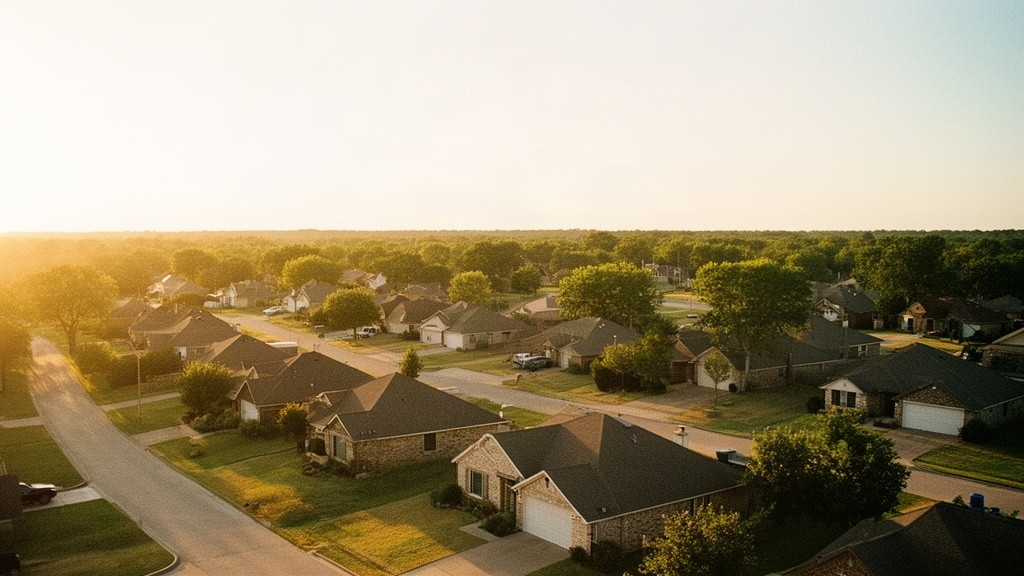
1. How Fort Worth Is Priced Right Now, in Plain Numbers
The Fort Worth median home price sits at approximately $310,000 as of September 2026. That figure is down modestly from the peak of around $340,000 reached in late 2022, and it has held relatively steady through the first three quarters of 2026 after a period of gradual correction. Buyers who were waiting for a dramatic crash have largely found that Fort Worth has absorbed higher interest rates better than many comparable metros, partly because its base prices never reached the extremes seen in Austin or coastal markets.
Inventory has loosened compared to 2021 and 2022, but Fort Worth is not a buyer's market in the traditional sense. Active listings are running at roughly 2.5 to 3 months of supply citywide as of this month, which still tilts conditions toward sellers on well-priced homes. Overpriced listings, on the other hand, are sitting longer, sometimes 60 to 90 days, and that gap between correctly priced and aspirationally priced homes is wider than it has been in several years.
What the Median Tells You and What It Hides
The citywide median is a starting point, not a destination. Fort Worth spans more than 350 square miles, and the price spread between a 1970s ranch-style home in Wedgwood and a new build in Walsh or Presidio Village can be $200,000 or more. Relying on the median without understanding where inside the city a property sits will lead to misaligned expectations on both the buying and selling side.
A more useful exercise is to look at price per square foot by zip code. In the 76107 zip code, which covers the Cultural District and surrounding streets, price per square foot has been running between $175 and $220 for updated homes. In far west zip codes like 76126 or the Aledo area just outside the city limits, that same metric can drop to $140 to $165 for comparable construction quality, reflecting the longer commute and newer subdivision character of those areas.
Price Per Square Foot Across the City
Here is a working reference for September 2026, based on closed sales data across Fort Worth's major corridors. Tanglewood and Rivercrest, which contain some of the city's largest lots and most substantial older homes near the Trinity River, regularly trade above $250 per square foot for renovated properties. TCU and Westcliff, with their mix of 1940s through 1960s bungalows and cottages, have been closing between $160 and $200 per square foot depending on condition and lot size.
New construction in master-planned communities like Walsh Ranch typically prices between $155 and $185 per square foot for production builds, though that figure rises with upgrades. Understanding these ranges lets buyers quickly filter whether a listing is priced at market, above it, or below it, without waiting for an agent to run a full comparative market analysis.
2. Neighborhood Characteristics Worth Understanding Before You Decide
Fort Worth's neighborhoods are defined by era of construction, lot configuration, street layout, and proximity to employment and transit corridors. Each of those factors affects both the day-to-day experience of living there and the long-term price trajectory of the home. Agents who refer their own clients to a real estate market guide on prices, neighborhoods and timing always emphasize understanding the physical character of an area before falling in love with a specific listing.
Inner Loop Areas: Older Stock, Walkable Streets
The neighborhoods closest to downtown Fort Worth, including the Near Southside, Fairmount, and the Magnolia Avenue corridor, contain housing built primarily between 1910 and 1960. Lot sizes in Fairmount typically run 50 by 150 feet, and the homes range from 1,100 to 2,200 square feet. Many have been renovated and command prices between $280,000 and $450,000 depending on finish level and exact block.
The Near Southside Medical District sits adjacent to this corridor, with Texas Health Harris Methodist and Cook Children's Medical Center both within a short drive. That proximity to one of Fort Worth's largest employment clusters has kept demand for inner-loop homes consistent even as outer areas have seen more price softening. Buyers who want a shorter commute to downtown or the medical district often prioritize these zip codes specifically.
Far West and Southwest Corridors: Newer Construction and Master Plans
West Fort Worth along the I-30 and Chapin Road corridors has seen significant master-planned development over the past decade. Walsh Ranch, which straddles the Parker County line west of the city, offers homes from roughly $380,000 to over $700,000 with HOA amenities that include fiber internet, trails, pools, and an onsite school campus. Presidio Village, positioned slightly further into Tarrant County's western edge, offers a similar master-planned format at a slightly lower entry price.
The tradeoff in these communities is commute time. From Walsh Ranch to downtown Fort Worth, the drive runs approximately 30 to 40 minutes in typical morning traffic, and closer to 50 minutes during peak congestion on I-30. For context on what that commute actually looks like day to day, the commute guide from Aledo and far west Fort Worth into downtown on this site walks through the specific routes and timing in detail.
North Fort Worth and Alliance Corridor
The Alliance area in north Fort Worth has evolved from a purely industrial and logistics corridor into a mixed residential and commercial zone. Neighborhoods like Heritage, Seventeen Lakes, and Presidio West sit within a short drive of the Alliance Town Center retail hub and the Alliance Airport employment cluster, which includes major distribution and manufacturing operations.
Home prices in north Fort Worth's newer subdivisions generally range from $290,000 to $480,000 for production builds on lots between 5,500 and 8,500 square feet. The area has attracted significant builder activity through 2026, with multiple communities still in active development phases. For a detailed look at what is currently under construction across the city, the new residential developments guide for Fort Worth in 2026 covers the active projects by area.
3. Timing the Fort Worth Market: When to Buy and When to Sell
Timing in Fort Worth follows a predictable seasonal pattern, but 2026 has added a layer of rate sensitivity that changes the calculation. Understanding both the seasonal cycle and the current rate environment gives buyers and sellers a meaningful edge over those who act without that context.
The Seasonal Pattern That Repeats Every Year
Fort Worth's busiest listing period runs from mid-March through the end of June. New listings peak in April and May, and the highest number of competing offers on desirable homes occurs during those two months. Sellers who list in that window have historically received offers closest to or above asking price, with shorter days on market.
July and August see a noticeable slowdown driven by the Texas heat and the school-year transition. September, where the market sits right now, is a transitional month: buyer traffic picks back up after Labor Day, but the sense of urgency that defined spring is absent. That dynamic is useful for buyers because sellers who listed in summer and did not sell are often more open to price reductions and concessions in September and October than they were in May.
How Rate Movements Have Changed the Calculus in 2026
Mortgage rates have remained elevated relative to the 2020 and 2021 lows, and that has compressed buyer purchasing power across the board. A buyer qualifying for $350,000 at a 3.5% rate in 2021 qualifies for roughly $270,000 to $290,000 at current rates, depending on the specific product and lender. That gap has pushed more buyers toward new construction with builder-subsidized rate buydowns, which is one reason builders in the Alliance corridor and Walsh area have maintained strong sales volume through 2026.
For sellers, the implication is that overpricing by even 3 to 5 percent above market value results in a listing that sits while buyers, already stretched by rates, pass it over for something more accurately priced. The Fort Worth home selling guide covering pricing and timeline on this site goes deeper into how to price correctly from day one rather than chasing the market down through reductions.
4. What Agents Tell Their Own Clients About Making an Offer
The offer strategy that worked in 2021 does not work in September 2026, and the one that will work in spring 2027 may be different again. What stays constant is the framework: read the listing's data before you write the number, understand what the seller actually needs, and structure the offer around their priorities, not just price.
Reading Days on Market Before You Bid
Days on market is one of the most useful data points available to a buyer before writing an offer. In Fort Worth right now, a home that has been on the market for fewer than 10 days is still in its competitive window, and offering below list price without a strong justification risks losing the deal. A home that has been listed for 30 or more days is a different conversation entirely.
Homes sitting 45 days or longer in the current market have almost always been overpriced at launch. By that point, sellers have typically had at least one price reduction conversation with their agent, and a buyer who comes in 3 to 6 percent below the current (already reduced) list price has a real chance of getting to contract. The key is to anchor the offer to comparable closed sales, not to the original list price or the seller's emotional attachment to a number.
Negotiating Concessions Without Losing the Deal
Seller concessions, where the seller contributes toward the buyer's closing costs or a rate buydown, have become a standard part of Fort Worth transactions in 2026. In the $300,000 to $400,000 price range, concessions of $5,000 to $10,000 are common on homes that have been on the market more than three weeks. On new construction, builders are frequently offering $15,000 to $25,000 in concessions structured as rate buydowns, which can reduce a buyer's effective rate by a full percentage point or more for the first two years.
The risk in asking for concessions is asking for too much at once. Requesting a price reduction, seller-paid closing costs, and a home warranty simultaneously on a listing that has only been on the market two weeks will often cause a seller to reject the offer entirely rather than counter. Prioritizing the concession that has the most financial impact, usually the rate buydown or closing cost credit, and leaving other items for post-inspection negotiation is a more effective sequence.
5. The Bigger Picture: Fort Worth Growth and What It Means for Your Decision
Fort Worth is the fastest-growing large city in the United States by population, and that growth is reshaping where value concentrates across the metro. Understanding the infrastructure and employer investments driving that growth helps buyers and sellers think beyond the current transaction and consider what a neighborhood's trajectory looks like over the next five to ten years.
Why the Westside and Alliance Areas Keep Attracting Builders
The westside growth story is tied to available land, Parker County's lower tax rates, and the appeal of newer construction at prices below what comparable square footage costs closer to downtown. Walsh Ranch alone is planned for over 3,800 homes at full build-out, with a town center, additional school campuses, and expanded trail networks still in development phases through the late 2020s.
The Alliance corridor's growth is employer-driven. Amazon, Sysco, and multiple logistics and manufacturing operations have expanded their footprints near Alliance Airport, creating a large local employment base that supports demand for housing in north Fort Worth and southern Denton County. That employer concentration is one reason residential development in that corridor has continued even as other parts of the DFW market have slowed. A broader look at how Fort Worth's expansion is redrawing the regional housing map is covered in this HousingWire analysis of Fort Worth's Westoplex growth.
How Infrastructure Investment Shapes Long-Term Value
Fort Worth's infrastructure investments over the past decade have included the Panther Island project along the Trinity River, which is redesigning several miles of waterfront north of downtown into a mixed-use district with flood control, trails, and residential development potential. That project has moved slowly, but the parcels immediately adjacent to the planned development have already seen speculative interest from investors and developers.
The TEXRail commuter line connecting downtown Fort Worth to DFW International Airport through North Richland Hills and Grapevine continues to influence residential demand along its corridor. Buyers who commute frequently to the airport or to employers in the mid-cities area have found that proximity to a TEXRail station meaningfully reduces the friction of that commute, and listings near stations in Richland Hills and North Richland Hills have reflected that preference in their pricing.
For buyers considering an investment angle alongside their primary purchase, the Fort Worth investment property guide on this site covers how to evaluate rental yield and appreciation potential across the city's different corridors.
Taken together, the Fort Worth market in September 2026 rewards buyers and sellers who come in with specific, current knowledge rather than general assumptions. The price ranges are real, the neighborhood differences are meaningful, and the timing windows are predictable enough to plan around. That is exactly what this Fort Worth, Texas real estate market guide on prices, neighborhoods and timing is designed to give you.
FAQ
What is the current median home price in Fort Worth, Texas in September 2026?
The Fort Worth median home price is approximately $310,000 as of September 2026, which is down from the peak of around $340,000 reached in late 2022. Prices have stabilized through 2026 rather than continuing to fall sharply, partly because Fort Worth's base prices never reached the extremes of other major Texas metros. The range across the city is wide: inner-loop neighborhoods like Fairmount and the Cultural District area can push $400,000 to $500,000 for updated homes, while newer production builds in north Fort Worth or far west corridors start closer to $290,000 to $320,000. Price per square foot is a more useful metric than median when comparing specific neighborhoods or listing types.
Is right now a good time to buy a home in Fort Worth, Texas?
September 2026 sits in a window that tends to favor buyers more than the spring peak season does. Sellers who listed in summer and did not sell are more likely to accept price reductions or concessions in September and October, and competition from other buyers is lower than it was in April and May. The main headwind is mortgage rates, which remain elevated and have compressed purchasing power compared to 2020 and 2021. Buyers who are rate-sensitive should ask their lender specifically about builder-subsidized buydowns on new construction, which have been a meaningful tool in the Fort Worth market through 2026. The decision ultimately depends on your financial readiness, your intended hold period, and which part of the city you are targeting.
How do I research schools in Fort Worth neighborhoods?
The Texas Education Agency publishes detailed campus-level data at tea.texas.gov, including accountability ratings, enrollment figures, and program offerings for every public school in Fort Worth ISD and surrounding districts like Keller, Eagle Mountain-Saginaw, and Aledo ISD. You can also contact individual campuses directly to ask about programs, class sizes, and enrollment timelines. For a walkthrough of how to use that data specifically in the context of Fort Worth neighborhoods, the Fort Worth ISD schools research guide on this site explains the process step by step.