
← Back to Blog
Market Trends
What New Construction Developments Are Currently Being Built in and Around Raleigh NC in 2026
By Shalon Leonard
September 12, 2026 · 11 min read
Raleigh is one of the most active construction markets on the East Coast right now, and if you are buying, selling, or relocating in 2026, knowing what is being built, where, and at what price point can change your entire strategy. This guide covers the major new construction developments currently underway in and around Raleigh, NC in 2026, from downtown mixed-use towers to master-planned communities stretching into Wake County's outer ring.
1. Why So Much Is Being Built in Raleigh Right Now
Raleigh is adding more new construction than almost any other mid-sized city in the country. The Research Triangle region has absorbed tens of thousands of new residents over the past several years, driven by corporate relocations, university expansion at NC State and Duke, and a tech and life sciences sector that keeps pulling in workers from higher-cost metros. That sustained demand has kept builders active even as mortgage rates remained elevated through much of 2025 and into 2026.
Population Growth Is Driving Demand
Wake County added roughly 60,000 to 70,000 residents between 2022 and 2025, and projections for 2026 show no sign of that pace slowing. The City of Raleigh's own housing office has tracked the need for tens of thousands of additional units across all income levels. In spring 2026, the city announced that hundreds of new homes were in various stages of permitting and delivery, spanning affordable workforce housing near downtown to large detached single-family subdivisions along the US-401 and US-64 corridors. You can read the city's own summary of that pipeline on RaleighNC.gov.
Permitting Activity in 2026
Raleigh's Development Services department has been processing residential permits at a rate that consistently puts Wake County among the top five counties in North Carolina for new housing starts. As of September 2026, single-family permits are running ahead of the same period in 2025, while multifamily permits, particularly for apartment and condo towers in the urban core, remain strong. This dual activity, detached homes in the suburbs and dense mixed-use projects closer to downtown, is what makes Raleigh's construction market unusually broad right now.
2. Downtown and Midtown Raleigh: Mixed-Use and Multifamily Projects
The most visible new construction in Raleigh right now is concentrated in two areas: the downtown core along Fayetteville Street and the Warehouse District, and the North Hills midtown corridor near Six Forks Road and I-440. Both areas are seeing high-rise and mid-rise development that combines residential units with retail, office, and hotel space, a format that Raleigh's zoning changes over the past several years have actively encouraged.
Kane Realty and the North Hills Expansion
Kane Realty's North Hills development is one of the largest mixed-use projects in the Southeast, and it continues to expand in 2026. The company has been adding residential towers, boutique hotel space, and street-level retail in the midtown area for several years. In 2026, additional phases are under construction that will bring more for-sale condominiums and rental apartments to the Six Forks corridor, with units ranging from the upper $300,000s for smaller condos to well over $1 million for penthouse-level residences. The walkable, mixed-use character of North Hills, with restaurants, green space, and office towers within steps of residential buildings, continues to attract buyers relocating from denser urban markets.
If you want a deeper look at how the North Hills area functions day to day, the commute distances, and what the existing housing stock looks like, the Midtown Raleigh real estate market guide on this site covers that in detail.
Downtown Core Towers and the Smoky Hollow District
The Smoky Hollow development, a multi-phase mixed-use project near Peace Street and Person Street in downtown Raleigh, is one of the most talked-about urban construction projects in the city. Phase two and three components are currently under construction as of September 2026, adding residential units above ground-floor retail and restaurant space. The development sits within walking distance of Seaboard Station, the Raleigh Union Station transit hub, and the growing Morgan Street food hall corridor. Residential units in this district are skewing toward rentals and for-sale condos priced from the mid $400,000s into the $700,000s depending on floor and finish level.
Beyond Smoky Hollow, several other high-rise residential towers are under construction or in final permitting stages along Hillsborough Street, near the NC State campus, and in the South Blount Street corridor near the City Market. For a broader overview of what these developments mean for Raleigh's overall price trends, the average home price guide for September 2026 breaks down what buyers are paying across different parts of the city right now.
6AM City's Raleigh coverage has also identified several other key developments to watch this year, including projects near the Dix Park greenway and along the South Saunders Street corridor. Their roundup of five major Raleigh developments to watch in 2026 is worth bookmarking if you want to track specific project timelines.
3. New Construction Developments in Raleigh's Suburbs and Surrounding Towns
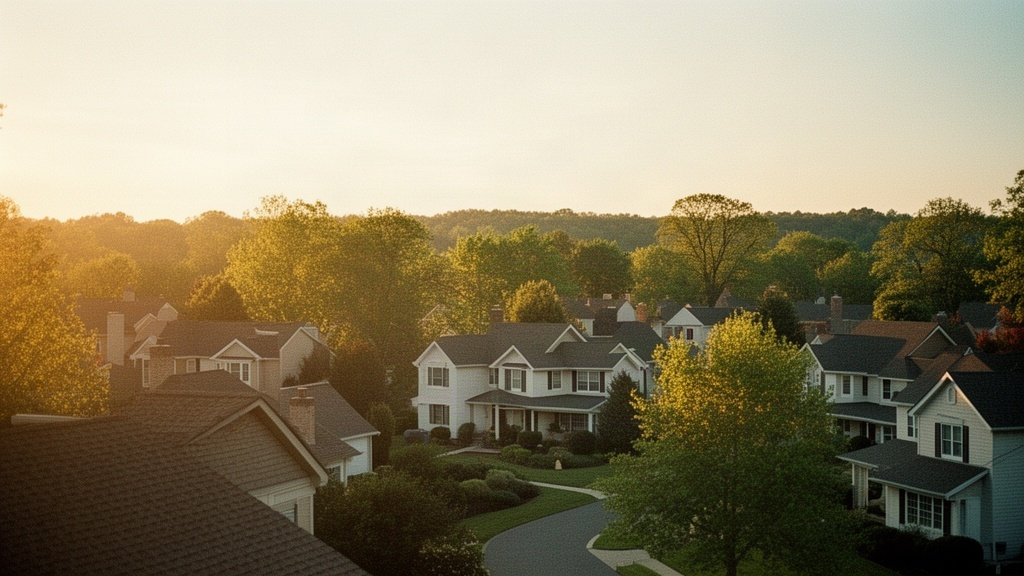
The bulk of new single-family construction in 2026 is happening outside Raleigh's city limits, in the towns that ring Wake County and the adjacent Johnston County corridor. Builders including D.R. Horton, Lennar, Toll Brothers, Smith Douglas Homes, and several regional custom builders are all actively delivering homes in communities from 10 to 40 miles from downtown Raleigh. Commute times and distances vary significantly depending on which community you are considering, so it is worth mapping your specific workplace before settling on a location.
Fuquay-Varina and Angier Corridors
Fuquay-Varina, located about 20 miles southwest of downtown Raleigh via US-401, is one of the most active new construction towns in the entire Triangle region right now. Multiple large subdivisions are under active construction in and around Fuquay-Varina's town limits in September 2026. Communities like Honeycutt Farm, Bexley, and newer phases of existing master-planned developments are delivering detached single-family homes on lots ranging from 0.15 acres to over half an acre. Base prices for new builds in Fuquay-Varina currently start around $330,000 for a three-bedroom home and climb past $600,000 for larger homes with upgraded finishes and bigger lots.
Angier, about 10 miles further south from Fuquay-Varina, is also seeing new subdivision activity from builders looking for more affordable land. The commute from Angier to Raleigh's downtown or to the Research Triangle Park area runs 40 to 50 minutes in normal traffic conditions, so buyers considering this corridor should plan around that drive. New construction base prices in Angier are generally lower than Fuquay-Varina, often starting in the high $200,000s to low $300,000s for entry-level plans.
Clayton and Johnston County Growth
Clayton, located in Johnston County about 20 miles southeast of Raleigh via US-70 or I-40, has become one of the most active new construction markets in the greater Raleigh area. Large master-planned communities like Flowers Plantation, which spans thousands of acres and includes multiple builder offerings, continue to add new phases and new home designs in 2026. Flowers Plantation includes a mix of townhomes, detached homes, and larger estate-style lots, with prices ranging from the low $300,000s for attached townhomes to over $700,000 for custom-style builds on larger parcels. The commute from Clayton to downtown Raleigh is roughly 30 to 40 minutes depending on traffic and route.
Other Johnston County communities including Selma, Smithfield, and Four Oaks are also seeing smaller-scale new construction activity, though the volume is lower than in Clayton. Buyers drawn to Johnston County typically cite lower land costs, larger lot sizes, and a more rural character compared to Wake County's inner suburbs.
Garner, Knightdale, and Wendell
Garner sits directly south of Raleigh, with parts of the town bordering Raleigh's city limits, and it continues to see steady new construction in 2026. Subdivisions along Timber Drive, Vandora Springs Road, and near the White Oak area are delivering new homes priced generally from the mid $300,000s to the upper $500,000s. Garner's proximity to downtown Raleigh, typically a 15 to 25 minute drive depending on the specific neighborhood, makes it one of the closer suburban options for buyers who want new construction without a long commute.
Knightdale and Wendell, both located east of Raleigh along the US-64 corridor, are also active new construction markets. Knightdale Station, a master-planned community built around a central park and greenway system, continues to add phases in 2026. Wendell Falls, one of the largest master-planned communities in the Triangle, is a particularly significant development: it spans over 1,100 acres and is designed to eventually include thousands of homes, retail, and community amenities. As of September 2026, Wendell Falls has multiple builders actively constructing homes, with prices ranging from the upper $200,000s for townhomes to over $600,000 for larger detached homes on premium lots. The drive from Wendell to downtown Raleigh is roughly 25 to 35 minutes via US-64.
4. What New Construction Homes Cost in and Around Raleigh in 2026
New construction pricing in the Raleigh area in 2026 spans a wider range than many buyers expect, from workforce townhomes in the mid $200,000s to custom estate homes well above $1 million. Where a home falls in that range depends heavily on location, builder tier, lot size, and how many structural upgrades the buyer selects at the design center.
Entry-Level and Mid-Range New Builds
Entry-level new construction, meaning attached townhomes and smaller detached homes from production builders, currently starts around $270,000 to $310,000 in the outer suburbs like Angier, Selma, and parts of Johnston County. In closer-in suburbs like Garner, Knightdale, and Fuquay-Varina, that same builder tier is pricing base homes from roughly $330,000 to $400,000. Mid-range new construction, which typically means a 2,000 to 3,000 square foot detached home with a two-car garage and standard builder finishes, runs from about $400,000 to $580,000 across most of Wake County's suburban towns in September 2026.
Luxury and Semi-Custom Construction
The upper tier of new construction in the Raleigh market includes semi-custom and custom builds in established neighborhoods like North Raleigh, the 540 corridor near Wakefield, and parts of Cary and Apex. Builders like Toll Brothers, Homes by Dickerson, and several local custom builders are delivering homes in the $700,000 to $1.5 million range in these areas. In the urban core, new construction condos at the top of the market in North Hills and downtown Raleigh can exceed $1 million for larger units with premium finishes and views.
5. What Buyers Should Know Before Purchasing New Construction in Raleigh
Buying new construction in Raleigh is a fundamentally different process from buying a resale home, and the differences can cost buyers thousands of dollars if they are not prepared. The good news is that the Raleigh market in 2026 has enough active inventory across multiple builder communities that buyers generally have real options and some negotiating room, particularly on inventory homes that are already completed or nearly finished.
Builder Contracts Are Not Like Resale Contracts
Every major builder in Raleigh uses their own purchase contract, written by their own attorneys, and those contracts are designed to protect the builder first. They typically limit the buyer's ability to terminate without losing their earnest money, restrict what inspections you can do and when, and include clauses that allow the builder to extend delivery timelines without penalty. Having a buyer's agent review the contract before you sign is not optional; it is the single most important step you can take. The builder's on-site sales agent works for the builder, not for you.
Incentives, Lot Premiums, and Upgrade Traps
Builders in Raleigh are currently offering incentives that range from closing cost assistance to free upgrade packages, particularly on completed inventory homes they want to move before year-end. These incentives are real, but they often come with a requirement to use the builder's preferred lender. That preferred lender may or may not offer the most competitive rate, so comparing the total cost of the loan against an outside lender is worth the extra step. Lot premiums for corner lots, cul-de-sac positions, or backing to open space can add $15,000 to $80,000 to the base price depending on the community. Design center upgrades, things like hardwood floors, upgraded countertops, and extended tile, can easily add $50,000 to $150,000 to the final purchase price if you are not disciplined about selections.
Timing and Delivery Realities
Build times for new construction in Raleigh currently run between six and fourteen months depending on the builder, the home plan, and the availability of subcontractors and materials. Supply chain disruptions have eased compared to 2022 and 2023, but skilled labor shortages in the Triangle continue to cause delays for some builders. If you need to be in a home by a specific date, an inventory home that is already built or nearly complete is a much safer choice than signing a contract on a to-be-built home. Buyers who are also selling a current home should plan their timelines carefully to avoid being caught between a delayed build and a closed sale.
For a complete picture of what the buying process looks like in Raleigh from offer to closing, including timelines and costs that apply whether you are buying new construction or resale, the Raleigh buyer's guide on this site covers the full process step by step.
FAQ
Are builders currently offering discounts or incentives on new construction in Raleigh in 2026?
Yes, several production builders in the Raleigh area are actively offering incentives as of September 2026, particularly on completed inventory homes. Common incentives include closing cost contributions of $10,000 to $20,000, free appliance packages, and rate buydown programs through the builder's preferred lender. These incentives vary by community and can change month to month, so it is worth visiting model homes or working with a buyer's agent who tracks builder programs across multiple communities. The incentives tend to be strongest at the end of a builder's fiscal quarter or year, when sales teams have targets to hit.
Can I use my own real estate agent when buying new construction in Raleigh?
Yes, and you should. Builders in the Raleigh market allow and expect buyers to be represented by their own agent, and in most cases the builder pays the buyer's agent commission so there is no additional cost to you as the buyer. The builder's on-site sales representative is employed by the builder and represents the builder's interests. Having your own agent means someone is reviewing the contract on your behalf, negotiating on your behalf, and helping you understand what the builder's incentives actually cost you in terms of rate or terms. Register your agent on your first visit to the model home, as builders typically require the agent to be present or registered at the first visit to honor the commission agreement.
What is the difference between a spec home and a to-be-built home in Raleigh's new construction market?
A spec home, sometimes called an inventory home, is a home the builder has already started or completed without a specific buyer under contract. These homes are available for faster closing, often within 30 to 60 days, but the finishes and floor plan are already chosen by the builder. A to-be-built home is one where you sign a contract first and then work with the builder's design center to select finishes and structural options before construction begins. To-be-built homes offer more personalization but come with longer timelines, typically six to fourteen months in the current Raleigh market, and carry more risk of delays. Buyers with firm move-in deadlines or those who need to sell a current home first should weigh these tradeoffs carefully before signing.