
← Back to Blog
Market Trends
Raleigh, North Carolina Is Known for Its Real Estate Market: A Guide to Prices, Neighborhoods and Timing
By Shalon Leonard
BIC, SFR®, RENE, ABR, NACA, P&C Insurance, Notary Public
September 25, 2026 · 12 min read
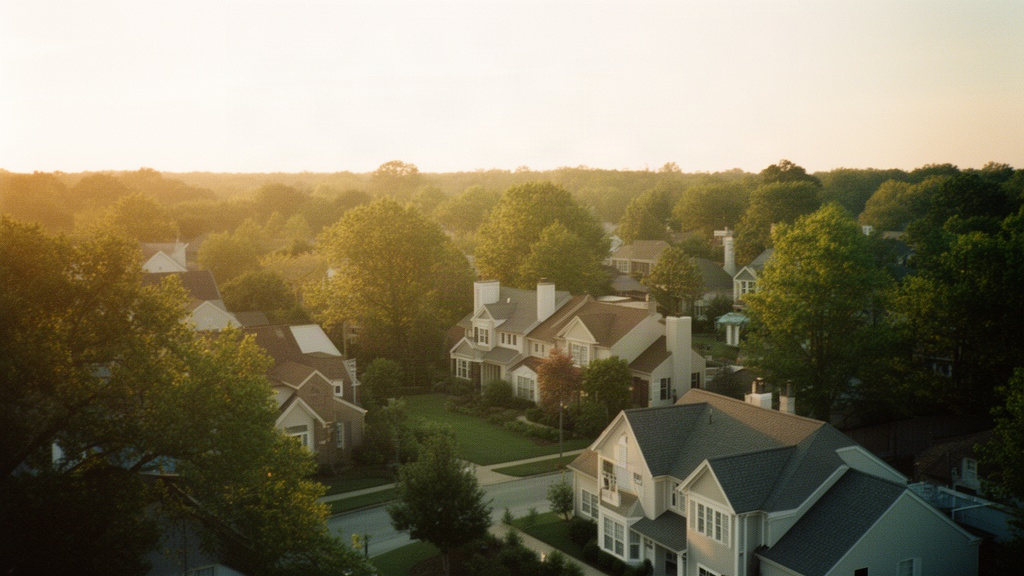
Raleigh, North Carolina is known for one of the most active real estate markets on the East Coast, drawing buyers, sellers, and relocating households from across the country. Whether you are comparing price points across different parts of the city, trying to understand which neighborhoods offer what kind of housing stock, or figuring out whether now is the right time to make a move, this guide covers the ground-level details that actually help you decide. Here is what the Raleigh market looks like in September 2026 and what you need to know before your next step.
1. What Makes Raleigh's Real Estate Market Distinctive
Raleigh, North Carolina is known for a real estate market that has remained resilient through national slowdowns while continuing to attract significant employer investment. The Research Triangle, anchored by Raleigh, Durham, and Chapel Hill, houses major employers in life sciences, technology, and higher education, including NC State University, which sits directly in the city. That employment base creates consistent demand for housing across price points.
A Market Shaped by Growth and Infrastructure
Raleigh's population has grown steadily for over a decade, and that growth has not let up in 2026. Wake County now exceeds 1.2 million residents, and Raleigh itself is the second-largest city in North Carolina. The city's infrastructure has expanded to match: the Outer Loop (I-540) extension completed its western segment in recent years, opening up areas like Morrisville, Cary, and western Wake County to faster commutes. GoRaleigh bus rapid transit lines connect key corridors. New mixed-use developments continue to reshape formerly industrial stretches along South Saunders Street and near the Dix Park greenway.
The National Association of Realtors has identified Raleigh among its clearest opportunity markets for 2026. You can read their full analysis in the NAR Housing Hot Spots report, which highlights Raleigh alongside a short list of metros where demand fundamentals remain strong. That recognition reflects what local buyers and sellers already experience: inventory moves, and well-priced homes rarely sit.
What the Numbers Show Right Now
As of September 2026, the Raleigh metro median home price sits in the range of $420,000 to $435,000 for single-family homes, with condos and townhomes tracking lower depending on location and size. Days on market for correctly priced listings in established neighborhoods typically run between 18 and 30 days. Homes that are overpriced relative to recent comparable sales are sitting longer, sometimes 60 days or more, which is giving buyers more room to negotiate in certain pockets of the market.
North Carolina's overall housing costs remain below the national average, which continues to make the state attractive to relocating buyers from higher-cost metros. Raleigh sits above the state median but still offers meaningful value compared to comparable cities in the Mid-Atlantic and Northeast. For buyers coming from markets like Northern Virginia, New Jersey, or the Boston suburbs, the price-per-square-foot difference can be substantial.
2. Raleigh Home Prices: What to Expect Across the City
Raleigh home prices vary significantly depending on location, lot size, age of the home, and proximity to employment corridors and parks. There is no single number that describes the whole city. Understanding the price spread across different parts of Raleigh is one of the most useful things a buyer or seller can do before entering the market.
Price Ranges by Area
Inside the Beltline (ITB), which refers to the area enclosed by I-440, prices for single-family homes frequently start in the mid-$500,000s and move well above $1 million for larger lots or renovated homes on streets like Oberlin Road, Yadkin Drive, or near Mordecai Historic Park. The combination of mature tree canopy, walkable distances to Cameron Village and Five Points, and lot sizes that rarely appear elsewhere in the city drives demand in this corridor.
North Raleigh, generally defined as the area north of I-540, offers a wider range. Established subdivisions near Falls Lake, Leesville Road, and the Strickland Road corridor typically price from the low $400,000s to the mid-$600,000s for four-bedroom homes with two-car garages. Newer construction in master-planned communities near Brier Creek and the 540 corridor starts in the $380,000s for townhomes and reaches into the $700,000s for larger single-family homes on premium lots. For a detailed look at that corridor, the Brier Creek neighborhood guide breaks down the specific pricing and housing stock in that part of the city.
East and Southeast Raleigh, including areas near New Bern Avenue and Garner Road, offer some of the most accessible entry-level price points in the city, with single-family homes still available in the $280,000 to $380,000 range. These areas have seen significant new investment in infrastructure and commercial development over the past several years, and buyers who want to be within 15 minutes of downtown Raleigh without paying Inside the Beltline prices often look here.
What Drives Price Differences Inside Raleigh
Lot size is one of the clearest price drivers inside Raleigh. Inside the Beltline, a quarter-acre lot is considered generous. In North Raleigh subdivisions built in the 1990s and early 2000s, lots of a third to half an acre are common. Newer construction on the outer edges of Wake County often trades lot size for finish quality, offering smaller lots with higher-end interior specifications.
Home age and renovation status also matter. A 1970s ranch on a large lot Inside the Beltline that has not been updated will price lower per square foot than a fully renovated craftsman two blocks away, even if the square footage is identical. Buyers who understand this distinction can find value in unrenovated homes if they are willing to take on updates. Sellers who have invested in kitchens, bathrooms, and mechanicals consistently see stronger per-square-foot returns.
3. Neighborhood Housing Stock: What Each Part of Raleigh Offers
Each section of Raleigh has a distinct physical character, shaped by when it was built, what builders were constructing at the time, and how the surrounding infrastructure developed. Knowing the difference helps buyers set realistic expectations and helps sellers understand who is likely to be drawn to their home.
Inside the Beltline and Midtown
Inside the Beltline is primarily a mix of mid-century ranches, colonial revivals, and cape cods built between the 1940s and 1980s, with a growing number of infill new construction homes on scraped lots. Neighborhoods like Hayes Barton, Budleigh, and Boylan Heights feature tree-lined streets, original hardwood floors, and lot sizes that allow for additions. Midtown Raleigh, centered around North Hills, blends older residential streets with a rapidly expanding mixed-use core that now includes high-rise condos, retail, and office towers along Six Forks Road.
The North Hills area in particular has transformed over the past decade into one of Raleigh's most walkable mixed-use corridors. Buyers considering condos or townhomes in that area will find a range of options from established buildings to newer high-rise construction. The North Hills neighborhood daily life guide covers what it is actually like to live there day to day.
North Raleigh and Brier Creek
North Raleigh's residential character is shaped by decades of subdivision development, with most housing stock dating from the late 1980s through the 2010s. You will find traditional two-story colonials, brick-front homes with formal dining rooms, and open-concept floor plans that became standard in the 2000s. Subdivision amenities like community pools, tennis courts, and greenway access are common. Brier Creek, near the intersection of I-540 and US-70, adds a layer of newer construction and proximity to RDU International Airport, which is roughly 10 to 15 minutes by car.
Buyers who want newer construction in North Raleigh have options ranging from attached townhomes in the low-to-mid $300,000s to detached single-family homes priced from the $400,000s into the $700,000s. For a full breakdown of what is available across North Raleigh's neighborhoods, the guide to homes for sale in North Raleigh covers pricing and expectations in detail.
East and Southeast Raleigh
East Raleigh includes a mix of post-war bungalows, 1960s and 1970s ranch homes, and newer infill construction on previously vacant lots. The Poole Road and New Bern Avenue corridors have seen commercial reinvestment, and the proximity to downtown Raleigh via US-64 and I-40 makes this section of the city accessible. Lot sizes here tend to be generous by Raleigh standards, with many properties sitting on a quarter to half an acre within a short drive of the city center.
Downtown and the Urban Core
Downtown Raleigh's residential market is almost entirely condos and a small number of townhomes, with very few detached single-family options. Buildings like the Edison, the Fairweather, and 400 West North offer units ranging from studios around $300,000 to full-floor penthouses well above $1 million. The Fayetteville Street corridor, Glenwood South, and the Warehouse District all sit within walking distance of major employers, the Duke Energy Center for the Performing Arts, and Dorothea Dix Park, which spans over 300 acres along the western edge of downtown.
4. Timing the Raleigh Market: When to Buy or Sell
Timing in Raleigh follows seasonal patterns that are real but not absolute. Understanding those patterns gives buyers and sellers a planning advantage, though the right time to move is ultimately shaped by personal circumstances as much as market conditions.
Seasonal Patterns in Raleigh
The Raleigh market typically sees its highest listing volume and buyer activity from March through June. Families with children in Wake County schools tend to time purchases to close before the school year begins in late August, which compresses the most competitive buying window into spring. July and August see a modest slowdown as that urgency passes. Fall, from September through November, brings a second wave of activity that is less competitive than spring but still active, particularly for buyers who missed out earlier in the year.
December and January are the slowest months for new listings, but motivated sellers who list in winter often price more sharply because they need to move. Buyers who are flexible on timing and willing to shop in the colder months sometimes find less competition and more room to negotiate, though inventory is thinner.
What September 2026 Looks Like for Buyers
Right now, in September 2026, buyers in Raleigh are seeing more inventory than they did during the peak competition years of 2021 and 2022. Days on market have stretched, and sellers who priced aspirationally in spring have in many cases reduced their asking prices. Mortgage rates remain a significant factor in monthly payment calculations, but buyers who are pre-approved and focused on correctly priced homes are finding they have time to conduct inspections and negotiate terms rather than waiving contingencies under pressure.
For buyers who want a full picture of whether conditions currently favor their side of the transaction, the analysis in this September 2026 buyers vs. sellers market breakdown goes into the specific indicators shaping the market this month.
What September 2026 Looks Like for Sellers
Sellers in September 2026 need to be more strategic about pricing than they did two or three years ago. Homes that are priced at or slightly below recent comparable sales are still moving within a few weeks. Homes priced above the market are sitting, and extended days on market can create a perception problem that makes subsequent price reductions less effective. Presentation matters more now: staging, professional photography, and addressing deferred maintenance before listing all contribute to stronger results.
The factors that separate top-performing listings from average ones in this market are worth understanding before you list. The guide on what sells homes fastest in Raleigh covers the specific pricing and presentation strategies that are producing results in 2026.
5. Practical Steps Whether You Are Buying, Selling, or Relocating
Knowing the market is useful; knowing what to do with that information is what actually moves you forward. Here is how to apply what you have read depending on your situation.
For Buyers
Start by getting pre-approved so you know exactly which price bands you are working within. Then map the Raleigh areas where your budget and priorities overlap. If you want a larger lot and newer construction, North Raleigh and Brier Creek will likely produce more options than Inside the Beltline. If walkability and architectural character matter most, the ITB neighborhoods or midtown corridors deserve attention even if the price per square foot is higher. Budget for closing costs, which in Wake County typically run between 2% and 3% of the purchase price on top of your down payment. The full breakdown of what to expect is in the Raleigh closing costs guide for buyers.
Do not skip the inspection, even in a competitive situation. Raleigh's older housing stock Inside the Beltline frequently has aging HVAC systems, original cast-iron plumbing, or crawl space moisture issues that are not visible in listing photos. A thorough inspection protects you from inheriting problems that would cost tens of thousands of dollars to correct.
For Sellers
Price your home based on what has actually sold in the past 60 to 90 days, not what is currently listed. Active listings are your competition; closed sales are your benchmark. In September 2026, the gap between aspirational asking prices and actual sale prices has widened in some Raleigh submarkets, so relying on list prices of nearby homes to set your own can lead to overpricing. Work with an agent who pulls closed comparable sales and adjusts for lot size, condition, and location rather than giving you a number designed to win your listing.
Prepare the home before it goes live. Fresh interior paint in neutral tones, cleaned gutters, a pressure-washed driveway, and decluttered rooms all photograph better and show better. Buyers in this market have more options than they did in 2021, which means they are comparing your home against others rather than bidding without seeing the interior. First impressions at the online listing stage determine whether a buyer schedules a showing at all.
For People Relocating to Raleigh
Relocating buyers often underestimate how much Raleigh's geography shapes the day-to-day experience of living here. The city is large and spread out. Being on the wrong side of I-440 from your employer can add 20 to 40 minutes to a daily commute during peak hours. Before you narrow your search to specific neighborhoods, map your commute from each area you are considering at 8 a.m. on a weekday using a real navigation app, not the posted speed limit.
Research public school assignments directly through the Wake County Public School System's website, which allows you to enter an address and see the assigned schools. School assignments are address-specific and can change, so verify them through the district rather than relying on listing data. For other personal research questions about specific areas, the state's own data portals and local municipal sites are the right starting point. An agent who knows Raleigh well can help you understand the physical character of each area without steering you toward or away from any particular neighborhood.
Raleigh, North Carolina is known for a real estate market that rewards preparation. Buyers who understand the price landscape, sellers who price and present strategically, and relocating households who research commutes and amenities before committing all tend to have better outcomes than those who move quickly without that groundwork. The market here is active and competitive enough that the difference between a good decision and a costly one often comes down to local knowledge.
FAQ
What is the current median home price in Raleigh, North Carolina?
As of September 2026, the median sale price for single-family homes in Raleigh is in the range of $420,000 to $435,000, though this varies significantly by location within the city. Inside the Beltline, prices frequently start in the mid-$500,000s and move higher. East and Southeast Raleigh offer more accessible price points, with single-family homes available in the $280,000 to $380,000 range. Condos and townhomes in urban corridors like downtown and midtown span from the low $300,000s to well above $1 million for premium units. Understanding the price spread across Raleigh's different areas is essential before setting a budget or a list price.
Is now a good time to buy a home in Raleigh, NC?
In September 2026, buyers in Raleigh have more leverage than they did during the peak competition years of 2021 and 2022. Inventory has increased, days on market have lengthened for overpriced homes, and sellers have shown more willingness to negotiate on price and terms. Mortgage rates remain a factor in monthly payment planning, so getting pre-approved and understanding your total cost of ownership is the right starting point. The best time to buy is when your finances, life circumstances, and the available inventory align, and right now the market conditions are more balanced than they have been in several years.
Which part of Raleigh has the most affordable housing?
East and Southeast Raleigh currently offer some of the most accessible price points within the city limits, with single-family homes available in the $280,000 to $380,000 range and proximity to downtown via I-40 and US-64. North Raleigh offers a wider spread, with townhomes starting in the low-to-mid $300,000s and detached homes ranging from the $400,000s into the $600,000s depending on size and location. Affordability is relative to what you are buying: a smaller condo in midtown Raleigh can be priced similarly to a larger single-family home in East Raleigh. Working with a local agent who knows the current inventory across all these areas helps you find the best match for your budget and priorities.