← Back to Blog
Buying
Luxury Home Market in Magnolia, Texas: What Buyers Should Know
By Shanna Holt
September 4, 2026 · 11 min read
The luxury home market in Magnolia, Texas is drawing serious attention from buyers across the Houston metro and beyond. Acreage estates, custom builds on wooded lots, and high-end homes inside gated communities are all part of what this market offers, and the price points are often more accessible than comparable properties in other Texas metros. This guide covers what buyers should know before stepping into that segment, from price thresholds and property types to negotiation dynamics and what to watch out for.
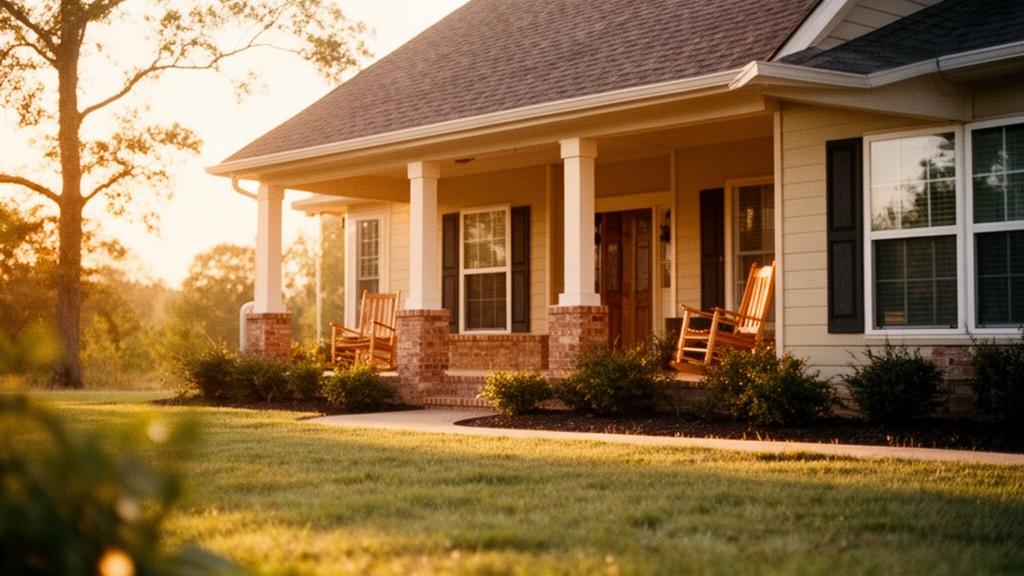
1. How Magnolia Defines Luxury Real Estate
In Magnolia, the luxury segment generally begins around $700,000 and extends well past $2 million. That lower boundary reflects local market conditions as of September 2026: the overall median home price in Magnolia sits well below that figure, so properties in the $700,000-plus range represent a distinct tier with different features, lot sizes, and buyer expectations. For context on where the broader market sits, see this overview of the average home price in Magnolia, Texas right now.
Where the Price Threshold Sits
Most real estate professionals working in the Magnolia area treat $700,000 as the entry point for the luxury conversation, though the most active luxury price band runs from roughly $800,000 to $1.4 million. Above $1.5 million, the inventory thins considerably and properties tend to sit on larger tracts, often five acres or more, with custom construction and features like private ponds, horse facilities, or resort-style pools. Texas as a whole has seen a notable rise in million-dollar-plus transactions: according to Texas Realtors, more homes in the state sold for $1 million or more than ever before in recent years, and the Montgomery County market, which includes Magnolia, has participated in that trend.
What the Properties Actually Look Like
Magnolia's luxury homes span two distinct physical types. The first is the large-lot custom estate, typically on one to twenty acres of land with mature pine and hardwood trees, a private well, a septic system, and a home built to the owner's specifications with features like four-car garages, outdoor kitchens, and dedicated home offices or media rooms. The second type is the high-end home inside a planned community or gated subdivision, where the lot sizes are smaller but the amenity packages, architectural standards, and community infrastructure are more controlled.
Both types are genuinely available in Magnolia, and neither is a substitute for the other. Buyers who want privacy, land, and the ability to keep animals or run a hobby farm tend toward the acreage route. Buyers who want curated landscaping, a clubhouse, and a gated entry tend toward the planned community route. Knowing which category fits your lifestyle before you start touring will save significant time.
2. What the Luxury Market in Magnolia Looks Like Right Now
As of September 2026, the luxury home market in Magnolia, Texas is balanced to slightly favoring buyers at the upper price tiers. Homes priced above $1.2 million are taking longer to sell than they did in 2022 and 2023, and sellers in that range are more open to negotiation on price, closing costs, and repair credits than they were during peak demand years. The $700,000 to $1 million band remains more competitive, with well-presented homes still moving within 30 to 60 days in many cases.
Inventory and Days on Market
Luxury inventory in the Magnolia area has grown compared to a year ago. In September 2025, buyers searching above $800,000 had limited options, and most desirable properties received multiple offers quickly. In September 2026, there are meaningfully more listings in that range, which gives buyers time to be selective, arrange thorough inspections, and negotiate terms. Days on market for luxury homes in Montgomery County currently average between 60 and 90 days depending on price point and property condition, with outliers on large acreage tracts sometimes sitting four to six months.
How Magnolia Compares to the Broader Texas Luxury Market
One of the most consistent findings across market reports is that Texas luxury properties deliver more square footage and land per dollar than comparable homes in coastal metros. Magnolia reflects that pattern clearly. A $1.2 million budget that might buy a modest townhome in certain California or Northeast markets can purchase a 4,500-square-foot custom home on three acres in Magnolia, complete with a pool, a three-car garage, and high-end finishes throughout. That relative value proposition continues to attract buyers relocating from higher-cost states, and it is a meaningful part of why the luxury segment here has stayed active.
3. The Most Notable Luxury Communities and Property Types
Magnolia's luxury market is concentrated in a handful of distinct areas, each with its own character. Understanding where these properties sit geographically, and what infrastructure surrounds them, helps buyers evaluate commute times, proximity to shopping, and long-term resale considerations.
Gated and Master-Planned Options
Several gated subdivisions in and around Magnolia offer luxury-tier homes with controlled access, deed restrictions, and community amenities. Woodtrace, one of the more prominent master-planned communities in the area, sits along FM 1488 and includes homes that reach into the upper $600,000s and $700,000s, with larger custom lots at the higher end. Communities closer to the FM 1488 and Mueschke Road corridor give buyers access to newer retail, the Magnolia Market area, and relatively straightforward routes to The Woodlands via Gosling Road or FM 2978.
Some buyers in this segment also look at communities that straddle the Magnolia and Tomball boundary, where the infrastructure is well established and the commute to the Energy Corridor or Beltway 8 can be more direct depending on the specific location. For a broader look at how the surrounding area fits into the picture, the Woodlands area real estate market guide covers pricing and community comparisons across the region.
Acreage and Custom-Build Properties
The acreage estate market is where Magnolia truly distinguishes itself from most Houston suburbs. Along corridors like Nichols Sawmill Road, Stagecoach Road, and the areas north of FM 1488 toward Dobbin, buyers can find properties ranging from two to twenty-plus acres with custom homes built over the past decade. These properties often include features like private water wells, aerobic septic systems, pipe-fenced pastures, barns or workshops, and mature tree canopies that cannot be replicated in a subdivision setting.
Buyers considering acreage properties should understand that the due diligence process is more involved. Well water quality testing, septic system inspections, soil evaluations, flood zone verification, and easement reviews are all standard steps that take time and add to upfront costs. Budgeting $2,000 to $5,000 for inspections and testing on an acreage property is reasonable, and some properties with older infrastructure may require more.
4. What Buyers Should Expect During the Purchase Process
Buying a luxury home in Magnolia follows the same legal framework as any Texas real estate transaction, but the details are more complex and the stakes at each step are higher. Buyers who have purchased homes in the $300,000 to $500,000 range before will find the process familiar in structure but more demanding in execution. For a full walkthrough of how the purchase process works in this market, the guide on buying a home in Magnolia, Texas covers the timeline and costs in detail.
Due Diligence Is More Complex at This Price Point
At the luxury tier, a standard home inspection is rarely sufficient on its own. Buyers should expect to hire specialists for pool and spa systems, roofing (especially on large or complex roof lines), HVAC systems with multiple zones, generators, and any agricultural or outbuilding structures on acreage properties. Custom finishes like stone countertops, hardwood floors, and custom cabinetry require an inspector who knows what to look for in high-end materials, not just basic systems.
Texas gives buyers an option period during which they can terminate the contract for any reason and receive their earnest money back. In the luxury segment, option periods of 14 to 21 days are common because the inspection and due diligence process takes longer. Sellers generally expect this and price it into their expectations. Earnest money deposits in the luxury range typically run one to two percent of the purchase price, which on a $1.2 million home means $12,000 to $24,000 held in escrow.
Financing a Luxury Home in Magnolia
Homes priced above the conforming loan limit require a jumbo mortgage, which as of September 2026 means anything above $806,500 in most Texas counties including Montgomery County. Jumbo loans have stricter underwriting requirements than conventional loans: lenders typically want a credit score of 720 or higher, a debt-to-income ratio below 43 percent, and cash reserves of 12 to 18 months of mortgage payments after closing. The approval process can take longer, and buyers should plan for 30 to 45 days minimum from application to clear-to-close on a jumbo loan.
All-cash purchases are more common in the luxury segment than in the broader market. Cash buyers have a meaningful advantage in negotiations because they eliminate financing contingencies and can close faster, sometimes in as few as 10 to 14 days. If you are financing, getting a full underwriting approval (not just a pre-qualification letter) before you make an offer will strengthen your position considerably in a competitive situation.
5. Costs Beyond the Purchase Price
The purchase price of a luxury home is only part of the financial picture. Ongoing costs in this segment are meaningfully higher than on a median-priced home, and buyers who do not account for them accurately can find themselves stretched after closing.
Property Taxes on High-Value Homes
Montgomery County property tax rates vary by location within the county, but buyers in the Magnolia area should budget roughly 1.8 to 2.2 percent of the appraised value annually for property taxes, depending on which taxing entities apply to a specific parcel. On a $1.2 million home, that translates to approximately $21,600 to $26,400 per year, or $1,800 to $2,200 per month added to a mortgage payment. Acreage properties with agricultural exemptions can have dramatically lower tax bills, but qualifying for and maintaining an ag exemption requires meeting specific land-use criteria set by the appraisal district.
HOA Fees and Private Road Maintenance
Luxury homes inside gated communities in Magnolia typically carry HOA fees ranging from $100 to $400 per month, depending on the amenity package and the services the association provides. Some higher-end communities with staffed gatehouse entry, resort-style pools, tennis or pickleball courts, and maintained common areas sit at the upper end of that range. Buyers should request the HOA's financial statements and reserve fund balance during due diligence: a community with an underfunded reserve account is a risk, because special assessments can be levied against homeowners when major repairs are needed.
Acreage properties on private roads present a different cost structure. If the road is maintained by a road district or a private road maintenance agreement among neighbors, buyers should review those documents carefully and understand what their annual contribution will be. Unpaved or chip-seal private roads in rural Magnolia can require significant maintenance, particularly after heavy rain events, and the cost is typically shared among the property owners who use the road.
Insurance costs also deserve attention. Luxury homes with pools, large structures, and high replacement values carry higher homeowner's insurance premiums. Wind and hail coverage in Montgomery County has become more expensive in recent years as insurers have repriced Texas risk, and some carriers have reduced their appetite for high-value properties. Buyers should obtain insurance quotes before closing rather than assuming coverage will be straightforward.
6. Negotiating and Timing Your Purchase
The luxury home market in Magnolia, Texas rewards patient, well-prepared buyers more than it rewards speed. Because days on market are longer in this segment and inventory has grown compared to a year ago, buyers have room to negotiate in ways that were not realistic in 2022 or 2023. Sellers of luxury properties in September 2026 are generally motivated to close, and many have already adjusted their list prices at least once before an offer arrives.
What to Negotiate Beyond Price
Price is one lever, but it is rarely the only one worth pulling at the luxury level. Sellers of high-end properties often have specific furniture, equipment, or personal property that buyers may want to include: outdoor furniture, a generator, a tractor, a riding mower, or specific light fixtures that are not standard with the home. These items can be negotiated into the contract and add real value without requiring the seller to move on headline price.
Closing cost contributions from the seller are also more common in this market right now than they were during the peak years. On a $1.1 million purchase, asking for $15,000 to $20,000 in seller contributions toward closing costs is not unusual and does not typically derail a deal when the overall offer is reasonable. Buyers using a jumbo loan should confirm with their lender how much in seller contributions is allowable under their loan program before including that request in an offer.
Commute Considerations for Luxury Buyers
Many luxury buyers in Magnolia are either remote workers, business owners with flexible schedules, or commuters who have made peace with the drive to Houston. The distance from central Magnolia to downtown Houston is roughly 45 to 50 miles, and during peak rush hour that translates to 60 to 90 minutes depending on the route and conditions. Buyers who need to commute regularly should test the specific route from the property they are considering, because the difference between a home on FM 1488 near Mueschke and a home on a rural road north of Dobbin can add 20 minutes each way. The full picture of what that commute looks like is covered in the article on the commute from Magnolia, Texas to downtown Houston.
FAQ
What price range defines the luxury home market in Magnolia, Texas?
In Magnolia, the luxury segment generally starts around $700,000 and extends past $2 million, with the most active band sitting between $800,000 and $1.4 million as of September 2026. Properties above $1.5 million are typically custom-built estates on larger tracts of land, often five acres or more. The upper end of the market includes features like private ponds, horse facilities, resort-style pools, and four-car garages. Buyers with budgets in the $700,000 to $900,000 range will find the most options and the most competition, while the $1.2 million-plus tier currently offers more negotiating room and longer days on market.
Is it a good time to buy a luxury home in Magnolia, Texas right now?
As of September 2026, conditions in the Magnolia luxury market favor buyers more than they have in several years. Inventory above $1 million has grown compared to September 2025, days on market have lengthened, and sellers are more open to negotiating on price, closing costs, and included personal property. The $700,000 to $1 million range remains more competitive, but even there buyers have more options than during the 2022 peak. Buyers who are financially prepared with strong credit, a jumbo loan pre-approval or cash funds, and a clear picture of their property criteria are well-positioned to find value in this market right now.
What extra costs should luxury home buyers in Magnolia, Texas plan for?
Beyond the purchase price, luxury buyers in Magnolia should budget for property taxes in the range of 1.8 to 2.2 percent of appraised value annually, which on a $1.2 million home means roughly $21,600 to $26,400 per year. HOA fees in gated communities typically run $100 to $400 per month. Inspection costs for a luxury property, including specialist inspections for pools, generators, and acreage structures, can reach $2,000 to $5,000 or more. Homeowner's insurance on a high-value property in Montgomery County has also increased in recent years and should be quoted before closing. Buyers financing with a jumbo loan should also account for larger earnest money deposits, typically one to two percent of the purchase price.