← Back to Blog
Buying
Homes for Sale in Lafayette, LA: What Buyers Need to Know Before They Start Looking
By Shayla Lange, Licensed Real Estate Agent
EXP Realty
September 15, 2026 · 10 min read
If you are searching for homes for sale in Lafayette, LA, you are entering one of the more active housing markets in the Gulf South, with options ranging from starter cottages in established neighborhoods to newer construction in fast-growing corridors south of the city. This guide covers what the Lafayette market actually looks like right now, what price ranges to expect across different parts of the parish, how the buying process works locally, and what separates a smooth transaction from a frustrating one.
1. What the Lafayette Housing Market Looks Like Right Now
Lafayette's housing market is active and competitive in September 2026. Inventory has grown modestly compared to the tight conditions of 2023 and 2024, but well-priced homes in desirable parts of the parish are still moving quickly, often within the first two to three weeks of listing. Buyers who come prepared with financing and a clear sense of what they want are in a much stronger position than those who are still figuring things out once they find a home they like.
Inventory and Pricing in September 2026
As of September 2026, the median home price in Lafayette Parish is hovering in the low-to-mid $280,000 range, though that number shifts depending on the part of the parish and the age of the home. Homes under $200,000 exist but are limited and tend to be older properties that may need updating. The $250,000 to $350,000 range holds the broadest selection of move-in-ready inventory, and that is where most of the buyer competition is concentrated right now.
Days on market vary by price point. Homes priced correctly in the $230,000 to $320,000 range are often under contract within 10 to 21 days. Homes above $450,000 are sitting longer, sometimes 45 to 60 days or more, which gives buyers in that range more room to negotiate. For a closer look at current days-on-market data across Lafayette, this article on how long homes are sitting in Lafayette right now breaks it down by price tier.
Types of Homes on the Market
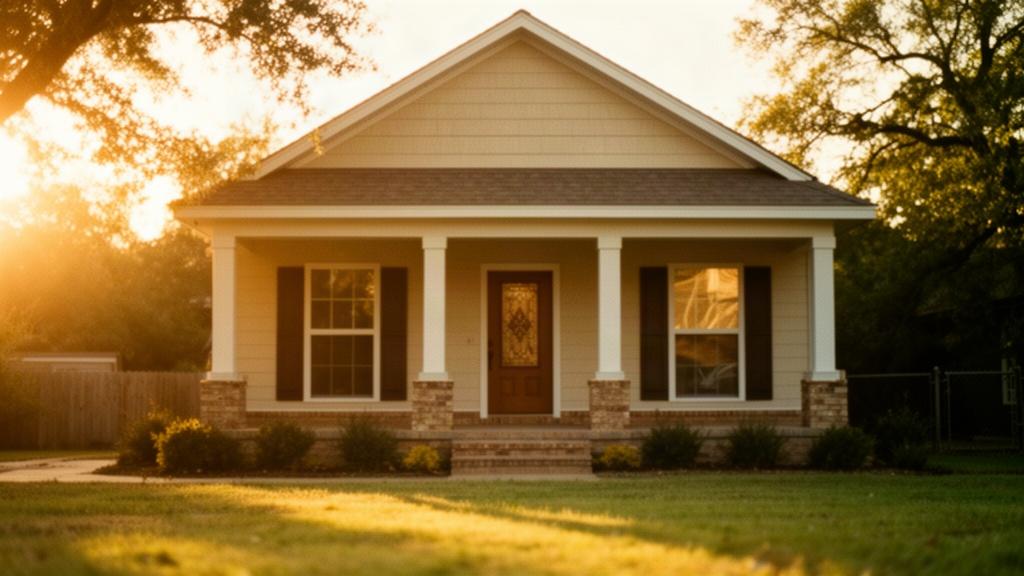
Lafayette's housing stock is a genuine mix. You will find Acadian-style cottages with front porches and steep rooflines, brick ranch homes from the 1970s and 1980s, traditional two-story homes in planned subdivisions, and a growing number of newer construction homes in developments south and east of the city center. Condos and townhomes make up a smaller share of inventory but are available, particularly in and around the Oil Center corridor and along Ambassador Caffery Parkway.
New construction is a significant part of what buyers encounter when searching for homes for sale in Lafayette and the surrounding area. Builders are active in subdivisions like Seasons at Maplewood, River Ranch extensions, and several newer communities off Verot School Road and Chemin Metairie Parkway. If new construction is on your list, this guide on finding new construction homes in Lafayette explains how that process differs from buying a resale home.
2. Price Ranges Across Lafayette Parish
Price in Lafayette depends heavily on location within the parish, the age of the home, and whether you are buying resale or new construction. Understanding these tiers before you start looking helps you set realistic expectations and avoid wasting time on homes that are outside your budget or that do not match what you actually need.
Entry-Level and Mid-Range Homes
In the $160,000 to $230,000 range, buyers will find smaller homes, generally 1,000 to 1,600 square feet, often in established neighborhoods north of I-10 or in older parts of the city near UL Lafayette. These properties tend to be on larger lots and have mature trees, but many were built in the 1960s through 1980s and may need roof, HVAC, or plumbing updates. Buyers in this range should budget carefully for post-purchase repairs and factor those costs into their offer strategy.
The $230,000 to $330,000 range is where most of the activity is concentrated right now. Homes in this tier typically run 1,500 to 2,200 square feet, with three bedrooms and two bathrooms being the most common configuration. Many were built between 1990 and 2015 and are in good condition. This price band covers a wide swath of Lafayette, from neighborhoods near Kaliste Saloom Road to areas closer to the Youngsville border.
Move-Up and Larger Properties
From $330,000 to $500,000, buyers get more square footage, newer construction, and features like open floor plans, covered outdoor living areas, and larger lots. This range includes homes in River Ranch, Maplewood, and newer subdivisions along Ambassador Caffery Parkway. Properties in this tier often come with community amenities like walking paths, ponds, and community pools.
Above $500,000, Lafayette has a distinct luxury segment with custom-built homes, larger acreage properties in the more rural parts of the parish, and high-end builds in gated communities. If that range is where you are shopping, this breakdown of the Lafayette luxury home market covers what buyers should expect in that segment specifically.
3. Housing Stock and Neighborhoods: What You Will Actually Find
Lafayette is not a single, uniform market. Different parts of the city and parish have distinct housing stock, lot sizes, street layouts, and proximity to commercial corridors, parks, and employers. Knowing what each area physically offers helps you narrow your search before you ever step into a house.
Established Neighborhoods Inside the City
The Oil Center area, located just north of Pinhook Road and west of University Avenue, is one of Lafayette's older commercial and residential corridors. Homes here tend to be brick ranch-style or mid-century construction on larger lots, often with mature oak trees. The neighborhood sits close to medical offices, restaurants along Johnston Street, and the Parc Sans Souci park along the Vermilion River.
River Ranch is a mixed-use development near Kaliste Saloom Road that blends retail, dining, and residential in a walkable layout with a central pond. Homes and townhomes here range from the mid-$300,000s into the $700,000s and above, depending on size and position within the development. The area is about 10 minutes from downtown Lafayette by car and roughly 15 minutes from Lafayette Regional Airport.
Broadmoor and Teurlings-adjacent neighborhoods in the central part of the city offer a mix of 1970s and 1980s brick homes on established streets with access to Girard Park, the University of Louisiana at Lafayette campus, and the restaurants and shops along Johnston Street. Lot sizes here are often 8,000 to 12,000 square feet, and the tree canopy in many blocks is substantial.
Newer Construction Corridors
South and southeast Lafayette, including the Youngsville border areas and the Verot School Road corridor, have seen the most new construction activity over the past decade. Subdivisions in this zone typically feature homes built after 2010, with open floor plans, higher ceilings, and modern kitchens. Lots tend to be smaller than in older parts of the city, often 6,000 to 8,000 square feet, but the homes themselves are newer and require less immediate maintenance.
The Broussard corridor to the south is also worth understanding if you are open to homes just outside Lafayette city limits. Broussard has its own active market with new subdivisions and competitive pricing. If that area is on your radar, this Broussard real estate market guide gives you the full picture.
4. How the Lafayette Buying Process Works in Practice
Buying a home in Lafayette follows the same general sequence as elsewhere in Louisiana, but there are local specifics that matter. Louisiana is a civil law state, which means the purchase contract and closing process have some differences from common-law states. Understanding those differences before you make an offer saves time and prevents surprises.
Getting Pre-Approved and Making Offers
Pre-approval is not optional in the current Lafayette market. Sellers in the $250,000 to $400,000 range are receiving multiple offers on well-priced homes, and an offer without a pre-approval letter from a reputable lender will not be taken seriously. Get your pre-approval letter before you schedule your first showing, not after you find a house you want.
In Louisiana, the purchase agreement is called an Agreement to Purchase and Sell. It includes a due diligence period during which you can order inspections and negotiate repairs. The standard contract in the Acadiana market typically allows 10 to 14 days for inspections, though this is negotiable. Your agent should walk you through every term before you sign.
Inspections, Insurance, and Closing Costs
Home inspections in Lafayette typically run $350 to $550 for a standard single-family home, depending on size. Beyond the general inspection, buyers of older homes should consider a separate termite inspection (required by most lenders), an HVAC-specific inspection, and a plumbing camera inspection for homes built before 1990. Slab foundation issues are not uncommon in south Louisiana's clay-heavy soil, so a foundation evaluation is worth the cost on any home showing cracks or door alignment issues.
Homeowners insurance is a significant line item in Lafayette. Louisiana's coastal exposure and hurricane history have pushed premiums higher over the past several years. Buyers should request insurance quotes early in the process, before the inspection period ends, so that a high insurance cost does not blindside you at the closing table. Annual premiums for a $280,000 home in Lafayette can range from $2,800 to $5,000 or more depending on the home's age, construction type, and flood zone designation.
Closing costs in Louisiana are generally 2% to 4% of the purchase price. They include lender fees, title insurance, the act of sale fee (Louisiana's version of closing fees paid to the notary who handles the transaction), and prepaid items like homeowners insurance and property tax escrow. On a $300,000 purchase, budget $6,000 to $12,000 in closing costs, not including your down payment.
First-time buyers who want a full step-by-step breakdown of the process should read the first-time home buyer guide for Lafayette, which covers every stage from pre-approval through the act of sale.
5. Timing Your Search: When to Look and What to Watch
Timing matters in Lafayette, though not in the way buyers sometimes assume. The best time to buy is when you are financially ready and have found a home that fits your needs. That said, understanding seasonal patterns and broader market conditions helps you approach your search with realistic expectations.
Seasonal Patterns in Lafayette
Spring, from March through May, is consistently the busiest listing season in Lafayette. More homes come to market, but buyer competition also peaks during that window. Summer brings continued activity, though the Louisiana heat slows foot traffic slightly. Fall, including September and October, tends to offer a solid mix of inventory and somewhat less frenzied competition than spring, making it a practical window for buyers who are ready to move.
Winter listings in Lafayette, from November through February, are fewer in number but sellers listing during that period are often highly motivated. Buyers who search in winter may find less selection but more negotiating room on price and terms.
What the Broader Market Means for Local Buyers
National forecasters have noted that markets like Lafayette, with lower price points relative to coastal metros and a stable local economy anchored by healthcare, energy, and higher education, are holding up well in 2026. Forbes Advisor's housing market predictions for 2026 point to continued demand in mid-sized Southern markets where affordability remains intact relative to coastal cities. Lafayette fits that profile, with a median price well below the national median and a local job base that has remained relatively stable.
Mortgage rates remain a real factor for buyers in September 2026. Rates have moderated from their 2023 peaks but are not at the historic lows of 2020 and 2021. Buyers who are waiting for rates to drop significantly before purchasing should weigh the cost of waiting against the fact that Lafayette home prices have continued to appreciate modestly. Locking in a home at today's price and refinancing later if rates drop is a strategy worth discussing with your lender.
If you are relocating to Lafayette from another city or state, the market context is especially important to absorb before you arrive. The relocation guide for Lafayette covers neighborhoods, cost of living, and timelines for out-of-area buyers making a move.
FAQ
What is the typical price range for homes for sale in Lafayette, LA right now?
As of September 2026, the median home price in Lafayette Parish is in the low-to-mid $280,000 range. Entry-level homes under $200,000 exist but are limited and tend to be older properties. The most active segment of the market is $230,000 to $330,000, where buyers will find the broadest selection of move-in-ready homes. Above $400,000, inventory includes newer construction, larger square footage, and homes in planned communities with amenities. Prices shift depending on the specific part of the parish, the age of the home, and whether you are buying resale or new construction.
How competitive is the Lafayette housing market for buyers?
Competition in Lafayette varies by price point. Homes priced correctly in the $230,000 to $350,000 range are seeing the most buyer activity, with well-priced listings often going under contract within two to three weeks. Buyers in this range should be pre-approved and ready to move quickly when they find a home they want. At higher price points, above $450,000, homes are sitting longer and buyers have more leverage to negotiate. Coming into the market with a clear budget, a strong pre-approval letter, and a knowledgeable local agent makes a measurable difference in how smoothly the process goes.
What should out-of-state buyers know before searching for homes in Lafayette?
Louisiana is a civil law state, which means the purchase contract and closing process work differently than in most other states. The closing is handled by a notary public rather than a title company attorney, and the purchase document is called an Agreement to Purchase and Sell. Flood zone designation is a critical factor in Lafayette Parish: many properties are in areas that require flood insurance, which adds to the monthly cost of ownership and should be factored into your budget from the start. Homeowners insurance premiums are also higher in Louisiana than the national average due to hurricane exposure. Working with a local agent who knows the parish, the flood maps, and the insurance landscape will save you significant time and prevent costly surprises.