← Back to Blog
Market Trends
San Francisco, Hawaii Refer Their Clients to Real Estate Market Guide: Prices, Neighborhoods and Timing
By Srikanth Kumar Chanakya
September 19, 2026 · 11 min read
When agents in San Francisco, Hawaii refer their clients to a real estate market guide covering prices, neighborhoods and timing, they want one source that answers every practical question in one place. This guide covers what homes are selling for right now, what distinguishes each part of town, and how to read the seasonal rhythms of this market so you can act with confidence, whether you are buying, selling, or relocating to the Big Island.
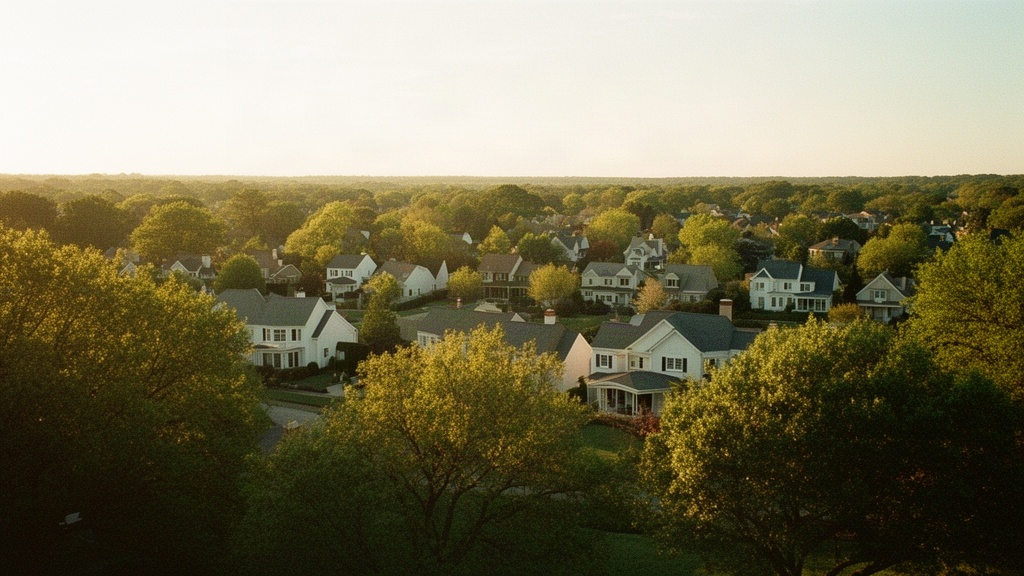
1. What the San Francisco, Hawaii Real Estate Market Looks Like Right Now
The San Francisco, Hawaii real estate market is active and inventory-constrained in September 2026. Single-family homes in and around the town of Na'alehu and the broader Ka'u district are trading in a wide band depending on condition, lot size, and proximity to the coast, but the general median for a move-in-ready single-family home on the island's south end sits in the $380,000 to $520,000 range. Condos and attached units in more urbanized pockets start closer to $280,000 and can push past $600,000 for newer builds with ocean views.
Current Price Benchmarks
Prices have held firm through 2026 despite modest softening in some mainland markets. The National Association of Realtors has tracked Hawaii among the markets seeing consistent year-over-year appreciation, which reflects the state's structural shortage of buildable land. On the Big Island specifically, the combination of lava-zone restrictions, agricultural land designations, and limited urban infrastructure keeps supply tight even when demand moderates slightly.
Land parcels in the Ka'u district, which includes the San Francisco, Hawaii area, can range from under $50,000 for raw agricultural lots to $250,000 or more for graded, permitted parcels with road access. Buyers who want to build rather than purchase an existing home should factor in the cost of water catchment systems, septic installation, and the longer permitting timelines that are standard on the Big Island.
How This Market Compares to State Trends
Statewide, Hawaii has seen a pattern of price cuts that differs meaningfully from the mainland. A recent analysis by HousingWire noted that Hawaii sellers are adjusting list prices at a different pace than Alaska, reflecting how local supply and demand dynamics vary sharply even within island markets. In the San Francisco, Hawaii corridor, price reductions are less common than in higher-priced resort communities on the west side of the Big Island, partly because entry-level and mid-range buyers are absorbing available inventory steadily.
For context on the broader regional picture, the Bay Area housing market in California has historically influenced buyer migration patterns toward Hawaii, as California equity-rich sellers often convert proceeds into Big Island purchases. When California markets cool, that migration flow can slow, and when California heats up, more buyers arrive in Hawaii with significant purchasing power. That connection is worth understanding if you are trying to time your entry or exit in the San Francisco, Hawaii market.
2. Neighborhood Breakdown: What You Get and What You Pay
San Francisco, Hawaii sits within the Ka'u district on the southern tip of the Big Island, and the surrounding communities each have a distinct character in terms of housing stock, lot sizes, and price points. Understanding what each pocket offers helps buyers focus their search and helps sellers position their property accurately.
Downtown San Francisco, Hawaii and the Urban Core
The town center of Na'alehu, the closest commercial hub to San Francisco, Hawaii, contains a mix of older plantation-era structures and post-war bungalows on compact lots typically ranging from 5,000 to 10,000 square feet. These homes generally run from $280,000 to $420,000 depending on renovation level. The town has a post office, a small grocery, a handful of local restaurants including the southernmost bakery in the United States, and direct access to Highway 11, which connects north toward Hilo and Kailua-Kona.
Walkability within the town center is reasonable by Big Island standards, and the proximity to services makes these properties attractive to buyers who prefer not to drive long distances for daily errands. Lot sizes are smaller here than in the rural subdivisions, which keeps purchase prices lower but also limits expansion potential for buyers who want room to add structures or gardens.
Residential Subdivisions and Plantation-Era Streets
Moving outward from the town core, several residential subdivisions developed in the 1970s through the 1990s offer larger lots, often one to five acres, at prices that reflect the additional land. Homes in these subdivisions frequently feature catchment water systems and cesspools rather than county water and sewer connections, which is standard for much of rural Ka'u. Buyers should budget for inspection of these systems and understand ongoing maintenance costs before making an offer. For a detailed look at what those costs mean for your purchase budget, the article on closing costs and fees when buying a home in San Francisco, Hawaii covers the line items specific to this area.
Plantation-era homes along older agricultural roads tend to be single-story wood-frame construction from the early to mid-20th century. Many have been updated with modern kitchens and bathrooms while retaining original wood floors and covered lanais. These properties often sell in the $350,000 to $480,000 range, with outliers on either side depending on acreage and condition.
Coastal and Waterfront Corridors
The coastline near Punalu'u, with its black sand beach and protected sea turtle habitat, anchors the most visually distinctive residential corridor in the Ka'u district. Properties within a short drive of the beach command a premium, and anything with an ocean view or direct coastal access can push well above $600,000 for even modest square footage. Lava zone designations matter significantly here: properties in Lava Zone 1 or 2 face higher insurance costs and limited financing options, while those in Zones 3 through 6 are generally insurable through standard carriers.
Buyers drawn to the coastal corridor should verify lava zone classification before making an offer, as it directly affects mortgage availability and long-term insurance costs. The Hawaii State Department of Land and Natural Resources maintains updated lava zone maps that any buyer can access directly.
3. Timing the Market: When to Buy and When to Sell
Timing in the San Francisco, Hawaii market follows patterns that are somewhat different from mainland seasonal cycles, because the island does not experience the sharp spring surge and winter slowdown that characterize northern states. That said, there are identifiable rhythms that buyers and sellers can use to their advantage.
Seasonal Patterns in San Francisco, Hawaii
Activity typically picks up between January and April, when mainland buyers are planning moves and winter weather in northern states motivates relocation decisions. This is historically when multiple-offer situations are most common in Ka'u, particularly on well-priced single-family homes below $450,000. The summer months of June through August tend to see slightly lower showing volume, partly because mainland buyers are occupied with school schedules and summer travel. September, where the market sits right now, represents a transitional window where motivated sellers are still active and buyer competition has eased from the spring peak.
Inventory Cycles and Days on Market
Inventory in the Ka'u district remains tight in September 2026, with active listings for single-family homes typically numbering in the low dozens across the entire district at any given time. Days on market for correctly priced homes has been running between 30 and 60 days, with overpriced listings sitting considerably longer. Sellers who price at or just below recent comparable sales tend to generate the most activity in the first two weeks, which is when showing traffic is highest.
For buyers, the current inventory level means that waiting for the perfect home to appear can be a long game. Having financing pre-approved and knowing your non-negotiables versus your nice-to-haves allows you to move quickly when the right property comes up. The guide on the home buying process, costs and timeline in San Francisco, Hawaii walks through exactly what that preparation looks like step by step.
Interest Rate Context for September 2026
Mortgage rates in September 2026 remain a central factor in buyer purchasing power. Rates have moderated from the peaks seen in 2023 and 2024, but they remain meaningfully higher than the historic lows of 2020 and 2021. For a buyer purchasing a $450,000 home with 20 percent down, the difference between a 6.5 percent and a 7.0 percent rate translates to roughly $150 per month in payment, which affects qualification and long-term affordability. Buyers should work with a lender familiar with Hawaii-specific loan programs, including those that accommodate catchment water and cesspool properties, which standard mainland underwriting guidelines sometimes flag.
4. What Drives Prices in San Francisco, Hawaii
Understanding the forces behind price levels helps buyers and sellers make more grounded decisions rather than reacting to individual data points. Several structural factors shape this market in ways that differ from most mainland communities.
Land Scarcity and Zoning Constraints
The Big Island has more land area than all other Hawaiian islands combined, but much of it is not developable for residential use. Volcanic activity has historically covered large tracts in lava, and the state's conservation and agricultural land designations protect substantial acreage from subdivision. In Ka'u specifically, the presence of Hawaii Volcanoes National Park to the north and the active volcanic landscape to the east creates a natural boundary on where residential development can expand. This structural scarcity provides a floor under prices that is unlikely to erode in the near term.
Demand from Mainland Relocators
Remote work has permanently altered who considers moving to the Big Island. Buyers who previously could not relocate because of office requirements now evaluate San Francisco, Hawaii as a primary residence rather than a retirement destination only. This has broadened the buyer pool across age ranges and income levels, adding demand that did not exist in the same volume before 2020. The article on what it is like to live in San Francisco, Hawaii day to day addresses the practical lifestyle questions that relocators ask most often.
Buyers relocating from the mainland often have equity from prior home sales that allows them to compete aggressively in the Ka'u market. This dynamic pushes prices upward when mainland markets are strong and can moderate when mainland equity is lower. If you are relocating and want to understand the agent selection process specific to this move, the guide on who to hire when relocating to San Francisco, Hawaii from the mainland is worth reading before you start your search.
New Construction Activity
New construction in Ka'u is limited compared to more urbanized parts of the Big Island like Kailua-Kona or Hilo. Permitting timelines through Hawaii County can run 12 to 24 months for new residential construction, and the cost of building materials on the island, which must be shipped from the mainland or manufactured locally, keeps new construction prices high. A newly built 1,500-square-foot home in the Ka'u district can cost $400,000 to $600,000 in construction costs alone before land. This means the existing housing stock absorbs most demand, and well-maintained older homes hold their value more reliably than in markets where new supply regularly enters.
5. How to Use This Guide Whether You Are Buying or Selling
The San Francisco, Hawaii real estate market guide covering prices, neighborhoods and timing is most useful when you translate the data into a specific action plan for your situation. The steps differ depending on which side of the transaction you are on.
For Buyers: Translating Data Into Offers
Start by anchoring your budget to what the Ka'u market actually delivers at each price point. Below $350,000, expect older homes with deferred maintenance or raw land. Between $350,000 and $500,000, you will find the widest selection of move-in-ready single-family homes with reasonable lot sizes. Above $500,000, expect either coastal proximity, newer construction, or significantly more acreage. Knowing this before you start touring prevents the frustration of falling in love with a home that is outside your realistic range.
When you find a property you want, look at comparable sales from the past 90 days within a two-mile radius and similar lot size. In a market with limited inventory, comparable sales can be sparse, which is where local agent expertise becomes essential. Srikanth Kumar Chanakya works specifically in this market and can pull the relevant comps, flag lava zone issues, and advise on offer structure in a way that a generalist agent unfamiliar with Ka'u cannot.
For Sellers: Pricing to the Current Market
Sellers in September 2026 are in a reasonably strong position, but overpricing remains the most common mistake in this market. Because the buyer pool is smaller than in urban markets, a home that sits for 60 or 90 days without offers develops a stigma that is difficult to overcome even with a price reduction. The goal is to price at a level that generates showings and an offer within the first three weeks.
Condition matters more in this market than in supply-starved urban areas where buyers will overlook issues. Ka'u buyers are often relocators doing careful due diligence, and a home inspection with significant findings will either kill a deal or result in a price reduction. Addressing obvious deferred maintenance before listing, particularly roof condition, water catchment tank integrity, and any pest damage, consistently produces better outcomes than pricing high and negotiating down. For a detailed look at the seller's timeline and what to expect at each stage, the article on selling a home in San Francisco, Hawaii covers the full process.
National data confirms that Hawaii remains among the markets with consistent price appreciation. The National Association of Realtors has identified Hawaii among markets seeing some of the sharpest home price increases nationally, which reflects the structural supply constraints that apply directly to the Ka'u district. Sellers who have owned for five or more years are often sitting on meaningful equity, and pricing strategy should account for that position rather than leaving gains on the table.
FAQ
What is the typical price range for a single-family home in San Francisco, Hawaii right now?
In September 2026, move-in-ready single-family homes in the Ka'u district, which includes the San Francisco, Hawaii area, are generally priced between $380,000 and $520,000 depending on lot size, age, and condition. Homes below $350,000 typically require significant updating or are on smaller lots with older systems. Properties with ocean views or coastal access can exceed $600,000. Land parcels without structures range from under $50,000 for raw agricultural lots to $250,000 or more for permitted, road-accessible parcels. These ranges shift with inventory levels and should be confirmed against recent comparable sales at the time of your search.
When is the best time of year to buy or sell in the San Francisco, Hawaii market?
The Ka'u market tends to see its highest buyer activity between January and April, when mainland buyers are actively planning relocations and winter weather motivates decisions. Multiple-offer situations on well-priced homes are most common during that window. September, the current month, represents a transitional period where motivated sellers remain active but buyer competition has eased from the spring peak, which can give buyers slightly more negotiating room. Sellers who want maximum exposure should consider listing in late January or February to capture the full spring buyer wave. That said, a well-priced, well-presented home can sell in any month in this market because inventory is consistently limited.
How do lava zone designations affect buying a home near San Francisco, Hawaii?
Lava zone classifications assigned by the U.S. Geological Survey and the State of Hawaii directly affect a property's insurability and mortgage eligibility. Homes in Lava Zones 1 and 2 face the highest volcanic risk and are often difficult or expensive to insure through standard carriers, and some lenders will not finance them at all. Zones 3 through 6 are generally insurable and financeable through conventional and government-backed loan programs. The Ka'u district contains properties across multiple lava zones, so buyers must verify a specific parcel's classification before making an offer. Your agent should pull the lava zone designation as part of initial due diligence, and you should confirm insurance availability and cost before removing contingencies.