← Back to Blog
Buying
Investment Property Guide for Saint Petersburg, Florida: What Works Most in Today's Market
By Susan Ross
REAL ESTATE SERVICES, MORTGAGE AND TITLE · BK# 3283805
September 15, 2026 · 11 min read
If you are searching for an investment property guide for Saint Petersburg, Florida, and want to know what works most right now, this article gives you the concrete numbers, property types, and local market conditions you need to make a confident decision. Saint Petersburg is one of Florida's most active real estate markets, drawing buyers who want long-term rental income, short-term rental revenue, or equity growth in a city that keeps expanding its footprint.
1. Why Saint Petersburg Draws Real Estate Investors Right Now
Saint Petersburg is attracting serious investor attention because the fundamentals are strong. The city's population has grown steadily, the arts and dining corridor along Central Avenue continues to expand, and the waterfront redevelopment around the Pier district has added a new anchor for visitor traffic and tenant demand alike. Pinellas County as a whole has limited room for new construction compared to inland markets, which keeps pressure on existing housing supply.
Population and Infrastructure Growth
Saint Petersburg sits at the tip of the Pinellas Peninsula, meaning it is geographically constrained. You cannot simply build outward the way developers can in Pasco or Hillsborough County. That constraint supports property values over time and makes existing rental stock more competitive. The city's population is estimated at roughly 260,000 as of September 2026, and the greater Tampa Bay metro continues to rank among the fastest-growing in the Southeast.
The redevelopment of the Historic Gas Plant District into a mixed-use entertainment and commercial hub is one of the largest urban projects in Florida right now. Projects of that scale typically lift surrounding residential values and increase demand for rental housing from workers, visitors, and new residents drawn to the activity. Investors who understand this cycle tend to position themselves ahead of it rather than after.
What the Broader Tampa Bay Market Tells Investors
Tracking Tampa Bay housing trends helps Saint Petersburg investors understand where the regional cycle sits. According to HousingWire's Tampa housing market analysis, the Tampa Bay area saw price appreciation slow from its 2022 peak but has remained one of the more resilient Sun Belt markets through 2025 and into 2026, with inventory still below historical norms in many price bands. Saint Petersburg tracks closely with those regional patterns while also having its own micro-market dynamics driven by its peninsula geography and tourism draw.
2. Investment Property Types That Work Most in Saint Petersburg
Not every investment strategy produces the same result in every market. In Saint Petersburg specifically, the strategies that tend to perform best are tied to the city's rental demand profile, its tourism economy, and the age and character of its housing stock. Here is a breakdown of the main property types and how each one fits the local market as of September 2026.
Single-Family Rentals
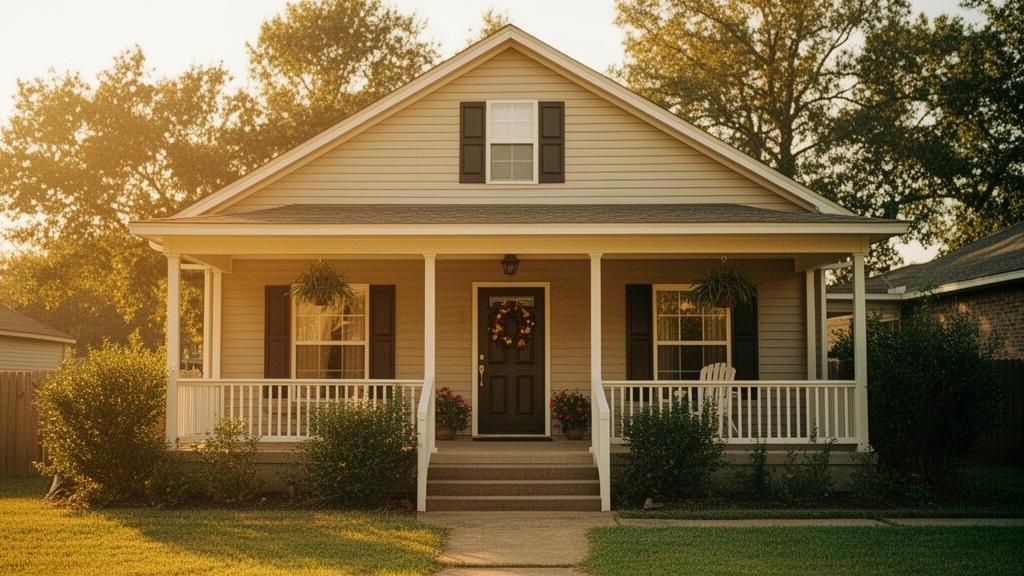
Single-family homes are the most common investment vehicle in Saint Petersburg's residential market. The city has a large stock of concrete block homes built between the 1940s and 1970s, many of them on lots between 5,000 and 7,500 square feet. These homes are durable, relatively low-maintenance compared to wood-frame construction, and they attract long-term tenants who want a yard and a neighborhood feel. Gross rental yields on single-family homes in Saint Petersburg currently range from roughly 5% to 7% depending on the submarket and condition of the property, with higher yields typically found south of Central Avenue.
Small Multifamily Properties
Duplexes, triplexes, and fourplexes are available in Saint Petersburg but they move quickly when priced correctly. Many of these properties were built in the 1950s and 1960s and sit in walkable blocks close to transit corridors. A well-maintained fourplex near the Grand Central District or the Warehouse Arts District can generate meaningful cash flow because you are spreading operating costs across multiple units. Buyers financing with conventional loans can still use the income from the occupied units to help qualify, which makes small multifamily one of the more accessible entry points for newer investors.
Short-Term Rentals and Vacation Units
Florida consistently ranks at the top for short-term rental performance nationally. A study covered by Inman found that Florida leads the country for short-term rental investors, driven by year-round tourism demand and a large stock of properties near beaches and attractions. Saint Petersburg benefits from that statewide dynamic. Properties within a mile or two of the waterfront, St. Pete Beach, or the downtown core can generate strong short-term rental revenue during peak season, which in this market runs roughly October through April, with a secondary peak in summer.
Short-term rental income can be significantly higher per night than long-term rents, but the carrying costs and management demands are also higher. Investors considering this path need to verify current City of Saint Petersburg short-term rental regulations before closing, since zoning and licensing requirements have evolved and vary by property type and location.
Condos and Townhomes
Condos in Saint Petersburg carry a lower entry price than single-family homes in many cases, but investors need to review HOA documents carefully. Some associations restrict short-term rentals entirely. Others have rental caps that limit how many units in a building can be leased at one time. Florida's updated condo inspection and reserve funding laws, which took effect after 2022, have also added costs for some older buildings. That said, well-run condo associations in buildings with solid reserve funds can offer a lower-maintenance path to rental income, particularly for out-of-state investors who want limited hands-on involvement.
3. Price Ranges and What Your Budget Gets You
Understanding where price points sit in September 2026 helps investors match their capital to realistic opportunities. Saint Petersburg has a wide range of price points, from workforce housing in the $250,000s to waterfront properties well into the millions. The investment property guide for Saint Petersburg, Florida that actually works most is one that matches your budget to the right submarket and property type, not one that chases the highest-priced asset or the cheapest one without understanding why it is priced that way.
Entry-Level Investment Properties
In the $250,000 to $350,000 range, buyers can find concrete block single-family homes in South Saint Petersburg and parts of the Childs Park and Lakewood Estates areas. These properties typically offer 3 bedrooms and 1 or 2 bathrooms on lots that can accommodate parking and outdoor space. Rental rates for this type of home currently run between $1,600 and $2,100 per month depending on condition and updates. Investors at this price point should budget for deferred maintenance and should verify roof age, HVAC condition, and plumbing before closing, since these are the cost items that most commonly erode returns on older Florida homes.
Mid-Range and Value-Add Opportunities
The $350,000 to $550,000 range opens up more of the city, including bungalows and updated block homes in Kenwood, Euclid-St. Paul, and the Crescent Lake area. Many of these properties have already been partially updated and can be rented immediately at market rates between $2,000 and $2,800 per month. Value-add opportunities in this range typically involve cosmetic updates, adding a bathroom, or converting a garage or bonus room to livable space to increase rent. The Kenwood neighborhood guide on this site covers the character and housing stock of that corridor in more detail.
Higher-End Investment Properties
Above $600,000, the investment calculus shifts toward appreciation and short-term rental potential rather than pure cash-on-cash return. Properties near the waterfront in Snell Isle, Coffee Pot Bayou, or Old Northeast can command premium short-term rental rates during season, sometimes $300 to $600 per night for well-positioned homes. However, carrying costs including insurance, property taxes, and HOA fees (where applicable) are also substantially higher. The luxury segment of the Saint Petersburg market has its own dynamics, which are covered in depth in the luxury home market guide on this site.
4. Key Neighborhoods and Submarkets to Know
Saint Petersburg is not a monolithic market. Each submarket has a different price floor, a different renter profile, and a different set of regulatory considerations. Investors who treat the entire city as one market tend to overpay in some areas and miss opportunities in others. Here is a factual breakdown of the main submarkets and what makes each one relevant to investment decisions.
Downtown and Edge Districts
Downtown Saint Petersburg is roughly 2 miles from the waterfront Pier district and is anchored by the Mahaffey Theater, the Salvador Dali Museum, and a dense corridor of restaurants, breweries, and retail along Beach Drive and Central Avenue. Investment properties closest to downtown tend to be condos and small multifamily buildings rather than single-family homes. Rents here are among the highest in the city, with one-bedroom units in newer buildings asking $1,900 to $2,600 per month as of September 2026. The trade-off is that purchase prices are also higher and condo association rules require careful review.
Kenwood and Central Corridors
Kenwood, Grand Central, and the Warehouse Arts District sit roughly 1 to 3 miles west of downtown and contain some of the city's most recognizable bungalow architecture. Many of these homes were built between 1920 and 1950 and feature original hardwood floors, front porches, and mature tree canopy. Long-term rental demand in these corridors is consistent, and short-term rental interest is high because of proximity to Central Avenue's dining and arts scene. Investors should factor in the cost of updating older electrical panels and plumbing, which is common in homes of this age.
Waterfront and Coastal Submarkets
Old Northeast, Snell Isle, and Coffee Pot Bayou sit north of downtown along Tampa Bay and Coffeepot Bayou. These areas have larger lots, Mediterranean Revival and Colonial Revival architecture, and some of the city's highest land values. Investors here are typically pursuing appreciation and premium short-term rental income rather than yield-focused cash flow. Flood zone designation is an important factor in these areas: buyers need to review FEMA flood maps and obtain flood insurance quotes before making an offer, as annual premiums can range from $2,000 to well over $10,000 depending on the property's elevation and zone. The Old Northeast neighborhood buying guide on this site provides a detailed look at that submarket's costs and process.
South Saint Petersburg
South Saint Petersburg, which includes neighborhoods like Childs Park, Lakewood Estates, and Bartlett Park, offers the city's most affordable price points for investors. Homes here are predominantly concrete block construction from the 1950s through 1970s, typically 3 bedrooms and 1 bath on standard city lots. Purchase prices in the $250,000 to $330,000 range are still available in this corridor as of September 2026. The city has directed infrastructure investment into parts of South Saint Petersburg in recent years, including road improvements and community center upgrades, which has brought increased attention from investors looking at longer-horizon appreciation plays.
5. What Investors Need to Know Before Closing
The investment property guide for Saint Petersburg, Florida that works most is one that accounts for carrying costs, not just purchase price and rent. Florida's insurance market has shifted significantly since 2022, and investors who modeled returns based on older insurance premiums have been surprised by the gap. Here is what to factor in before you close.
Insurance and Carrying Costs
Homeowners insurance in Pinellas County has increased sharply over the past three years. Annual premiums on a non-waterfront single-family rental in Saint Petersburg currently range from roughly $3,500 to $6,000 depending on the home's age, roof condition, and coverage level. Waterfront or flood-zone properties can run considerably higher when you add flood insurance. Investors should obtain insurance quotes during the inspection period, not after closing, since the premium can materially change the return calculation. Property taxes in Pinellas County run approximately 1% to 1.2% of assessed value annually for investment properties, which do not qualify for the homestead exemption.
Short-Term Rental Regulations
The City of Saint Petersburg requires a business tax receipt and compliance with specific operational standards for short-term rentals, defined as rentals of 30 days or fewer. Zoning matters: not every residential zone permits short-term rentals, and some neighborhoods have HOA covenants that restrict them regardless of city zoning. Investors planning to operate a short-term rental should confirm both city licensing requirements and any deed or HOA restrictions before making an offer, not after. Florida state law has also preempted some local restrictions in certain contexts, so the regulatory picture requires current, local legal or licensing review.
Financing Considerations
Investment property financing in Florida follows conventional rules: most lenders require 20% to 25% down for a non-owner-occupied single-family or small multifamily purchase. Interest rates on investment property loans are typically 0.5% to 0.75% higher than owner-occupied rates, which affects your monthly payment and cash flow projections. DSCR (Debt Service Coverage Ratio) loans have become more common for investors who want to qualify based on the property's rental income rather than personal income, and several lenders active in the Tampa Bay market offer these products. If you are relocating and considering an investment property alongside a primary residence, the relocation guide for Saint Petersburg covers how out-of-state buyers typically approach the process.
Working with a Local Expert
Investment property decisions in Saint Petersburg require someone who knows which blocks are in flood zones, which HOAs restrict rentals, which neighborhoods have the tightest rental vacancy, and where the city's infrastructure investment is actually landing. Susan Ross of Real Estate Services, Mortgage and Title has worked across Saint Petersburg's submarkets and understands the specific dynamics that affect investment property returns here. That kind of local knowledge is what separates a well-underwritten investment from one that surprises you after closing. You can also review the broader Saint Petersburg real estate market guide on this site for additional context on how the overall market is moving.
FAQ
What type of investment property works most in Saint Petersburg, Florida right now?
As of September 2026, single-family rentals and small multifamily properties (duplexes and fourplexes) are the most consistent performers for investors focused on cash flow. Short-term rentals near the waterfront and downtown core can generate higher per-night revenue but require more active management and careful attention to city licensing requirements. The right property type depends on your budget, your tolerance for management intensity, and whether you are prioritizing monthly income or longer-term appreciation. Investors who are new to the Saint Petersburg market often start with a long-term single-family rental and add short-term rental properties once they understand the local regulatory landscape.
How much does an investment property in Saint Petersburg, Florida cost?
Entry-level investment properties in South Saint Petersburg are available in the $250,000 to $350,000 range as of September 2026, typically concrete block homes with 3 bedrooms and 1 or 2 bathrooms. Mid-range opportunities in areas like Kenwood, Euclid-St. Paul, and the Crescent Lake corridor run from $350,000 to $550,000. Waterfront-adjacent and premium submarket properties start around $600,000 and can exceed $1.5 million for direct waterfront homes. Purchase price is only one part of the equation: insurance, property taxes, and any needed repairs or updates should all be factored into your return calculation before you make an offer.
Do I need a local real estate agent to buy an investment property in Saint Petersburg?
Working with a local agent who knows the Saint Petersburg market is one of the most practical steps an investor can take, especially if you are purchasing from out of state or are new to the Pinellas County market. A local agent can identify flood zone exposures, flag HOA rental restrictions, and provide current rental rate data for specific streets and submarkets, none of which is visible from a national listing platform. They can also connect you with local property managers, insurance agents, and inspectors who understand the specific challenges of Florida's older housing stock. Susan Ross of Real Estate Services, Mortgage and Title brings that local depth to investment property buyers across Saint Petersburg's submarkets.