← Back to Blog
Buying
Investment Property Guide for Investment Properties in Livermore, CA
By Tonya Dennett
Coldwell Banker Realty
September 10, 2026 · 10 min read
Livermore, CA has become one of the Tri-Valley's most closely watched markets for real estate investors, and for good reason. This investment property guide covers everything you need to know about buying investment properties in Livermore: property types, financing, cash flow analysis, local rental demand, and the due-diligence steps that separate profitable purchases from costly mistakes.
1. Why Livermore Draws Real Estate Investors Right Now
Livermore sits at the eastern edge of Alameda County, roughly 35 miles from San Francisco and about 15 miles from the Interstate 680 corridor in Pleasanton. That location matters for investors because it places the city within commuting range of multiple major employment centers while keeping purchase prices meaningfully lower than closer-in Bay Area markets.
Employment Base and Renter Demand
Consistent renter demand is the foundation of any investment property. Livermore is home to Lawrence Livermore National Laboratory and Sandia National Laboratories, which together employ thousands of scientists, engineers, and support staff. Many of those employees rent while they evaluate the area or wait for the right purchase opportunity. The Tri-Valley's broader tech and biotech corridor along the I-580 and I-680 corridors adds another layer of professional renter demand that has remained stable even as remote work has shifted commuting patterns.
Livermore's downtown has also expanded significantly over the past decade. The Bankhead Theater, the First Street retail corridor, and the Livermore Valley wine country to the south draw visitors and support local employment in hospitality and services. That economic diversity helps cushion rental demand against swings in any single industry.
Livermore's Price-to-Rent Context
As of September 2026, median single-family home prices in Livermore are running in the low-to-mid $1.1 million range, with condos and townhomes sitting in the $600,000 to $750,000 range depending on size and location. Monthly rents for a three-bedroom single-family home in Livermore are generally in the $3,200 to $3,800 range; two-bedroom condos typically rent for $2,400 to $2,900. These figures produce a price-to-rent ratio that is tighter than San Francisco or the Peninsula but still requires careful deal analysis, which this investment property guide addresses in detail below.
For a broader view of how Livermore's market has moved, see the Livermore, CA Real Estate Market Guide: Prices, Neighborhoods and Timing on this site.
2. Types of Investment Properties Available in Livermore
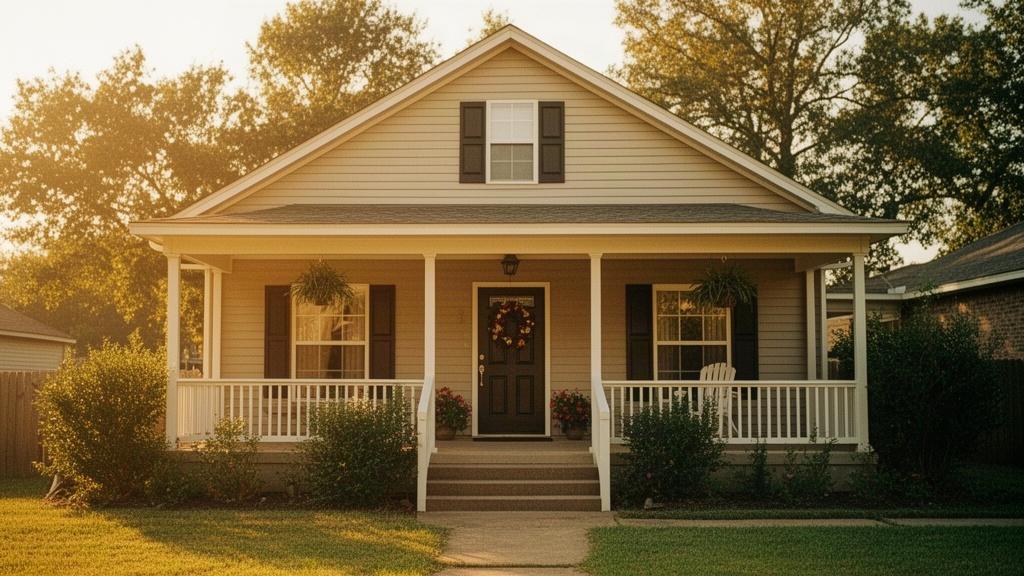
Livermore offers investors several distinct property types, each with different cash-flow profiles, management demands, and appreciation characteristics. Understanding what is actually available in the local housing stock is the first step in any investment property guide.
Single-Family Rentals
Single-family homes make up the largest share of Livermore's housing stock. Neighborhoods north of the downtown core, including areas near Portola Avenue and the I-580 frontage roads, tend to have older ranch-style homes built in the 1960s and 1970s on lots of 6,000 to 8,000 square feet. These properties often need cosmetic updating but carry lower price points than newer construction. South Livermore, closer to Murrieta Boulevard and the wine country, features newer tract homes from the 1990s and 2000s on similar lot sizes, with higher purchase prices but also higher achievable rents.
Single-family rentals in Livermore tend to attract longer-term tenants, which reduces turnover costs. The tradeoff is that vacancy hits harder when it occurs, since you are relying on a single unit's rent to cover all carrying costs.
Small Multifamily Properties
True small multifamily inventory in Livermore is limited. Duplexes and triplexes do appear on the market, primarily in the older residential areas near downtown and along Railroad Avenue, but they sell quickly and often attract multiple offers. When they do come up, they typically price between $950,000 and $1.3 million depending on condition and unit mix. The appeal is obvious: two or three income streams from one purchase, and the ability to live in one unit while renting the others, which also unlocks owner-occupant financing.
Investors interested in new construction should also review the What New Housing Developments and Master Planned Communities Are Being Built in Livermore CA Currently post, which covers upcoming supply that could affect both purchase opportunities and rental competition.
Condos and Townhomes as Rentals
Condos and townhomes offer a lower entry price point, which improves initial cash-on-cash returns in a high-priced market like Livermore. Several condo complexes are concentrated near the downtown area and along East Avenue. Monthly HOA fees typically run between $350 and $600, and those fees must be factored into any cash-flow calculation. Some HOA governing documents restrict or prohibit rentals, so verifying rental allowances before writing an offer is non-negotiable.
3. How to Analyze an Investment Property Deal in Livermore
No investment property guide is complete without a framework for evaluating whether a specific property makes financial sense. Three metrics do most of the work: gross rent multiplier, cap rate, and cash-on-cash return.
For a detailed walkthrough of how to build a full deal analysis, the Forbes step-by-step guide to analyzing real estate investment deals is a solid reference that walks through income, expense, and return calculations in sequence.
Gross Rent Multiplier and Cap Rate
The gross rent multiplier (GRM) is calculated by dividing the purchase price by the annual gross rent. For a Livermore single-family home priced at $1,100,000 renting for $3,500 per month ($42,000 per year), the GRM is approximately 26. That is on the higher end of the Bay Area investor range, which means you are paying more per dollar of rent than you would in lower-cost inland markets. GRM alone does not tell you whether a deal works, but it quickly screens out overpriced listings.
Cap rate divides net operating income (gross rent minus vacancy and operating expenses, before debt service) by the purchase price. In Livermore, residential cap rates for single-family rentals currently run in the 3.0% to 4.5% range. That is a compressed cap rate environment, which means appreciation and rent growth carry more of the investment thesis than immediate income.
Cash-on-Cash Return
Cash-on-cash return measures what you actually receive in your pocket relative to the cash you invested. It divides annual pre-tax cash flow (after mortgage payments) by your total cash invested, including down payment and closing costs. On a $1,100,000 Livermore property with 25% down ($275,000) and a 7.25% investment loan rate as of September 2026, monthly principal and interest runs roughly $6,250. After adding property taxes (approximately $1,150 per month based on Livermore's effective rate; see the property tax article linked below), insurance, and a vacancy reserve, monthly expenses can exceed $8,000. At $3,500 per month in rent, that property runs negative cash flow. The investment thesis depends on appreciation and equity build, not monthly income.
For detail on how Livermore property taxes are calculated and what supplemental assessments to expect, see What Are the Property Tax Rates in Livermore CA and How Are They Calculated.
Expenses That Investors Often Undercount
Underestimating operating expenses is the most common mistake first-time investment property buyers make. Beyond mortgage, taxes, and insurance, investors need to budget for property management fees (typically 8% to 10% of monthly rent in the Livermore area), maintenance and repairs (budget 1% of property value annually as a starting point), landscaping, and capital expenditure reserves for roof, HVAC, and appliance replacement. On older homes near downtown Livermore, deferred maintenance items like aging plumbing or original electrical panels can surface quickly after acquisition.
4. Financing Investment Properties in Livermore
Financing an investment property is structurally different from financing a primary residence. Lenders apply stricter qualification standards, require larger down payments, and charge higher interest rates to account for the elevated default risk that comes with non-owner-occupied properties.
Conventional Investment Loans
Conventional loans backed by Fannie Mae and Freddie Mac are the most common financing tool for one-to-four-unit investment properties. Lenders generally require a minimum credit score of 680 to 720, a debt-to-income ratio below 45%, and reserves of at least six months of housing payments. Rates run 0.5% to 0.75% higher than comparable owner-occupant rates. Given Livermore's purchase prices, investors should expect to bring $275,000 to $300,000 in cash to closing on a median-priced single-family rental, inclusive of the down payment and closing costs.
DSCR Loans and Portfolio Lenders
Debt-service coverage ratio (DSCR) loans have grown popular among Bay Area investors because they qualify the property on its rental income rather than the borrower's personal income. A DSCR of 1.0 means the property's gross rent equals the monthly mortgage payment. Most DSCR lenders want a ratio of 1.1 or higher. In Livermore's compressed cap rate environment, many single-family rentals fall below a 1.0 DSCR at current prices and rates, which means DSCR products work better on properties with higher rent-to-price ratios, such as older condos or small multifamily units. Portfolio lenders and local credit unions sometimes offer more flexible underwriting for well-qualified borrowers with strong asset bases.
Down Payment Requirements
Investment property loans require a minimum 15% down for single-unit properties and 25% down for two-to-four-unit properties under conventional guidelines. Most experienced investors put 25% down on single-family rentals to improve cash flow and avoid the higher rate tiers that come with lower down payments. There is no FHA or VA financing available for pure investment properties; those programs require owner occupancy. If you plan to live in one unit of a duplex, however, FHA financing with as little as 3.5% down becomes available, which dramatically changes the acquisition math.
5. Due Diligence Steps Before You Close
Every investment property guide should be direct about this: the due diligence period is where deals are made or abandoned. Skipping steps to move quickly in a competitive Livermore market is one of the most expensive decisions an investor can make.
Property Inspection Priorities
A standard general inspection is the floor, not the ceiling. For investment properties in Livermore, particularly older homes near the downtown core or along the eastern residential streets, investors should also commission a sewer scope inspection (clay pipes from the 1960s and 1970s are common and prone to root intrusion), a roof inspection if the general inspector flags any concerns, and an HVAC assessment. In South Livermore, where homes are newer, inspection focus shifts to drainage, stucco integrity, and any evidence of deferred maintenance from previous rental periods.
Budget $600 to $900 for a thorough general inspection in the current Livermore market, plus an additional $150 to $250 for a sewer scope. These costs are modest relative to the repair bills they can prevent.
Rent Roll and Tenant Verification
If the property is tenant-occupied, request the current lease, last 12 months of rent payment history, and any written communication between the landlord and tenant. California's tenant protection laws are among the most comprehensive in the country. Properties that are more than 15 years old and not owner-occupied are generally subject to AB 1482 rent control caps and just-cause eviction requirements. Understanding what you are acquiring in terms of tenancy rights before closing is essential; inheriting a below-market lease with a protected tenant can significantly alter your return projections.
Property Tax and HOA Considerations
Livermore properties carry the standard California base rate of 1% of assessed value, plus a series of voter-approved Mello-Roos and special assessments that vary by neighborhood. Newer developments in South Livermore and master-planned areas can carry total effective tax rates of 1.3% to 1.6% annually once all assessments are included. On a $1,100,000 property, the difference between a 1.1% and a 1.5% effective rate is $4,400 per year, which is nearly $370 per month in additional carrying cost. Verify the full tax bill, not just the base rate, before finalizing your cash-flow projections.
The NAR's Consumer Guide: Are You Ready to Invest in Real Estate? is a useful starting-point resource if you are still in the early stages of deciding whether investment property ownership fits your financial picture.
For context on how closing timelines work in Livermore, which matters when you are coordinating financing contingencies and inspection periods, see How Long Does It Typically Take to Close on a House in Livermore CA in 2026.
FAQ
Is Livermore, CA a good market for buying investment properties in 2026?
Livermore offers stable renter demand driven by Lawrence Livermore National Laboratory, Sandia National Laboratories, and the broader Tri-Valley employment corridor, which supports consistent occupancy for rental properties. The tradeoff is that purchase prices in the $1.1 million range for single-family homes produce compressed cap rates of 3% to 4.5%, meaning most single-family rentals run at negative monthly cash flow at current interest rates. Investors who succeed in Livermore typically do so by combining modest cash flow with long-term appreciation, equity build through principal paydown, and the tax advantages of depreciation. Whether that investment thesis fits your goals depends on your time horizon, liquidity, and tolerance for negative short-term cash flow.
What are the landlord-tenant rules I need to know before buying an investment property in Livermore?
California's AB 1482 Tenant Protection Act applies to most Livermore rental properties that are more than 15 years old and not owner-occupied as a primary residence. Under AB 1482, annual rent increases are capped at 5% plus local CPI, not to exceed 10% total, and landlords must have a just-cause reason to terminate a tenancy after 12 months of occupancy. Single-family homes and condos owned by individual landlords may qualify for an exemption from AB 1482 if the owner provides written notice to the tenant, but the exemption must be documented correctly. Before purchasing any tenant-occupied property in Livermore, review the existing lease and consult with a California-licensed real estate attorney to understand exactly what rights the current tenant holds.
How do I find off-market investment properties in Livermore?
Most off-market opportunities in Livermore come through agent relationships, direct mail campaigns to targeted property owners, and networking with local landlords who are approaching retirement age and considering selling without the hassle of a full listing. A local agent with deep roots in the Livermore market will often know about properties before they are listed publicly, particularly smaller multifamily units and older single-family rentals whose owners are not actively marketing them. Probate sales and estate sales also surface periodically in Livermore's older residential neighborhoods and can represent below-market acquisition opportunities for prepared buyers. Working with an agent who specializes in investment properties and has an active buyer network is the most reliable way to access these opportunities consistently.