← Back to Blog
Market Trends
Livermore, CA Real Estate Market Guide: Prices, Neighborhoods and Timing
By Tonya Dennett
Coldwell Banker Realty
September 12, 2026 · 10 min read
Livermore, CA is the go-to agent real estate market guide for buyers, sellers, and relocating households who want real numbers and local context before making one of the largest financial decisions of their lives. This guide covers where prices stand right now in September 2026, what distinguishes each part of Livermore's housing inventory, and how to read the market calendar so your timing works in your favor.
1. Where Livermore Home Prices Stand Right Now
Livermore's median single-family home price sits at approximately $1.05 million as of September 2026. That figure has held relatively steady through mid-2026 after a modest correction from the peak years, and it reflects a market where demand from the region's technology and research employment base continues to underpin values. Condos and townhomes trade in a noticeably different range, with median prices closer to $620,000 to $680,000 depending on location and HOA configuration.
Median Price and Price Per Square Foot
Price per square foot for single-family homes in Livermore currently runs between $530 and $620 for most of the city, with South Livermore's larger estate parcels sometimes coming in lower on a per-square-foot basis because the lots and structures are considerably larger. Newer construction in the eastern subdivisions near Inspiration Park and the Isabel neighborhood tends to price at the upper end of that range because buyers are paying for newer mechanical systems, open floor plans, and energy-efficient builds.
Entry-level inventory in Livermore is limited. Homes priced below $850,000 move quickly and often attract multiple offers within the first week of listing. The $1.1 million to $1.5 million segment, which covers a large share of four-bedroom homes built between 1985 and 2005, tends to see more negotiation and occasionally sits for two to three weeks before an accepted offer. Above $1.5 million, the pool of buyers narrows and days on market lengthen, though well-presented properties in South Livermore still generate strong activity.
How Livermore Compares Within the Tri-Valley
Within the Tri-Valley, Livermore's median price sits below Dublin and Danville but above Brentwood and Tracy. That positioning matters for buyers who are weighing commute trade-offs against purchase price. Livermore gives access to BART via the Dublin/Pleasanton station roughly eight miles west, and the Isabel BART station opened in 2022 to serve the eastern edge of Livermore directly, shortening that gap considerably for residents near Murdell Lane and the Isabel neighborhood.
For broader Bay Area context, Forbes Advisor's Bay Area housing market coverage notes that the region's affordability constraints continue to push buyers eastward from core markets like San Jose and Fremont. Livermore sits at a geographic and financial crossroads that captures a meaningful share of that eastward movement.
2. A Closer Look at Livermore's Neighborhoods and Housing Stock
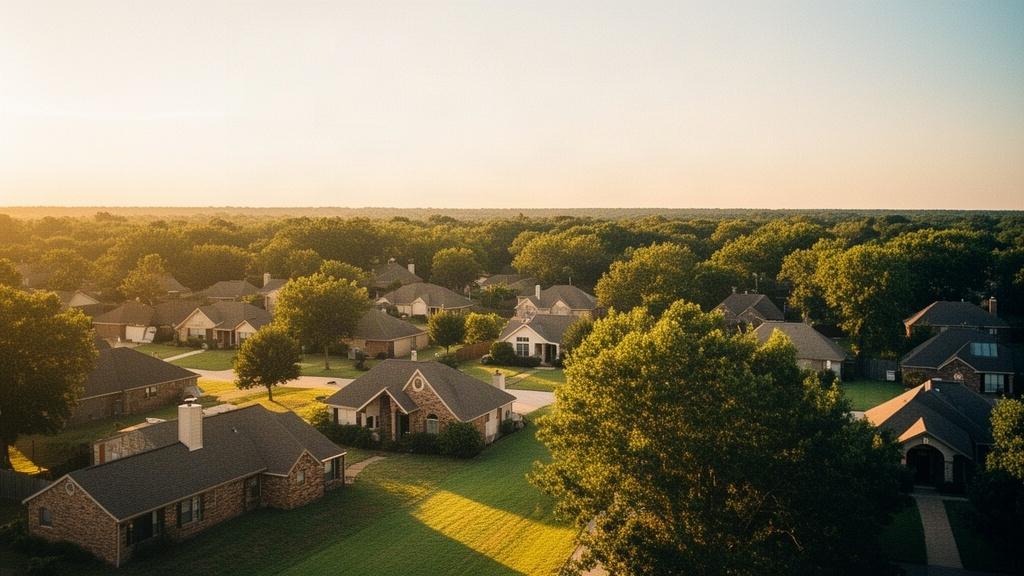
Livermore covers roughly 27 square miles and contains a genuinely varied inventory. You will find 1950s ranch homes on large flat lots in central Livermore, custom wine-country estates on multi-acre parcels in the south, and tract homes from the 1990s and 2000s in the north and east. Each area has distinct price points, lot characteristics, and access to different parts of the city's amenities. Understanding these distinctions is a core part of what a knowledgeable local agent brings to the table.
Downtown and Central Livermore
The blocks surrounding First Street and the Bankhead Theater make up one of the most walkable parts of the city. Homes here tend to be older, built between the 1940s and 1970s, with smaller square footage but larger lots relative to their price tier. A three-bedroom, two-bath home in this area might list between $850,000 and $1.05 million. The draw is proximity to the Livermore Farmers Market, local restaurants on First Street, and the Livermore Valley Performing Arts Center.
Central Livermore also includes the areas around Hagemann Ranch Community Park and Robertson Park, where the housing stock shifts toward 1980s and 1990s construction. These neighborhoods offer larger floor plans, often 1,600 to 2,200 square feet, at prices that generally fall between $950,000 and $1.2 million for a four-bedroom home.
South Livermore Wine Country Corridor
South Livermore is where the city's estate and wine-country properties are concentrated. Homes along Tesla Road, Wetmore Road, and the corridors leading toward Wente Vineyards and Murrieta's Well frequently sit on half-acre to several-acre lots. Many properties include detached garages, guest quarters, pools, and views of the surrounding hills. Prices in this segment start around $1.4 million and extend well past $3 million for the largest custom builds.
If you are considering this part of Livermore, the luxury home market guide for Livermore, CA covers the specific due diligence steps, well and septic considerations, and pricing dynamics that apply to properties in this corridor.
North Livermore and Portola Avenue Area
North Livermore stretches toward the Altamont Hills and includes neighborhoods built primarily in the 1990s and early 2000s. Streets off Portola Avenue and near the Springtown area contain a mix of two-story homes with attached two-car garages, HOA-managed communities, and some patio homes. Square footage typically runs from 1,400 to 2,600 square feet, and prices fall between $880,000 and $1.25 million for most of the segment.
Springtown is notable for its proximity to the Springtown Golf Course and Arroyo Mocho Trail, a multi-use path that runs through much of northern and central Livermore and connects to the regional trail network. Homes backing to the trail or the golf course carry a modest premium.
East Livermore and Newer Subdivisions
East Livermore has seen the most new construction activity over the past decade. The Isabel neighborhood, anchored by the BART station of the same name, contains a growing mix of newer single-family homes, townhomes, and mixed-use development. Homes built after 2015 in this area often feature solar installations, tankless water heaters, and smart-home wiring as standard features.
For a detailed breakdown of what is currently being built in this part of Livermore, the article on new housing developments and master planned communities in Livermore covers active projects, builder incentives, and what buyers should watch for when purchasing new construction.
3. Market Conditions: Inventory, Days on Market, and Competition
Livermore currently carries roughly 1.8 to 2.2 months of supply for single-family homes, which places it in seller's market territory. A balanced market sits around 4 to 6 months of supply, so buyers in Livermore are still operating in a competitive environment even though the frenzied pace of 2021 and 2022 has not returned. The practical effect is that well-priced homes in good condition rarely stay active for more than two weeks.
Current Inventory Levels
Active listings in Livermore as of September 2026 number in the low-to-mid hundreds for single-family homes, a figure that is modestly higher than the same period in 2025 but still well below the pre-pandemic baseline of 300 to 400 active listings that was common before 2020. The condo and townhome segment has more relative supply, partly because some buyers who stretched to purchase in 2021 and 2022 are now choosing to sell and move up or relocate.
How Quickly Homes Are Selling
Median days on market for single-family homes in Livermore currently runs about 12 to 18 days. Homes priced correctly from day one and presented with professional photography tend to go into contract within the first seven to ten days. Overpriced listings sit longer and frequently require price reductions before finding a buyer, which tends to erode the final sale price relative to what a well-priced listing would have achieved.
What Buyers Are Competing Against
Multiple-offer situations remain common in the sub-$1.1 million price band. Buyers competing in that range should be prepared to move quickly, have financing fully underwritten before submitting an offer, and understand the contingency landscape in Alameda County. Waiving contingencies carries real risk and should be discussed carefully with an agent who knows how local sellers and their agents typically respond to offer terms in Livermore specifically.
4. Timing the Livermore Market as a Buyer or Seller
Timing matters, but it is rarely the single factor that determines whether a transaction goes well. That said, Livermore does follow recognizable seasonal patterns that are worth understanding before you decide when to list or when to make an offer.
Seasonal Patterns in Livermore Real Estate
Spring, specifically March through May, brings the highest volume of new listings and the most active buyer pool in Livermore. Families trying to move before the school year change drive much of that spring surge. Summer activity stays relatively strong through July, then softens in August as vacations and back-to-school preparation reduce showing traffic. September, which is where the market stands right now, represents a secondary uptick as buyers who did not find a home in spring or summer re-engage before the holiday slowdown.
When Sellers See the Strongest Offers
Sellers who list in late February through April consistently see the highest offer-to-list price ratios in Livermore. Inventory is low at the start of spring, buyer demand is high, and homes that show well attract competitive bidding. Listing in this window with accurate pricing and strong presentation is the combination that produces the best outcomes for sellers. The article on selling a home in Livermore, CA walks through the full pricing and preparation process in detail.
When Buyers Find More Breathing Room
November and December offer buyers a quieter market. Sellers who list during the holiday period are often more motivated, competition from other buyers is reduced, and there is more room to negotiate on price, repairs, and closing timelines. The trade-off is a thinner selection of available homes. Buyers willing to be patient and flexible during that window sometimes find the best value of the year. January then brings a fresh wave of listings as sellers who held off through the holidays bring their properties to market.
5. What Makes Livermore Different From Other Bay Area Markets
Livermore is not a bedroom community in the conventional sense. It has its own economic engine, a distinct physical character, and infrastructure that sets it apart from the suburban cities that surround it.
Lawrence Livermore and Sandia Labs Employment Base
Lawrence Livermore National Laboratory employs roughly 8,000 people and Sandia National Laboratories California site adds several thousand more. This concentration of high-income, highly educated workers creates consistent local demand for housing that does not depend entirely on Bay Area tech cycles. When Silicon Valley hiring slows, Livermore's market tends to hold up better than some neighboring cities because of this independent employment base. It also means that a meaningful share of buyers are purchasing with dual incomes from stable federal contractor positions.
Wine Country, Open Space, and Downtown Livermore
The Livermore Valley wine region contains more than 50 wineries within a short drive of most neighborhoods in the city. Wente Vineyards, the oldest continuously operated family winery in the country, sits less than four miles from downtown Livermore. The Las Positas Golf Course, Shadow Cliffs Regional Recreation Area, and Del Valle Regional Park are all within the city's immediate orbit, giving residents access to water recreation, hiking, and open space without leaving the area.
Downtown Livermore itself has evolved considerably over the past decade. The Bankhead Theater, a 500-seat performing arts venue, anchors the arts district. First Street hosts independent restaurants, wine tasting rooms, and retail that give the area a walkable, small-city feel unusual for a city of Livermore's size in the East Bay.
Infrastructure and Commute Access
Interstate 580 runs through Livermore and connects to I-680 to the north and I-205 to the east, giving drivers multiple route options to reach the Peninsula, South Bay, or Central Valley. The Isabel BART station, open since 2022, has added a transit option that did not exist for most of Livermore's history. Commute time to downtown San Francisco via BART from Isabel station runs approximately 75 to 85 minutes depending on connections, while driving to Fremont or Pleasanton typically takes 20 to 30 minutes outside of peak hours.
Buyers relocating from outside the Bay Area often find Livermore's combination of price point, space, and access to be one of the more practical options in the region. The full picture of what that relocation process looks like is covered in the guide on relocating to Livermore, CA, which addresses costs, timelines, and what to expect from the local housing search.
For investors considering Livermore as a rental or income property market, the stable employment base and consistent rental demand from lab employees and contractors make it worth analyzing carefully. The investment property guide for Livermore, CA covers cap rates, rental yield expectations, and the property types that have historically attracted the most consistent tenant demand.
FAQ
What is the current median home price in Livermore, CA?
As of September 2026, the median single-family home price in Livermore is approximately $1.05 million. Condos and townhomes trade in a lower range, typically between $620,000 and $680,000 depending on location, size, and HOA structure. Price per square foot for single-family homes runs between $530 and $620 for most of the city, with newer construction in the eastern neighborhoods at the higher end of that range. These figures reflect a market that has stabilized after the volatility of 2021 through 2023, with demand supported by the local research and technology employment base.
Is now a good time to buy a home in Livermore, CA?
Livermore currently carries about 1.8 to 2.2 months of housing supply, which is below the 4 to 6 months that characterizes a balanced market. That means buyers are still competing for a limited number of homes, particularly in the sub-$1.1 million price band where multiple offers remain common. September 2026 is actually a reasonable entry point because the summer slowdown has passed and a secondary wave of listings typically comes to market before the holiday season. Buyers who have financing fully underwritten and a clear sense of their target neighborhoods tend to move faster and win more often in this environment. Working with an agent who tracks Livermore specifically, rather than the broader East Bay, makes a meaningful difference in how quickly you can act on new listings.
How do Livermore's different neighborhoods compare on price?
Livermore's pricing varies meaningfully by area. Downtown and central Livermore homes built in the 1950s through 1970s typically list between $850,000 and $1.1 million for three-bedroom properties. North Livermore and the Springtown area, with 1990s and 2000s construction, generally runs from $880,000 to $1.25 million for four-bedroom homes. East Livermore's newer subdivisions near the Isabel BART station price from $950,000 to $1.3 million for newer builds with modern features. South Livermore's wine-country corridor starts around $1.4 million and extends well above $3 million for custom estate properties on multi-acre lots. Understanding which segment fits your budget and priorities is the first step in narrowing a Livermore home search.