

← Back to Blog
Market Trends
Rome, GA: Do Other Realtors Refer Their Clients Here? A Real Estate Market Guide on Prices, Neighborhoods and Timing
By Brianna Hightower
EXP Realty · DRE# 428363
September 19, 2026 · 11 min read
Yes, other realtors do refer their clients to Rome, GA, and the reasons become clear the moment you look at the numbers: relative affordability compared to Atlanta, a walkable historic downtown, and a housing stock that ranges from modest ranch homes under $200,000 to riverfront properties well above $600,000. This Rome, GA real estate market guide covers prices, neighborhoods, and timing so you can move forward with confidence, whether you are buying, selling, or relocating from across the state or across the country.
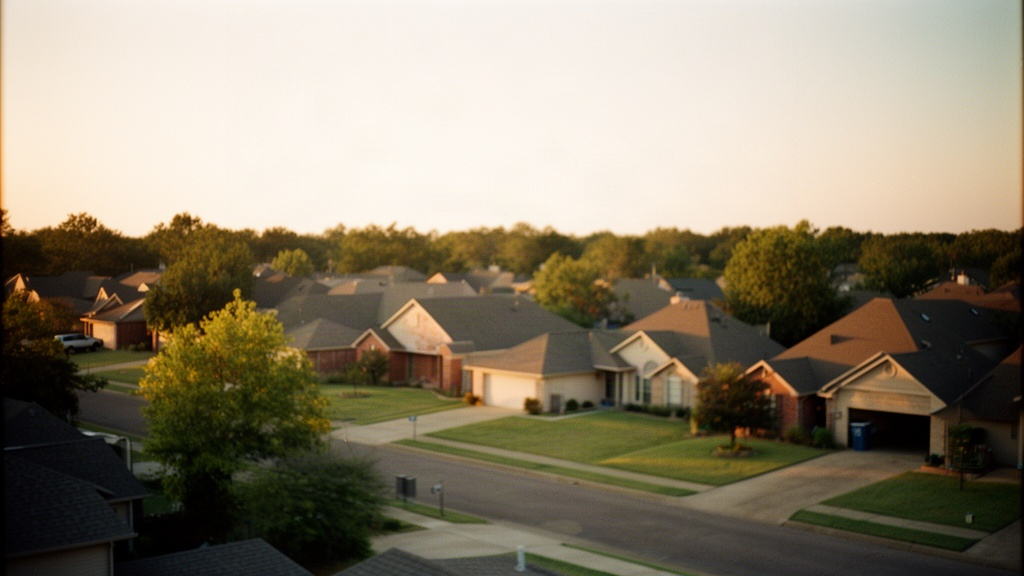
1. Why Realtors Refer Clients to Rome, GA
Agent-to-agent referrals are a significant driver of real estate transactions in mid-size markets. When an agent in Atlanta, Chattanooga, or even out of state has a client who wants to relocate to Northwest Georgia, Rome is frequently the city they mention first. The reasons are practical: Rome sits at the intersection of U.S. Highway 27 and U.S. Highway 411, it is roughly 70 miles northwest of Atlanta, and it offers a range of housing options that simply do not exist at comparable price points in larger metro areas.
The Referral Network Behind Rome's Market
Professional real estate referrals work because agents trust colleagues who specialize in a specific market. A buyer's agent in Marietta who has a client moving to Floyd County is not going to attempt to serve that buyer from two hours away. Instead, they refer the client to a Rome-based agent who knows the local inventory, the neighborhood differences, and the timing nuances that only come from working the market daily. For a deeper look at how referral relationships function in real estate, Inman's guide on real estate referrals outlines the trust dynamics and professional standards that make these relationships work.
Brianna Hightower of EXP Realty receives referrals from agents across Georgia and beyond because she brings documented local knowledge to every transaction. When a referring agent sends a client her way, that client arrives knowing they have a Rome specialist who can speak to specific streets, specific price bands, and specific timing windows rather than offering broad generalizations.
What Rome Offers That Drives Outside Interest
Rome's physical layout is one of its most distinctive features. Three rivers converge here: the Etowah, the Oostanaula, and the Coosa. That geography creates a variety of housing settings within a compact city of roughly 40,000 residents. You can find a craftsman bungalow within walking distance of Broad Street's restaurants and shops, a 1960s ranch home on a half-acre lot in a quiet residential corridor, or a newer construction home in a subdivision off Martha Berry Highway, all within a 10-minute drive of each other.
The presence of Shorter University, Berry College, and Floyd Medical Center creates consistent demand from faculty, staff, and healthcare professionals who are often relocating from other cities. That institutional base means Rome's housing market does not rely solely on organic local demand; it receives a steady stream of buyers who arrive through employer relocation and professional networks.
2. Rome, GA Real Estate Prices: What the Market Looks Like Right Now
As of September 2026, the median home price in Rome, GA sits in the low-to-mid $200,000 range, with meaningful variation by neighborhood, lot size, and condition. Entry-level homes, typically smaller ranch-style or older craftsman properties, are available in the $150,000 to $185,000 range. Move-up homes with three or four bedrooms, updated kitchens, and larger lots tend to cluster between $220,000 and $340,000. Properties with riverfront access, historic character on larger parcels, or significant square footage can exceed $500,000.
Median Price and Price Per Square Foot
Price per square foot in Rome currently runs between roughly $115 and $165 depending on the area and property type. Newer construction in subdivisions on the city's eastern and southern edges tends to land at the higher end of that range because buyers pay a premium for updated systems, open floor plans, and builder warranties. Older homes in established neighborhoods can offer more square footage per dollar but may require buyers to budget for deferred maintenance, HVAC updates, or roof replacement.
Days on market for well-priced listings in Rome have been running between 25 and 45 days as of September 2026. Homes that are priced accurately from the start and presented well tend to go under contract within the first two weeks. Overpriced listings, particularly those above $300,000 that lack recent updates, have been sitting longer and in some cases requiring price reductions before attracting offers.
How Rome Compares to the Broader Georgia Market
Georgia's statewide median home price has been tracking significantly higher than Rome's, largely because Atlanta-area suburbs pull the average up. For buyers priced out of Cobb or Cherokee County, Rome represents a genuine alternative: a city with its own infrastructure, healthcare, higher education, and cultural amenities at a fraction of the price. The NAR's metro market statistics dashboard tracks regional price trends and is a useful tool for buyers who want to contextualize Rome's numbers against surrounding markets.
Long-term appreciation in Rome has been steady rather than volatile. According to historical trend data tracked by sources like NeighborhoodScout's Rome, GA real estate market page, the market has shown consistent long-run appreciation without the boom-and-bust swings seen in some coastal or high-growth metros. That stability is part of what makes Rome attractive to buyers who plan to hold a property for five to ten years.
3. Rome, GA Neighborhoods: A Factual Look at the Housing Stock
Rome's residential areas each have a distinct physical character shaped by the city's topography, its development history, and its proximity to the three rivers. Understanding what each area actually contains, in terms of housing type, lot size, and price range, is more useful than any ranking or label. For a closer look at the downtown corridor specifically, the Downtown Rome real estate market guide covers that area in depth.
Historic and Walkable Areas Near Downtown
The neighborhoods immediately surrounding Broad Street contain some of Rome's oldest residential architecture. You will find two-story Victorian-era homes, craftsman bungalows from the early 1900s, and mid-century brick cottages on tree-lined streets. Lot sizes in these areas typically run from 0.1 to 0.3 acres. Prices for move-in ready homes in this zone have been ranging from the upper $170,000s to the mid $300,000s in September 2026, with condition and renovation level being the primary price driver.
Walkability here is genuine: Broad Street's retail, the Rome City Auditorium, the Rome Area History Museum, and the clock tower at the top of the hill are all within a short walk of many of these addresses. For buyers who want to walk to dinner or a weekend farmers market without getting in a car, this zone offers that in a way that most of Rome's outer residential areas do not.
East Rome and the Coosa Corridor
East Rome is a distinct part of the city with its own residential character, primarily consisting of post-war ranch homes and smaller brick houses on modest lots. Prices in this area tend to run on the lower end of the Rome spectrum, with many properties available in the $130,000 to $195,000 range. For buyers working with a tighter budget or investors looking for rental properties, East Rome offers more square footage per dollar than the historic core. The Shorter Avenue area real estate market guide covers a related corridor in more detail.
The Coosa River runs along the eastern edge of the city, and properties with river proximity or views command a premium. Riverfront lots or homes with direct water access in this corridor can push well above $400,000 depending on acreage and improvements. Flood zone status is an important consideration for any property near the Coosa or Etowah; buyers should request flood zone determinations early in the due diligence process.
The Outer Residential Zones
Rome's growth over the past two decades has pushed residential development outward along corridors like Martha Berry Highway to the northeast and U.S. 27 to the south toward Cave Spring. These outer zones contain the majority of Rome's newer construction: subdivisions with homes built between 2000 and 2026, typically featuring open floor plans, two-car garages, and lots ranging from 0.25 to 0.75 acres. Prices in these areas run from the low $200,000s for smaller new builds to the upper $300,000s and beyond for larger homes with premium finishes.
Berry College's 27,000-acre campus borders Rome to the northeast and creates a natural boundary that shapes the residential development patterns in that direction. Homes near the Berry campus area tend to sit on larger lots with more mature tree cover. The tradeoff is that these locations are farther from downtown Rome's commercial core, typically a 10 to 15-minute drive to Broad Street.
4. Market Timing: When to Buy or Sell in Rome, GA
Timing in Rome's market follows patterns that are partly seasonal and partly driven by local institutional calendars. The academic year at Berry College and Shorter University, the hiring cycle at Floyd Medical Center, and the general spring-summer buying season all influence when inventory rises and when buyer demand peaks.
Seasonal Patterns in Floyd County
Spring, specifically March through June, is historically Rome's most active listing season. Sellers who list in that window benefit from the highest concentration of active buyers and the longest days of natural light for showings. Inventory rises in spring, which gives buyers more choices but also more competition for well-priced homes. Multiple-offer situations on properties priced accurately in the $200,000 to $280,000 range have been common during spring windows.
Summer brings a secondary wave of activity tied to job relocations and families wanting to settle before the school year begins. This is when out-of-state referral buyers tend to arrive: someone who accepted a position at Floyd Medical Center in May often needs to close on a home by late July or early August. Sellers who keep their homes on the market through July can capture this demand even as the broader market begins to slow.
What September 2026 Looks Like for Buyers and Sellers
September 2026 is a transitional month in Rome's market, and that transition creates distinct opportunities for both sides. Buyer competition has softened compared to the spring peak, which means buyers who are ready to act right now face less pressure and have more negotiating room than they did six months ago. Sellers who list in September are working with a smaller but more motivated buyer pool; the people touring homes in September are not casual browsers.
For sellers, pricing discipline matters more in the fall than it does in the spring. A home that might have attracted multiple offers in April at a slightly optimistic price will sit in September if it is not priced to reflect current market conditions. Sellers who price accurately from day one are still seeing clean contracts and reasonable timelines. Those who push above market are watching their listings age. For a detailed breakdown of seller strategy and pricing, the guide on selling a home in Rome, GA covers the full process.
5. What to Know Before You Act: Due Diligence in Rome, GA
A referral from another agent gets you to Rome; local knowledge keeps you from making a costly mistake once you are here. Due diligence in Floyd County involves understanding property tax structures, flood zone maps, utility service areas, and the condition of the specific housing stock you are considering. None of those things are visible from a listing photo.
Schools, Crime, and Demographics: Where to Look
These are personal research decisions that every buyer and relocating family should make for themselves using primary sources. For school information, the Georgia Department of Education publishes school-level data including enrollment, programs, and performance metrics at gadoe.org. For public safety data, the Rome Police Department and Floyd County Sheriff's Office publish incident statistics through their own public portals. For demographic information, the U.S. Census Bureau's data.census.gov tool allows you to look up Floyd County and Rome city-level data directly.
No agent should be steering you toward or away from a neighborhood based on who lives there or how an area is characterized. The right approach is to give you the factual housing data and point you to the official sources for the personal research questions. What a good local agent adds is knowledge of specific streets, specific HOA situations, specific flood zone designations, and specific property-level issues that do not show up in any public database.
Working with a Local Expert Who Knows the Referral Landscape
When another realtor refers a client to Rome, they are trusting that the receiving agent will handle the transaction with the same professionalism they would bring themselves. That means clear communication, accurate pricing guidance, honest assessments of property condition, and a thorough understanding of the local contract and closing process in Georgia. Floyd County has its own property tax millage rates, its own utility districts, and its own local customs around inspections and due diligence periods that differ from what buyers and sellers experience in other states or even other Georgia counties.
Buyers relocating from out of state in particular benefit from an agent who can walk them through Georgia-specific contract terms, explain the due diligence fee structure, and flag local issues that would not appear on a national home search platform. For anyone coming from another state, the guide on who to hire to help you relocate to Rome, GA is worth reading before you start scheduling tours.
Brianna Hightower of EXP Realty has built her practice in Rome around exactly this kind of local depth. Agents who refer their clients to Rome trust her because she brings specific, checkable knowledge to every conversation, not broad generalizations. If you are a buyer, a seller, or someone relocating to Floyd County, that specificity is what protects your interests throughout the transaction.
FAQ
Why do realtors from other cities refer their clients to Rome, GA?
Agents refer clients to Rome primarily because the city offers a combination of relative affordability, genuine urban amenities, and a stable housing market that is difficult to find at comparable price points in the Atlanta metro or other Northwest Georgia cities. Rome has its own hospital system, two universities, a walkable downtown, and a range of housing types from historic craftsman bungalows to newer suburban construction. When a buyer is priced out of Cherokee or Cobb County, or when an employer relocation brings someone to Floyd County, a referring agent's best move is to connect that client with a Rome specialist who knows the local inventory. The referral relationship works because the receiving agent brings local knowledge the referring agent cannot replicate from a distance.
What is the current price range for homes in Rome, GA as of September 2026?
As of September 2026, Rome's housing market spans a wide range depending on location, size, and condition. Entry-level homes, typically smaller ranch or older craftsman properties, are available in the $150,000 to $185,000 range. Move-up homes with three or more bedrooms and updated features tend to fall between $220,000 and $340,000. Properties with significant acreage, riverfront access, or high-end finishes can exceed $500,000. Price per square foot currently runs between roughly $115 and $165 across the market. Buyers should expect that well-priced homes in the $200,000 to $280,000 range still attract competitive interest, while overpriced listings are sitting longer and requiring reductions.
Is fall a good time to buy or sell a home in Rome, GA?
Fall in Rome brings a more measured market than the spring peak, and that creates real opportunities for both buyers and sellers who understand the dynamics. Buyers in September and October face less competition than they would have in April or May, which can translate into more negotiating room and fewer multiple-offer situations. Sellers who list in the fall are working with a smaller but highly motivated buyer pool; people who are actively searching in September typically have a genuine reason to move. The key for sellers is accurate pricing from day one, since fall buyers are more likely to pass on an overpriced listing than spring buyers who fear missing out. A local agent who tracks Rome's seasonal patterns can help you time your move strategically.