← Back to Blog
Market Trends
Frisco Texas Real Estate Market Guide: Prices, Neighborhoods, Timing
By Brittani Miller
September 7, 2026 · 11 min read
If you are researching the Frisco, Texas real estate market, you already know this city moves fast and the details matter. This guide covers everything a buyer, seller, or relocating household needs to understand right now in September 2026: what homes actually cost, what the different parts of Frisco look like on the ground, how timing affects your outcome, and what market signals are worth paying attention to.
1. Where Frisco Home Prices Stand Right Now
Frisco home prices in September 2026 remain elevated compared to most of the Dallas metro. The median sale price for a single-family home in Frisco is hovering in the low-to-mid $600,000s, though that number shifts meaningfully depending on which part of the city you are looking at and whether the home is resale or new construction. For a deeper breakdown of the median figure, see what the average home price in Frisco looks like right now.
Median Price and Price-Per-Square-Foot
Price per square foot in Frisco currently runs roughly $210 to $260 for resale homes, depending on age, finish level, and location within the city. New construction from national builders active on Frisco's west side tends to price higher on a per-square-foot basis when you factor in lot premiums and upgrades. Homes under 2,000 square feet are comparatively rare in the resale pool, because most of Frisco's single-family housing stock was built between the late 1990s and the mid-2010s in the 2,500 to 4,000 square foot range.
How Prices Vary Across Frisco
Not every zip code in Frisco prices the same. The 75033 zip code, which covers much of central and west Frisco near the Eldorado Parkway and Teel Parkway corridors, tends to carry higher price points because of newer construction and proximity to the PGA Frisco campus. The 75034 zip code, anchored around Preston Road and the older established neighborhoods closer to the Collin County border with Plano, offers a wider range of price points, including resale homes in the $450,000 to $550,000 range. The 75035 zip code in the northeast portion of the city includes a mix of mid-2000s subdivisions and some of the city's most spacious lots.
What Is Driving Current Values
Frisco's price floor has stayed firm because demand consistently outpaces available inventory. Corporate relocations tied to the Dallas North Tollway corridor, the presence of the PGA of America headquarters and two championship courses at PGA Frisco, and the continued draw of the Toyota Stadium and the Star in Frisco (the Dallas Cowboys' headquarters and practice facility) all keep the city on the radar of relocating households. That said, the pace of appreciation has slowed from the sharp gains of 2021 through 2023. The market is recalibrating rather than retreating, a pattern consistent with what analysts are observing across the broader DFW region. For context on that wider picture, HousingWire's analysis of the Dallas-Fort Worth reset is worth reading.
2. Frisco Neighborhoods: Housing Stock and What to Expect
Frisco's neighborhoods fall into a few distinct eras of development, and each era comes with its own architectural character, lot sizes, and price profile. Understanding those differences helps you know what you are comparing when you look at two homes with similar list prices but very different features.
Established Neighborhoods in Central and East Frisco
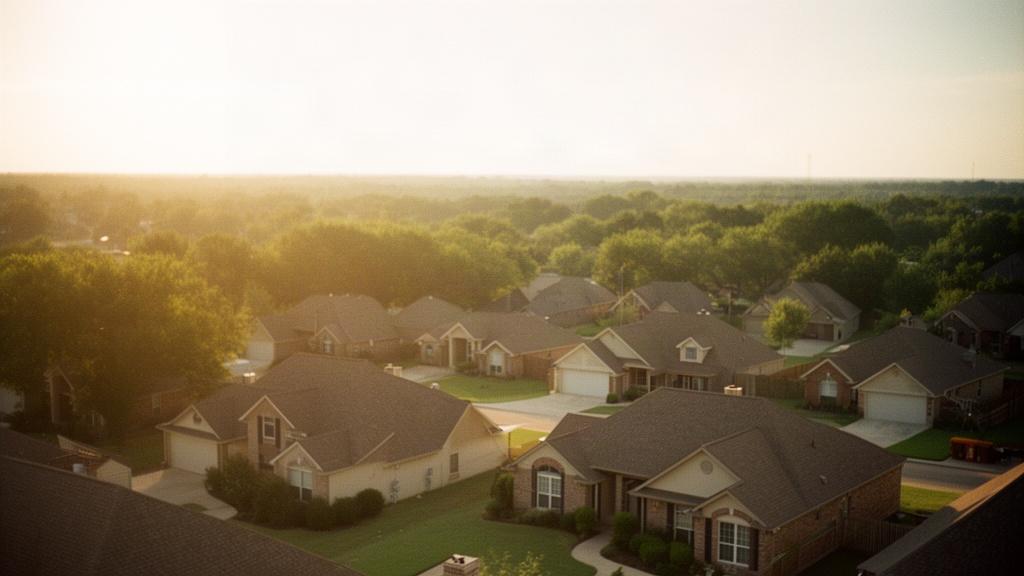
Central and east Frisco neighborhoods built between roughly 1998 and 2010 typically feature brick exterior construction, mature tree lines, and lots ranging from 6,000 to 9,000 square feet. Subdivisions like Plantation Resort, Frisco Lakes (the active adult section near El Dorado Parkway), and Grayhawk carry community amenities including pools, walking trails, and greenbelt access. These areas tend to offer more square footage per dollar than newer west-side construction because the homes have appreciated steadily but not at the same pace as brand-new product. Resale inventory in these corridors has been slowly increasing through 2026, giving buyers a bit more negotiating room than they had in 2022.
Starwood is one of the most distinctive established neighborhoods in Frisco. It is a gated community along the Dallas North Tollway with custom and semi-custom homes, many in the $900,000 to $2 million range, sitting on lots that are generous by Frisco standards. If you want a detailed look at what daily life and the housing stock there actually look like, see the full write-up on living in the Starwood neighborhood in Frisco.
West Frisco and New Development Corridors
West Frisco, roughly defined as the area west of the Dallas North Tollway between Eldorado Parkway and US-380, is where most of the city's remaining developable land sits. Builders including Highland Homes, Toll Brothers, Shaddock Homes, and David Weekley have active or recently completed sections in this corridor. Homes here tend to be newer (built 2018 to present), with open floor plans, three-car garages, and energy-efficient construction standards that older resale inventory does not always match. Lot sizes on the west side are often smaller than what you find in central Frisco, typically 5,500 to 7,500 square feet, because land costs are higher.
Master-Planned Communities Still Active in 2026
Several large master-planned communities in and around Frisco are still actively selling new homes in September 2026. These communities typically include amenity centers, hike and bike trail networks, and community pools built into the HOA structure. Buying new in a master-planned community comes with different considerations than buying resale, including build timelines, design center upgrade costs, and the fact that your neighbors may still be construction crews for a year or more. For a full breakdown of which communities are still open and what they are offering, see the guide to new master-planned communities still selling homes in Frisco in 2026.
3. Commute, Infrastructure, and Location Tradeoffs
Where you land within Frisco's footprint has a direct impact on your daily commute and your access to the city's major amenities. Frisco sits roughly 25 to 35 miles north of downtown Dallas, and that distance translates to very different drive times depending on the time of day and your specific origin point within the city.
Getting to Dallas and Other Employment Centers
The Dallas North Tollway is the primary artery connecting Frisco to employment centers in Plano, Addison, North Dallas, and downtown Dallas. During morning rush hour, a drive from central Frisco near Main Street to downtown Dallas typically takes 45 to 60 minutes under normal conditions, and can stretch longer if there is an incident on the tollway. Homes closer to the tollway on-ramps in east-central Frisco tend to have a commute advantage over homes on the far west side, which may require an additional 10 to 15 minutes just to reach the tollway. For a detailed look at commute times and route options, see the article on commute time from Frisco to downtown Dallas during morning rush hour.
Tollway Access and Daily Drive Times
US-380 (University Drive) runs east-west across the northern edge of Frisco and connects to McKinney, Prosper, and eventually Denton. The Sam Rayburn Tollway (SH-121) cuts through the southern portion of the city and provides access to Plano, Allen, and DFW Airport without requiring a trip through downtown Dallas. Households that work in the Legacy West or Plano business corridor can often commute in 20 to 30 minutes via SH-121, which makes south Frisco particularly convenient for that employment zone. Frisco also has a DART bus connection point, though the city is primarily car-dependent for daily transportation.
What Proximity to the Star and PGA Frisco Means for Values
The Star in Frisco, the Dallas Cowboys' 91-acre headquarters and entertainment district near the intersection of the Dallas North Tollway and Warren Parkway, has become a significant commercial anchor for the city's central corridor. Restaurants, hotels, and retail surrounding the Star have added to the area's appeal as a walkable destination within an otherwise car-centric city. PGA Frisco, located on Panther Creek Parkway in the northwest portion of the city, opened in 2023 and brought two 18-hole championship courses, a short course, and the PGA of America's national headquarters to Frisco. Homes within a few miles of PGA Frisco have seen heightened buyer interest, and the surrounding area continues to attract hospitality and retail development that adds long-term value to nearby residential properties.
4. Market Conditions and the Right Timing to Act
Timing a real estate transaction perfectly is not possible, but understanding current conditions in the Frisco, Texas market gives you a meaningful advantage whether you are buying or selling. The market in September 2026 looks different from the frenzied pace of 2021 and 2022, and that shift creates both challenges and opportunities depending on which side of the transaction you are on.
Is This a Buyer's Market, a Seller's Market, or Neither
Frisco currently sits in a balanced-to-slightly-seller-favoring market, with months of supply hovering in the two-to-three-month range for most price points. A true seller's market is generally defined as under two months of supply; a buyer's market is above six months. Frisco is in the middle, which means well-priced, well-presented homes still move quickly, often within two to three weeks, while overpriced listings are sitting longer and seeing price reductions. That is a meaningful shift from 2021 and 2022, when nearly everything sold above asking price within days. The National Association of Realtors has noted this pattern broadly across high-demand markets: slow sales alongside high prices is the defining tension in markets like Frisco right now.
Seasonal Patterns in Frisco Real Estate
Frisco follows a fairly predictable seasonal rhythm. The spring selling season, running from late February through May, brings the highest volume of listings and the most competitive buyer activity. Summer activity stays strong through July, then typically softens in August as the Texas heat peaks and households with children are focused on back-to-school. September, where we are right now, marks the beginning of a secondary activity window. Motivated buyers who missed spring inventory are still searching, and sellers who list in September face less competition from other listings than they would have in April. This can work in a seller's favor if the home is priced correctly.
How Interest Rates Are Shaping Decisions in September 2026
Mortgage rates remain the single biggest variable affecting buyer purchasing power in Frisco right now. A buyer purchasing a $625,000 home with 20 percent down at a 6.5 percent rate carries a principal and interest payment of roughly $3,160 per month. At 7.0 percent, that same loan costs approximately $3,325 per month. That $165 monthly difference translates to about $30,000 in purchasing power, which is meaningful in a market where the difference between a three-bedroom and a four-bedroom home can be exactly that. Buyers who are waiting for rates to drop significantly before purchasing should weigh that against the reality that Frisco home prices have not declined materially and inventory is not expanding rapidly.
If you are weighing whether to list now or hold until next year, the detailed breakdown on whether to sell your Frisco home now or wait covers the tradeoffs in depth.
5. What Buyers and Sellers Should Do Before Making a Move
Understanding the Frisco, Texas real estate market is one thing; executing a transaction well is another. The steps you take before you list or before you make an offer have a direct effect on your outcome, particularly in a market where pricing precision and preparation matter more than they did when everything sold itself.
Steps for Buyers Entering the Frisco Market
Get a full mortgage pre-approval, not just a pre-qualification, before you look at a single home. Sellers in Frisco still expect serious buyers to come with documentation in hand. Once you have financing confirmed, clarify your priorities: do you need a specific Frisco ISD school zone, a short commute to a particular employment center, or a certain minimum lot size? Those criteria will narrow your search to specific parts of the city and help you avoid wasting time on homes that look right on paper but do not fit your actual life.
Budget beyond the purchase price. Property taxes in Frisco are a significant ongoing cost. On a $600,000 home, the combined Frisco ISD, City of Frisco, Collin County, and applicable MUD or PID levies can add up to a tax bill in the $12,000 to $15,000 per year range, depending on the specific location and any applicable exemptions. For a detailed look at how those numbers break down, see the article on property taxes on a $600,000 home in Frisco.
Steps for Sellers Preparing to List
Price your home based on closed sales from the past 60 to 90 days, not on what your neighbor listed for six months ago. In a market where overpriced listings are sitting, the first two weeks on the market are your highest-traffic window. A home that enters at the right price generates competing interest; a home that enters too high and then reduces often carries a stigma that follows it through the rest of its days on market. Professional photography, a pre-listing inspection, and a clean, decluttered presentation are not optional extras in Frisco; they are baseline expectations among buyers shopping in the $500,000 to $800,000 range.
Frequently Overlooked Costs in Frisco Transactions
HOA fees vary widely across Frisco's neighborhoods and are often underestimated by buyers. Basic subdivision HOAs in Frisco typically run $400 to $800 per year, while master-planned communities with extensive amenity centers, pools, and trail systems can charge $1,200 to $2,400 per year or more. Some west-side properties also carry Municipal Utility District (MUD) or Public Improvement District (PID) assessments that show up as a separate line on the tax bill rather than in the HOA fee, so it is important to request and read the full resale certificate before closing. Sellers should also be prepared for the buyer to request a home warranty as part of negotiations, which typically costs $500 to $700 for a one-year policy.
FAQ
What is the current median home price in Frisco, Texas in September 2026?
The median sale price for a single-family home in Frisco is currently in the low-to-mid $600,000s as of September 2026, though that figure varies by zip code, age of the home, and whether the property is new construction or resale. Homes in the 75033 zip code near the PGA Frisco corridor tend to price higher, while the 75034 and 75035 zip codes offer a wider spread including some resale options in the $450,000 to $550,000 range. Price per square foot for resale homes generally runs between $210 and $260. New construction carries different pricing dynamics because of lot premiums and builder upgrade packages.
Is Frisco, Texas a buyer's market or a seller's market right now?
As of September 2026, Frisco sits in a balanced-to-slightly-seller-favoring market with roughly two to three months of supply across most price points. That means well-priced, well-presented homes still generate strong interest and sell within two to three weeks, while overpriced listings are sitting longer and seeing reductions. This is a more moderate environment than the extreme seller's market of 2021 and 2022, when nearly everything sold above asking price within days. Buyers have more room to negotiate on condition and terms than they did a few years ago, but they should not expect significant discounts on homes that are priced accurately.
What should I know about property taxes and HOA fees before buying in Frisco?
Property taxes in Frisco are a meaningful ongoing cost that buyers sometimes underestimate when budgeting. On a $600,000 home, the combined tax load from Frisco ISD, the City of Frisco, Collin County, and any applicable MUD or PID assessments can total $12,000 to $15,000 per year before exemptions. HOA fees range from around $400 per year in basic subdivisions to $2,400 or more annually in master-planned communities with extensive amenities. Some west-side properties carry PID or MUD assessments that appear as a separate line on the tax bill rather than within the HOA fee, so requesting a full resale certificate before closing is essential. A local agent familiar with Frisco's specific assessment districts can help you understand the full annual cost of ownership before you commit.