
← Back to Blog
Neighborhoods
The Crescent Hill Area of Louisville, Kentucky Real Estate Market Guide: Prices, Neighborhoods and Timing
By Jalyn Nutgrass
Re/Max Premier Properties | The Lewis Real Estate Group · DRE# 301453
September 5, 2026 · 12 min read
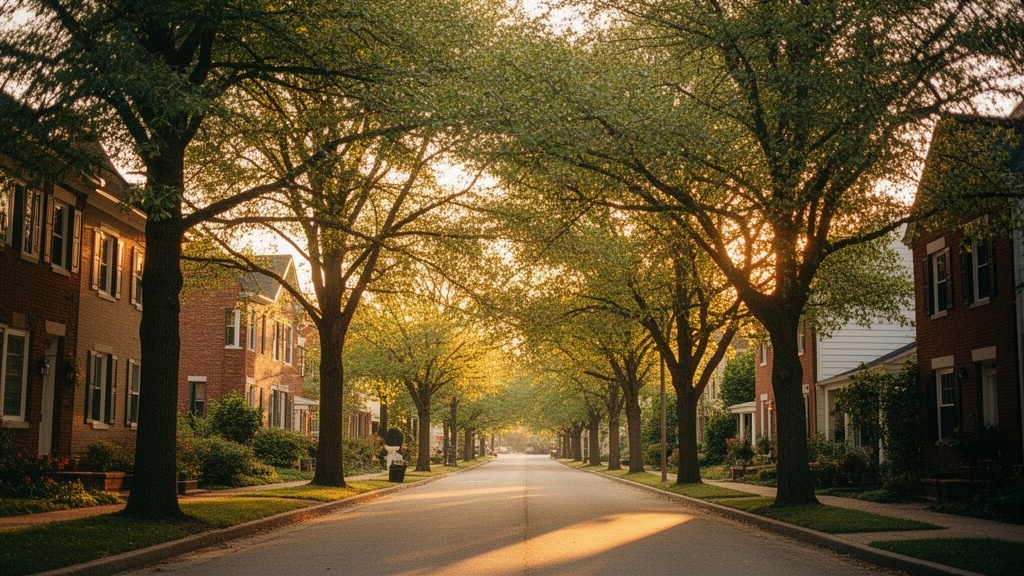
The Crescent Hill area of Louisville, Kentucky draws consistent attention from buyers and sellers alike, and for good reason: it offers a compact, walkable grid of early-twentieth-century homes within three miles of downtown Louisville, with a price range that spans from move-in-ready bungalows under $300,000 to fully renovated Craftsman and Tudor Revival properties pushing past $600,000. This guide covers what homes actually cost right now in September 2026, what the housing stock looks like street by street, how quickly properties are moving, and what buyers and sellers need to know about timing a transaction in this part of Louisville.
1. What Is the Crescent Hill Area of Louisville, Kentucky
Crescent Hill sits in the northeastern quadrant of Louisville proper, bordered roughly by Frankfort Avenue to the south, the Louisville Water Tower to the west near Zorn Avenue, Brownsboro Road to the north, and the Clifton Heights and Clifton corridors to the southwest. It is an established, platted neighborhood with a street grid that dates to the late 1800s and early 1900s, and most of its residential blocks have changed very little in their fundamental character since then.
Frankfort Avenue is the commercial spine of the area. It runs east-west through the heart of Crescent Hill and carries a mix of locally owned restaurants, coffee shops, independent retailers, and service businesses. The Louisville Water Tower Park, one of the oldest ornamental water towers in the United States, anchors the western edge of the neighborhood and sits directly on the Ohio River floodplain, giving the area a distinct sense of place you do not find in Louisville's newer subdivisions.
Geography and Boundaries
The neighborhood covers roughly 1.5 square miles and is fully surrounded by other established Louisville neighborhoods. Clifton lies to the southwest, Crescent Hill bleeds into Glenview and Mockingbird Valley to the east along River Road, and the Brownsboro Road corridor connects it to St. Matthews in about five minutes by car. Crescent Hill Reservoir, a functioning Louisville Water Company facility, occupies a significant chunk of the interior of the neighborhood and is surrounded by a walking path that residents use regularly.
The neighborhood is fully built out. There are no vacant lots being developed into subdivisions and no new construction communities being platted here. Every transaction involves an existing home, which means buyers are competing for a finite and relatively stable supply of properties. That supply constraint is one of the core forces shaping the Crescent Hill real estate market in September 2026.
What Makes the Housing Stock Distinct
The architecture in Crescent Hill is one of the most varied in Louisville. You will find American Foursquare homes from the 1910s sitting next to Craftsman bungalows from the 1920s, Tudor Revival cottages from the 1930s, and the occasional Colonial Revival on a larger lot. Lot sizes range from roughly 4,000 square feet on the tighter blocks near Frankfort Avenue up to 9,000 or 10,000 square feet on the quieter residential streets further north toward Brownsboro Road.
Interior square footage typically runs between 1,200 and 2,800 square feet, with the median home in the neighborhood falling somewhere around 1,600 to 1,800 finished square feet. Many homes have partially finished basements that add usable space not counted in the above-grade square footage figures. Detached garages are common but not universal; some of the smaller bungalow lots have no off-street parking at all.
For a broader look at how Crescent Hill compares to other established Louisville neighborhoods in terms of housing stock and price positioning, the Louisville Real Estate Market Guide on this site covers the city-wide picture in detail.
2. Crescent Hill Real Estate Prices in September 2026
The median sale price in the Crescent Hill area of Louisville, Kentucky sits at approximately $355,000 to $375,000 in September 2026. That figure reflects closed sales over the trailing ninety days and represents a modest increase from the same period in 2025, when the median hovered closer to $330,000 to $345,000. Price per square foot for above-grade finished space runs roughly $185 to $220 depending on the block, the condition of the home, and whether significant updates have been made to kitchens, baths, or mechanical systems.
Those numbers are consistent with the broader Louisville market trend of steady, moderate appreciation rather than the sharp spikes seen in some Sun Belt cities. Louisville KY real estate market trends have shown the metro area holding value well relative to national averages, and Crescent Hill's in-fill location with no new supply gives it additional price stability.
Current Median and Price Per Square Foot
Median sale price: approximately $365,000 as of September 2026. That number sits above the Louisville metro-wide median, which reflects the neighborhood's desirability, walkability, and architectural character. Homes that have been renovated to a high standard, particularly those with updated kitchens, restored original woodwork, and modern mechanical systems, regularly close at $420,000 to $500,000 or above. Unrenovated properties in original condition, which do come to market periodically, tend to settle in the $260,000 to $310,000 range depending on their size and specific location within the neighborhood.
For additional context on what the average home price looks like across Louisville as a whole right now, see the article on average home prices in Louisville in September 2026, which breaks down the metro-wide data in detail.
How Prices Break Down by Property Type
Entry-level bungalows: $260,000 to $310,000. These are typically two-bedroom or small three-bedroom homes with one bath, original hardwood floors, and kitchens and baths that need updating. They attract buyers who want to be in the neighborhood and are willing to do work over time.
Mid-range updated homes: $310,000 to $430,000. This is the largest segment of the market. Three-bedroom, one-and-a-half to two-bath homes with updated kitchens, newer HVAC systems, and restored original details dominate this price band. These properties move quickly, often within a week or two of listing.
Upper-tier renovated properties: $430,000 to $650,000 and above. Larger homes on wider lots, particularly those with four bedrooms, two or more full baths, finished basements, and high-end kitchen renovations, occupy this range. Tudor Revival and larger Craftsman examples on the quieter residential blocks north of Frankfort Avenue tend to land here when fully updated.
3. The Crescent Hill Real Estate Market Guide: What Buyers Need to Know
Buying in Crescent Hill requires preparation and speed. The neighborhood consistently sees more buyer demand than available inventory, which means well-priced homes in good condition rarely sit for more than ten to fourteen days before going under contract. Buyers who are not pre-approved and ready to move will lose properties they want.
Inventory Levels and Competition
Active listings in Crescent Hill at any given moment typically number between eight and eighteen homes. That is a thin market. When a well-presented home hits the MLS, it is not unusual to see multiple offers within the first weekend. The most competitive situations involve properties priced in the $310,000 to $400,000 range, where buyer demand is heaviest.
Buyers competing in this market should have their pre-approval letter in hand before they even schedule a showing. An offer submitted without a current pre-approval letter from a recognized lender will not be taken seriously by most Crescent Hill sellers. Escalation clauses and clean offers with minimal contingencies are common tools in competitive situations, though waiving an inspection entirely is a decision each buyer must weigh carefully given the age of the housing stock.
What You Get at Each Price Point
At $300,000 in Crescent Hill, expect a home that needs work. You will likely get original plaster walls, a galley kitchen that has not been touched in decades, one bathroom, and a furnace that is past its expected service life. The bones are typically solid because Louisville builders of that era used quality materials, but the systems and finishes will need attention.
At $380,000 to $420,000, the picture changes considerably. Homes in this range have generally had at least one significant renovation cycle, meaning the kitchen has been opened up and updated, at least one bathroom has been modernized, and the HVAC system is within the last ten to fifteen years. Original hardwood floors are typically present and refinished. These are move-in-ready homes that still carry the character of the neighborhood.
At $500,000 and above, buyers are looking at homes that have been renovated to a current standard throughout, often with custom cabinetry, quartz or stone counters, primary suites with updated baths, and finished lower levels. These are the neighborhood's standout properties and they do not come to market often.
Commute Times and Proximity to Louisville Landmarks
Crescent Hill is approximately three miles from downtown Louisville. By car during off-peak hours, that is a ten to twelve minute drive via Frankfort Avenue or Brownsboro Road. During morning rush hour, the same trip can take eighteen to twenty-five minutes depending on the route. The University of Louisville's main Belknap Campus is roughly five to six miles away, accessible via the Watterson Expressway or through the Highlands. Norton Healthcare's main campus downtown is about twelve minutes by car.
Louisville Muhammad Ali International Airport is approximately nine miles from Crescent Hill, typically a fifteen to twenty minute drive depending on the time of day. The Kentucky Exposition Center and the Louisville Slugger Field are both accessible within fifteen minutes. Crescent Hill's position in the northeast quadrant of the city also puts it roughly twelve miles from the Eastpoint Business Park and the Gene Snyder Freeway corridor, which serves a large concentration of employers in eastern Jefferson County.
If you are also considering the Highlands neighborhood, which borders Crescent Hill to the southwest, the guide on living in the Highlands neighborhood in Louisville covers that area's housing stock and character in detail.
4. What Sellers in Crescent Hill Should Know Right Now
Sellers in Crescent Hill are in a strong position in September 2026. Inventory remains constrained, buyer demand continues to outpace supply, and the neighborhood's architectural character gives well-prepared homes a marketing advantage that cookie-cutter subdivisions simply cannot replicate. That said, pricing a Crescent Hill home correctly is more nuanced than it looks from the outside.
Days on Market and Pricing Strategy
Well-priced Crescent Hill homes are averaging seven to fourteen days on market before going under contract in September 2026. Homes that are overpriced relative to their condition and comparable sales sit longer, often thirty to sixty days, and frequently require a price reduction that ends up netting the seller less than a correctly priced listing would have from day one.
The biggest pricing mistake sellers make in Crescent Hill is using the sale price of a fully renovated home as a benchmark for their unrenovated property. Buyers in this neighborhood are sophisticated. They know what renovations cost in Louisville, and they will discount their offers accordingly. A seller who prices an original-condition home as if it were move-in ready will watch it sit while comparable properties sell.
For a thorough breakdown of how to price and prepare a Louisville home for sale, the article on selling a home in Louisville: pricing, timeline and what to expect covers the process from start to finish.
Preparing a Crescent Hill Home for Sale
Presentation matters more in Crescent Hill than in many other Louisville neighborhoods. Buyers here are paying a premium for character, so anything that detracts from the home's original charm will cost you at the negotiating table. Peeling exterior paint on a 1920s bungalow, a front porch with rotting boards, or a living room with original woodwork painted over are all items that buyers will cite in their offer price or inspection negotiations.
Sellers who invest in exterior paint, landscaping, and minor repairs before listing consistently net more than those who list as-is and hope buyers will overlook deferred maintenance. Professional photography is non-negotiable in a neighborhood where the architecture is a primary selling point. Buyers shopping Crescent Hill are often doing so from out of town, and the listing photos are frequently what determines whether they schedule a showing at all.
5. Timing the Crescent Hill Market: When to Buy or Sell
Timing in Crescent Hill follows Louisville's broader seasonal rhythms, but with some neighborhood-specific nuances worth understanding before you list or make an offer.
Seasonal Patterns in This Neighborhood
Spring, from late March through May, is consistently the most active period for Crescent Hill real estate. Inventory rises as sellers who waited out the winter list their homes, and buyer activity peaks as people try to close before the end of the school year. Competition is at its highest during this window, and sellers who list in April or early May typically see the strongest offers.
Summer, from June through August, remains active but slightly less frenetic. Inventory ticks up a bit as some sellers who missed the spring window list their homes. Buyers who were outbid in the spring are still in the market and motivated.
Fall, meaning September through November, is where the market sits right now. Activity is solid but more measured. Buyers who are serious about closing before the holidays are actively searching, and sellers who list in September and October face less competition from other listings than they would have in the spring. For buyers, fall can present opportunities to negotiate more carefully on homes that have been sitting since summer.
Winter, from December through February, sees the fewest listings and the fewest buyers. Sellers who list in January or February are typically motivated, which can create opportunities for buyers willing to search during the cold months. Inventory is at its lowest, but so is competition.
How Crescent Hill Fits Into the Broader Louisville Market
Crescent Hill tends to hold value more consistently than some of Louisville's newer suburban corridors because its supply is fixed and its housing stock is genuinely irreplaceable. You cannot build a new 1920s Craftsman bungalow. That scarcity is a structural feature of the market, not a temporary condition. The Midwest regional housing market has shown consistent resilience over the past several years, and Louisville's in-fill neighborhoods like Crescent Hill benefit from that broader dynamic.
Interest rates remain a meaningful factor for buyers in September 2026. At current rate levels, a buyer purchasing a $365,000 home with ten percent down is financing roughly $328,500. At a thirty-year fixed rate in the mid-to-upper six percent range, that translates to a principal and interest payment somewhere around $2,050 to $2,150 per month before taxes and insurance. Buyers who are stretching to get into Crescent Hill should model their payment carefully before committing to a price range.
If you are new to the Louisville home buying process and want to understand what the full transaction looks like from pre-approval through closing, the first-time home buyer guide for Louisville, Kentucky walks through every step in plain language.
FAQ
What is the median home price in the Crescent Hill area of Louisville, Kentucky right now?
As of September 2026, the median sale price in Crescent Hill is approximately $355,000 to $375,000, based on closed sales over the trailing ninety days. That figure is above the Louisville metro-wide median, reflecting the neighborhood's architectural character, walkable location, and constrained supply. Fully renovated homes on larger lots can push well past $500,000, while original-condition properties in need of updating tend to close in the $260,000 to $310,000 range. Price per square foot for above-grade finished space runs roughly $185 to $220 depending on condition and location within the neighborhood.
How competitive is the Crescent Hill real estate market for buyers?
Crescent Hill is a competitive market with limited inventory. At any given time, active listings in the neighborhood number between eight and eighteen homes, which is a thin supply for the level of buyer interest the area attracts. Well-priced, move-in-ready homes in the $310,000 to $420,000 range frequently receive multiple offers within the first weekend on market. Buyers should have a current mortgage pre-approval letter before scheduling showings and should be prepared to move quickly when a home that meets their criteria becomes available. Working with an agent who monitors new Crescent Hill listings as soon as they hit the MLS is a practical advantage in this environment.
Is fall a good time to buy or sell a home in Crescent Hill, Louisville?
Fall, including September and October, is an active but more measured period in the Crescent Hill market compared to the spring peak. For sellers, listing in September means less competition from other sellers than in April or May, and buyers who are motivated to close before the holidays are actively searching. For buyers, fall can offer slightly more room to negotiate on homes that have been on the market since summer, and the pool of competing buyers is smaller than it would be in the spring. Both buyers and sellers should be aware that inventory typically drops further in November and December, so the window for fall transactions is relatively concentrated.