← Back to Blog
Market Trends
What New Construction and Development Projects Are Happening in Oklahoma City in 2026
By Jeanine Martin
Lime realty
September 25, 2026 · 12 min read
Oklahoma City is in the middle of one of its most active construction cycles in decades, and if you are buying, selling, or relocating here in 2026, knowing what is being built matters. New construction and development projects in Oklahoma City in 2026 span downtown skyscrapers, a brand-new professional sports venue, master-planned suburban communities, and major infrastructure upgrades. This guide covers the full picture so you can make smarter decisions about where to buy, what to watch, and how the building boom affects home values across the metro.
1. The Downtown Oklahoma City Building Boom in 2026
Downtown OKC is undergoing its most dramatic physical transformation since the original MAPS program rebuilt the core in the late 1990s. Five major construction projects are simultaneously reshaping the skyline, and several of them are expected to reach completion or significant milestones before the end of 2026. For anyone considering a downtown condo purchase or evaluating how central Oklahoma City will look in five years, the pace of change right now is genuinely significant.
The New Arena and Entertainment District
The most talked-about project in Oklahoma City right now is the new arena being built to replace Paycom Center as the home of the Oklahoma City Thunder. The facility is part of a broader entertainment district concept that includes retail, restaurants, and public gathering space along the south end of downtown near the Oklahoma River. According to Urban Land Institute's coverage of the project, the new stadium and surrounding entertainment district are considered the final major pieces needed to complete the vision for a fully activated downtown core that planners and civic leaders have been working toward for over two decades.
The arena project carries real weight for real estate buyers. Districts anchored by professional sports venues and walkable entertainment tend to attract hospitality investment, residential development, and retail tenants at a faster rate than comparable blocks without that anchor. The blocks immediately south and west of the new arena footprint are already drawing developer interest for mixed-use residential projects, which means the window for buying into that corridor before pricing reflects the finished product is narrowing.
Office and Mixed-Use Towers Rising on the Skyline
Beyond the arena, downtown Oklahoma City currently has multiple high-rise and mid-rise projects under construction or in the permitting phase. A detailed look at five of the largest active builds, including office towers, hotel developments, and mixed-use residential projects, was published earlier in 2026 and confirms that the skyline is changing in ways that are visible from the I-40 and I-235 corridors. You can review the specifics of those five mega-builds in this Hoodline breakdown of the projects reshaping downtown OKC. Each project adds density, foot traffic, and daytime population to the urban core, all of which support the retail and restaurant ecosystem that makes downtown living more practical for condo buyers.
For buyers weighing a downtown condo purchase, understanding which blocks are adjacent to active construction is important for both short-term livability and long-term value. If you want a deeper look at what to consider before purchasing in this market, the guide on buying a condo downtown covers the key questions around HOA structures, parking, and what the construction timeline means for your purchase decision.
Scissortail Park Area Expansion
Scissortail Park, the 70-acre linear park that opened in phases starting in 2019, continues to generate development pressure on surrounding blocks. In 2026, several parcels along the park's western and northern edges are in active development for residential and hospitality uses. The park itself connects to the new convention center, the Omni Hotel, and the planned entertainment district, creating a walkable spine through the southern half of downtown that did not exist a decade ago. Properties within a few blocks of Scissortail consistently command a premium over comparable units further north, and that gap has been widening as the park fills in.
2. Suburban Housing Development Across the OKC Metro
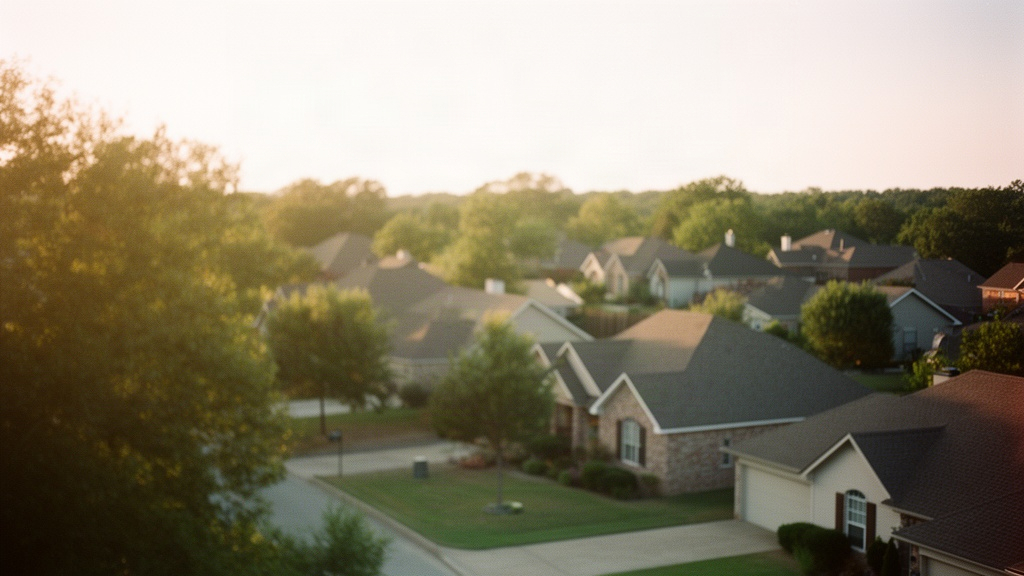
The downtown construction boom is only part of the story. The broader Oklahoma City metro is experiencing a surge in suburban housing production driven by population growth, in-migration from higher-cost states, and employer expansions that are pulling workers into the region. New construction and development projects in Oklahoma City in 2026 are concentrated in several distinct suburban corridors, each with its own price range, lot size profile, and builder mix.
Edmond and Deer Creek Growth Corridors
Edmond remains one of the most active new construction markets in the metro, with builder activity concentrated along the Coffee Creek corridor, near the Deer Creek school district boundary, and in master-planned communities off Covell Road and Memorial Road. New single-family homes in Edmond currently range from the low $300,000s for entry-level production builds on smaller lots to over $700,000 for custom and semi-custom homes on acreage. Builders including Homes by Taber, Ideal Homes, and Landmark Fine Homes are all active in the Edmond area right now, offering floor plans from roughly 1,600 square feet to over 3,500 square feet.
The Deer Creek area north of Edmond proper has seen particularly strong absorption of new inventory in 2026, with subdivisions along N. Coltrane Road and N. Western Avenue filling in quickly. Lot sizes in newer Edmond communities typically run from 6,500 to 10,000 square feet for production homes, with larger lots available in custom sections. For a thorough look at pricing trends and timing in this submarket, the Edmond area real estate market guide covers what buyers need to know before making an offer.
Yukon, Mustang, and the Southwest Corridor
The southwest metro, including Yukon and Mustang, is absorbing significant new construction volume in 2026, partly because land costs are lower than in Edmond and partly because the SH-152 and US-270 corridors provide reasonable access to the Will Rogers World Airport employment hub and to downtown via I-40. New homes in Yukon currently start around $270,000 for a three-bedroom production build and run to approximately $450,000 for larger homes in newer master-planned communities. Mustang has seen several new subdivision plats filed in 2026, with builders targeting the $280,000 to $380,000 price band that appeals to buyers who need more square footage than the Midtown market offers at that price point.
Commute times from Yukon and Mustang to downtown Oklahoma City run approximately 25 to 40 minutes depending on the specific subdivision and departure time, with I-40 being the primary route. That corridor is one of the more heavily traveled in the metro during morning rush, so buyers evaluating new construction in these cities should factor in drive time carefully.
Moore, Norman, and the South Metro
Moore and Norman are both seeing active new construction in 2026, with builder activity concentrated along the S. Eastern Avenue corridor in Moore and along the 24th Avenue SW and Highway 9 corridors in Norman. Norman in particular is benefiting from University of Oklahoma-adjacent employment growth and from remote workers who want a college-town environment with more space than the urban core provides. New homes in Norman range from approximately $290,000 for a starter build to over $500,000 in newer custom sections near Lake Thunderbird. Moore's new construction tends to be more tightly priced, with most production homes landing between $260,000 and $380,000.
3. Infrastructure and Transit Projects Shaping Future Growth
New buildings do not exist in isolation. The infrastructure projects currently underway in Oklahoma City in 2026 will determine which corridors grow fastest over the next decade, and buyers who understand that relationship can make more informed location decisions today.
MAPS 4 Projects Still Delivering
MAPS 4, the $978 million package approved by Oklahoma City voters in 2019, is still delivering projects in 2026. The package funds a new multi-sport complex on the Oklahoma River, a mental health and crisis intervention center, senior wellness centers, a new animal shelter, parks improvements across the metro, and streetscape enhancements in several commercial corridors. Several of these projects are in the construction or final planning phase right now, meaning their full impact on surrounding real estate has not yet been priced in. Areas near MAPS 4 park improvements and the new sports complex are worth watching for buyers thinking about a three-to-five-year investment horizon.
Road and Highway Improvements Affecting Commutes
ODOT has multiple active projects in the OKC metro in 2026 that affect commute patterns and, by extension, where new housing demand is concentrating. The I-40 Crosstown reconstruction project, which has been ongoing in phases, continues to affect travel times through the central corridor. The planned improvements to the I-235 and US-77 interchange north of downtown are expected to improve access to the Edmond and Deer Creek growth corridors. Buyers evaluating new construction in the outer suburbs should check current ODOT project maps before committing to a specific location, since active construction zones can add 10 to 20 minutes to a commute during peak hours.
Oklahoma City does not currently have a commuter rail line serving the suburbs, so highway access is the primary variable in commute quality for most new construction buyers. The streetcar system that serves a limited loop through Midtown, Bricktown, and the downtown core is useful for residents already living within that footprint but does not meaningfully change the calculus for buyers in Edmond, Yukon, or Moore.
4. What the Development Boom Means for Home Buyers and Sellers
Oklahoma City's construction boom is not just a civic story; it has direct implications for anyone buying or selling a home in the metro right now. Understanding how new construction supply and major development projects interact with the existing resale market helps buyers avoid overpaying and helps sellers price and time their listings more effectively.
How New Construction Affects Existing Home Prices
In submarkets where builders are delivering significant new inventory, resale sellers face more competition than in markets with limited new supply. In Yukon and Mustang right now, for example, a resale home priced at $320,000 is competing directly with new construction at a similar price point that offers builder warranties, modern floor plans, and sometimes builder-paid closing cost incentives. Sellers in those corridors need to price carefully and present their homes in strong condition to compete. In contrast, resale sellers in established areas like Nichols Hills, Mesta Park, or Crown Heights face far less direct competition from new construction because buildable land in those areas is essentially nonexistent.
For sellers in the OKC metro right now, understanding your specific submarket's new construction exposure is critical to setting the right list price. The guide on selling a home in Oklahoma City covers how to position a resale home competitively in a market where buyers have options.
Buying New Construction vs. Resale in OKC Right Now
New construction in the OKC suburbs offers buyers modern energy efficiency, open floor plans, and builder warranties, but it also comes with trade-offs that are easy to underestimate. Lot sizes in newer communities are often smaller than what you find in 1970s and 1980s subdivisions at a similar price point. Landscaping, fencing, and window treatments are typically not included in the base price. Builders in the current market are offering incentives including rate buydowns and closing cost contributions, but those incentives are negotiable and vary significantly by community and completion stage.
Resale homes in established OKC neighborhoods often offer larger lots, mature trees, and proximity to amenities that newer subdivisions on the suburban fringe simply do not have yet. Buyers relocating to Oklahoma City sometimes underestimate how long it takes for a brand-new subdivision's retail and service infrastructure to catch up to the housing. Grocery stores, restaurants, and medical offices typically lag new residential development by two to four years. If you are evaluating new construction communities, it is worth driving the area on a weekday evening to get a realistic sense of what daily life looks like right now, not what the marketing materials project for three years from now.
For buyers relocating to Oklahoma City who are still orienting to the metro's geography, the relocating to Oklahoma City guide provides a useful overview of how the different parts of the metro compare on commute times, price ranges, and housing stock before you start narrowing your new construction search.
One more consideration for buyers evaluating new construction as an investment: the Oklahoma City boom is attracting attention from investors as well as owner-occupants. The investment property guide for Oklahoma City covers how to evaluate new construction communities from a rental yield and long-term appreciation perspective, which is a different analysis than buying for primary residence.
5. The Suburban Demand Surge and What It Signals for 2026 and Beyond
Oklahoma City's downtown transformation is generating a secondary wave of demand in the suburbs that is reshaping the entire metro's housing market. As major employers and entertainment anchors concentrate in the urban core, workers and residents who want more space are pushing outward into Edmond, Yukon, Mustang, Moore, and even further-out communities like Guthrie and El Reno. This dynamic is well documented: as HousingWire reported on Oklahoma City's boom and suburban demand surge, the city's economic momentum is directly translating into housing demand across the metro, not just in the core.
What this means practically is that buyers who are waiting for prices to soften in the suburbs may be waiting longer than they expect. Builder production is increasing, but so is demand from in-migration. Oklahoma City has been one of the more affordable major metros in the country for several years, and that relative affordability continues to attract buyers from Texas, California, and the Pacific Northwest who find that their budget goes significantly further here. A buyer priced out of the Austin or Denver market can often purchase a comparable or larger new construction home in Edmond or Yukon for 40 to 50 percent less.
The pace of new construction activity in Oklahoma City in 2026 also has implications for first-time buyers who are trying to decide between new and resale. The first-time home buyer guide for Oklahoma City covers down payment assistance programs and local loan options that can apply to new construction purchases as well as resale, which is a detail many first-time buyers miss when they are comparing their options.
The Visit OKC website maintains a running list of new openings and upcoming projects across the city, which is a useful resource for tracking how the amenity landscape is evolving alongside the housing market. Buyers who are evaluating specific communities can cross-reference that list to see what retail, hospitality, and entertainment options are planned near a prospective purchase, giving a more complete picture of what daily life in that location will look like in two to three years.
FAQ
Is new construction in Oklahoma City more expensive than resale homes right now?
In most OKC suburbs, new construction and resale homes at similar price points are in direct competition with each other in September 2026. New construction typically carries a modest premium per square foot compared to resale in the same submarket, but builders are currently offsetting that with incentives including mortgage rate buydowns and closing cost contributions. The gap varies significantly by location: in Edmond, new construction commands a more substantial premium over resale than it does in Yukon or Mustang, where the resale inventory is larger and the builder competition is more intense. Working with a knowledgeable local agent to compare the true all-in cost of new versus resale in a specific community is the most reliable way to make that comparison.
How do I find out which new construction communities are currently open in the OKC metro?
The most reliable approach is to work with a local buyer's agent who tracks builder activity across the metro, since many communities have limited online visibility until they are fully platted and marketing. Beyond that, the Oklahoma City metro's major builders including Homes by Taber, Ideal Homes, Landmark Fine Homes, and Central Oklahoma Habitat all maintain community pages on their websites with current inventory and pricing. The Oklahoma City Metropolitan Association of Realtors also publishes monthly market data that breaks down new construction permit activity by submarket. For a broader picture of what is being built and planned across the city, the Visit OKC website maintains a current list of projects and openings that covers commercial and mixed-use development alongside residential.
Will all the new development in downtown OKC affect property values in surrounding neighborhoods?
The historical pattern in Oklahoma City is that major downtown investment has had a positive spillover effect on adjacent areas. The original MAPS program in the 1990s is credited with catalyzing the revival of Bricktown and the Midtown corridor, both of which saw significant residential and commercial investment in the years following those public infrastructure improvements. The current wave of development, anchored by the new arena and entertainment district, is expected to generate similar pressure on the blocks immediately surrounding the project. Areas like the Automobile Alley district, the Film Row corridor, and the blocks east of Scissortail Park are already seeing increased developer interest. How quickly that translates to measurable price appreciation in nearby residential properties depends on the pace of project completion and the broader economic environment, but the directional trend is consistent with past cycles in OKC.