← Back to Blog
Market Trends
Tulsa, Oklahoma Real Estate Market Guide: Prices, Neighborhoods and Timing
By Kimmie Martin
September 20, 2026 · 12 min read
Whether you are buying your first home, selling a property you have owned for years, or relocating to Tulsa from another state, understanding the local real estate market is the single most important step you can take before signing anything. This Tulsa, Oklahoma real estate market guide covers current prices, the character of different parts of the city, and the timing factors that shape whether a deal works in your favor. Every number and neighborhood detail here reflects conditions as of September 2026.
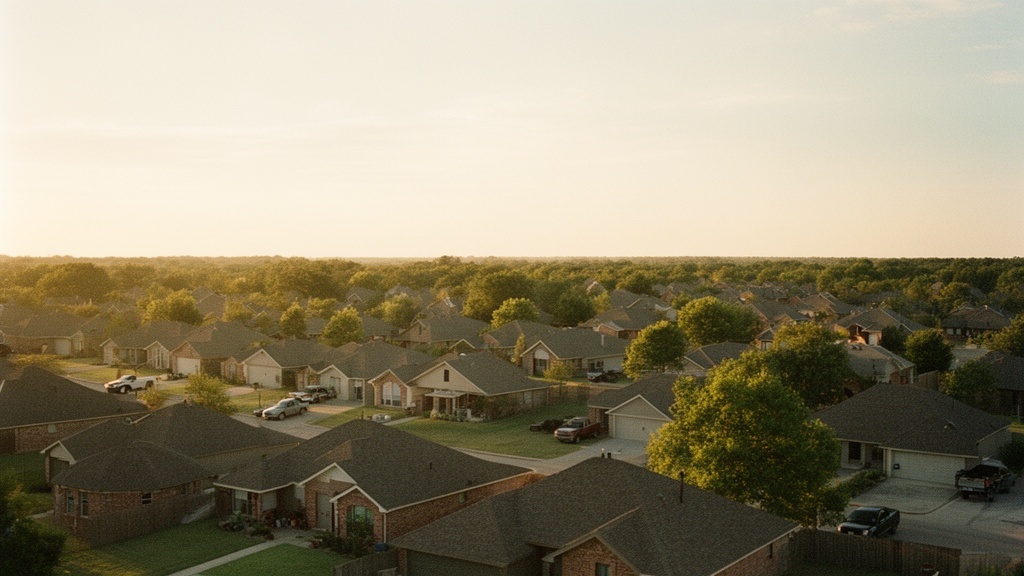
1. Where Tulsa Home Prices Stand Right Now
Tulsa remains one of the more affordable mid-sized cities in the country, with a median home sale price in the low-to-mid $200,000s as of September 2026. That figure reflects closed sales across all property types, from compact bungalows in the Pearl District to four-bedroom brick ranches in South Tulsa. The number moves depending on which zip codes are included, so it is worth understanding what sits above and below that median before you set a budget.
The Median Price and What Drives It
Tulsa's price floor is anchored by its large stock of older homes built between the 1940s and 1980s. Many of these properties sit on generous lots, sometimes 8,000 to 12,000 square feet, in neighborhoods within a few miles of downtown. Entry-level buyers can still find move-in-ready homes in the $150,000 to $190,000 range in areas like East Tulsa and parts of North Tulsa, while updated properties in Midtown or the Maple Ridge area routinely close above $350,000. The spread is wide, which is one reason the median alone does not tell the full story.
For a detailed look at the current median and recent price trend data, Redfin's Tulsa housing market page publishes updated figures on median sale price, price per square foot, and the share of homes selling above list price. Checking that alongside local closed sales data gives you the clearest picture of where the market is on any given week.
How Tulsa Compares to Its Own Recent History
Prices in Tulsa appreciated sharply between 2020 and 2023, then plateaued through much of 2024 and 2025 as mortgage rates climbed and buyer demand softened. In September 2026, the market is in a more balanced position than it was at the height of that run. Sellers are not giving homes away, but buyers are no longer competing against ten offers on day one in most price ranges. That balance is good news for anyone who sat out the frenzied years and is now ready to act.
2. A Neighborhood-by-Neighborhood Price Breakdown
Tulsa's geography shapes its real estate market as much as any economic factor. The Arkansas River runs through the western side of the metro, the IDL (Inner Dispersal Loop) defines the downtown core, and the city stretches south along the US-75 and US-169 corridors into some of the fastest-growing suburban zip codes in the state. Each corridor has its own price range, housing stock, and pace of sales.
North Tulsa and the Pearl District
North Tulsa contains some of the city's oldest housing stock, with craftsman bungalows and foursquare homes dating to the 1910s and 1920s. The Pearl District, centered around the stretch of Peoria Avenue north of downtown, has seen renovation activity and new restaurant and retail openings over the past several years. Median prices in this corridor generally run between $120,000 and $200,000, though renovated properties in the Pearl District itself can reach higher. Lot sizes tend to be smaller than in South Tulsa, typically 5,000 to 7,500 square feet, and many homes were built before modern energy codes, so buyers should budget for potential updates.
Midtown Tulsa
Midtown is the stretch of Tulsa roughly between 11th Street and 51st Street, bounded by the river to the west and Harvard Avenue to the east. It includes neighborhoods like Maple Ridge, Brookside, and Swan Lake, all of which feature mature tree canopy, walkable blocks, and a mix of Tudor revivals, colonial revivals, and mid-century ranch homes. Prices in Midtown range widely: a smaller bungalow near 31st and Peoria might list in the $220,000s, while a fully updated Maple Ridge home on a double lot can exceed $600,000. The 918 Brookside corridor along Peoria between 36th and 51st Streets anchors the area with independent restaurants, coffee shops, and local retail within walking distance of many homes.
For a closer look at the day-to-day experience of living in this part of the city, see the article on what it is actually like to live in Midtown Tulsa, which covers commute patterns, local amenities, and the physical character of the area in more detail.
South Tulsa and the Jenks Border Areas
South Tulsa, particularly the zip codes around 74137 and 74133, contains the city's largest concentration of newer suburban construction. Homes here were largely built between the 1990s and 2010s and feature brick exteriors, two-car garages, open floor plans, and subdivision amenities like community pools and walking trails. Median prices in South Tulsa cluster between $280,000 and $420,000, with custom builds near the Jenks border and along the river corridor pushing well above that. The area sits close to the Tulsa Hills shopping district on the southwest side and the 71st Street retail corridor on the southeast.
East Tulsa and the Broken Arrow Corridor
East Tulsa spans the area east of US-169 toward the Broken Arrow city line, with ranch-style homes from the 1960s through 1980s making up most of the housing stock. Prices here are among the most accessible in the metro, with many three-bedroom homes available between $140,000 and $210,000. The area connects directly to Broken Arrow via the Creek Turnpike and US-51, and many buyers who work in Broken Arrow's industrial and healthcare corridors choose this part of Tulsa for its shorter commute distances. If you are weighing the commute tradeoffs, the article on commuting from Broken Arrow to downtown Tulsa breaks down typical travel times during morning rush hour.
West Tulsa and the River District
West Tulsa sits across the Arkansas River from downtown and includes older neighborhoods like Red Fork and the areas surrounding the Tulsa Fairgrounds. The housing stock skews toward smaller, older homes in the $110,000 to $175,000 range, though the river-adjacent sections have drawn interest from buyers attracted by proximity to the River Parks trail system and the developing River District entertainment area. Buyers considering homes near the river should review flood zone maps carefully; the article on flooding and storm risk for homes near the Arkansas River covers how flood zone designation affects insurance costs and what to look for during due diligence.
3. What the Current Market Conditions Mean for Buyers
Buyers in September 2026 have more leverage than they did in 2021 or 2022, but this is not a buyer's market in the classic sense. Well-priced homes in Midtown and South Tulsa still move quickly, often within two to three weeks of listing. The advantage buyers have right now is in the negotiation details: inspection contingencies, seller-paid closing costs, and repair credits are all back on the table in a way they were not during the peak years.
Inventory Levels and What They Signal
Active inventory in the Tulsa metro has expanded compared to 2023 and 2024, giving buyers more options at any given moment. That said, inventory remains below the four-to-six month supply that economists typically associate with a fully balanced market. In practical terms, buyers shopping in the $175,000 to $275,000 range will find the most competition because that bracket captures both first-time buyers and investors. Above $400,000, homes are sitting longer and sellers are more open to negotiation.
Mortgage Rate Reality in September 2026
Mortgage rates have eased from their 2023 peak but remain elevated relative to the historically low rates of 2020 and 2021. A buyer purchasing a $230,000 home in Tulsa with a conventional 30-year loan at current rates will carry a meaningfully higher monthly payment than the same purchase would have cost three years ago. Getting pre-approved before you shop is not optional; it tells you exactly what you can afford and signals to sellers that you are a serious buyer, which matters in a market where multiple-offer situations still occur on the most desirable listings.
New Construction as an Alternative
New construction in Tulsa has expanded in 2026, with active developments in Owasso to the north, Bixby and Jenks to the south, and several infill projects in the midtown and downtown corridors. Builders are offering rate buydowns and incentives that resale sellers typically cannot match, which makes new construction worth considering if your timeline allows for a four-to-eight month build window. The full picture of what is being built and where is covered in the article on new housing developments and construction projects in Tulsa in 2026.
4. What the Current Market Conditions Mean for Sellers
Sellers in Tulsa can still achieve strong results in September 2026, but the approach that worked in 2021 will not work today. Overpricing is the single biggest mistake sellers make in the current environment. Buyers are well-informed, they have more choices than they did two years ago, and they are willing to wait out a home that is priced above comparable sales.
Pricing Strategy in a Shifting Market
The most effective pricing strategy right now is to come in at or just below the most recent comparable sales in your specific neighborhood, not in Tulsa broadly. A home in the 74114 zip code (Maple Ridge, Swan Lake) competes against a completely different set of comps than a home in 74133 (South Tulsa near 91st and Yale). Lumping them together leads to mispricing. A thorough comparative market analysis that looks at closed sales within the past 90 days, within half a mile, and within 200 square feet of your home's size is the starting point for any serious pricing conversation.
Days on Market and Seller Expectations
Average days on market in Tulsa has stretched compared to the 2021 and 2022 peaks, when well-priced homes sometimes sold in under a week. In September 2026, sellers should plan for a two-to-five week marketing period in most price ranges, with homes above $450,000 potentially sitting longer. That is not a sign of a broken market; it reflects a return to normal transaction timelines. Sellers who prepare their home well, price it accurately, and remain flexible on closing timelines tend to outperform those who do not.
5. Timing the Tulsa Market: When to Buy or Sell
Timing matters in the Tulsa, Oklahoma real estate market, but it is rarely as dramatic as people expect. The difference between buying in March versus October in Tulsa is more about competition and selection than price. Understanding the seasonal rhythm helps you plan, but it should not cause you to delay a move that makes financial sense for your situation.
Seasonal Patterns in Tulsa Real Estate
Tulsa follows a spring-peak pattern that is common across most of the country. Listings surge in March through May as sellers list ahead of summer, and buyer activity peaks in April and May. By late summer, activity slows and inventory lingers longer. Fall, from September through November, brings a secondary wave of motivated sellers who need to close before year-end, and buyers who missed the spring window. Right now, in September 2026, sellers who price correctly are reaching a pool of buyers who are serious and ready to move.
December and January are the slowest months for Tulsa real estate in terms of volume, but they can be advantageous for buyers because competition drops and sellers who have been on the market since fall are often more motivated to negotiate. The tradeoff is limited selection, particularly in the entry-level price range where inventory is already thin year-round.
Broader Economic Signals Worth Watching
Tulsa's economy is more diversified today than it was during the oil-dependent decades of the 20th century. The healthcare sector, anchored by major employers like Saint Francis Health System and Hillcrest HealthCare System, provides a stable employment base. American Airlines' Tulsa maintenance base, one of the largest commercial aircraft maintenance facilities in the world, employs thousands and anchors a significant portion of the local economy. When those sectors are stable, Tulsa real estate tends to be stable. Buyers and sellers alike should watch local employment announcements and any shifts in energy prices, which still influence Oklahoma's broader economic mood even if Tulsa is less directly tied to oil than it once was.
For broader market trend context, Norada Real Estate's Tulsa market analysis provides a useful macro-level view of price trends, rental market conditions, and investment indicators that complement local MLS data.
6. Practical Steps to Move Forward in the Tulsa Market
Knowing the market is only useful if it leads to action. Here is a straightforward sequence for buyers and sellers to follow in the current Tulsa environment.
For Buyers: A Clear Starting Sequence
Start with your financing. Get pre-approved with a lender who understands the Oklahoma market, ideally one familiar with the Tulsa metro's specific property types, including older homes that may have deferred maintenance or non-standard construction. Once you have a pre-approval letter, identify the two or three neighborhoods whose price range and physical character align with your priorities. Spend time in those areas on weekday mornings and weekend afternoons to understand what daily life actually looks like there.
When you find a home you want to pursue, move quickly on the offer but do not skip due diligence. Tulsa has a significant stock of homes built before 1980, and foundation issues, aging HVAC systems, and outdated electrical panels are common inspection findings. Budget for a thorough inspection and, in areas near the Arkansas River or low-lying creek corridors, a flood zone verification. The detailed buyer's guide on this site covers the full purchase process from offer to close for anyone who wants a step-by-step walkthrough; see the Tulsa buyer's guide for that detail.
For Sellers: Preparation Determines the Outcome
The two months before you list matter more than most sellers realize. In Tulsa's current market, buyers have enough options that a home with deferred maintenance, dated finishes, or poor photos will simply sit. Address the items that show up most often in buyer objections: fresh interior paint in neutral tones, cleaned and serviced HVAC, repaired gutters and trim, and professional photography. Homes in Midtown and South Tulsa that are properly prepared and priced accurately are still generating multiple showings within the first week of listing.
Sellers should also think carefully about their own next move before they list. If you are selling and buying simultaneously in the same market, the sequencing of those transactions requires coordination. In some cases, negotiating a rent-back period from the buyer gives you time to close on your next home without the pressure of a same-day move. This is a common arrangement in Tulsa and most buyers will accept a 30-to-60 day rent-back if the price and terms are otherwise strong.
FAQ
Is Tulsa, Oklahoma a buyer's or seller's market right now in September 2026?
Tulsa is best described as a balanced market in September 2026, leaning slightly toward buyers in the upper price ranges and slightly toward sellers in the entry-level range below $225,000. Inventory has grown compared to 2023 and 2024, giving buyers more options and more negotiating room, but well-priced homes in sought-after areas like Midtown and South Tulsa still move in two to three weeks. The days of waiving inspections and submitting offers $30,000 over list price are largely gone, but sellers who price accurately and prepare their homes well are still closing at strong values. The specific balance varies significantly by zip code, price point, and property type.
What is the most affordable part of Tulsa to buy a home right now?
East Tulsa and parts of North Tulsa offer the lowest price points in the city, with three-bedroom homes available in the $140,000 to $200,000 range as of September 2026. West Tulsa also has entry-level inventory in the $110,000 to $175,000 range, particularly in older neighborhoods like Red Fork. These areas feature larger lots and older housing stock, which means buyers should budget for potential updates to mechanical systems, roofing, and insulation. The tradeoff for lower prices is typically a longer drive to employment centers in South Tulsa or the tech and healthcare corridors near 71st and Yale, though East Tulsa connects efficiently to Broken Arrow via the Creek Turnpike.
How do I research schools in Tulsa before buying a home?
School research is an important part of the home-buying decision, and the most reliable approach is to go directly to primary sources rather than relying on third-party ratings. The Oklahoma State Department of Education publishes school report cards at sde.ok.gov, which include enrollment data, accreditation status, and state assessment results for every public school in Tulsa Public Schools and the surrounding independent districts including Jenks, Union, Owasso, and Bixby. Each district also maintains its own website with boundary maps, enrollment procedures, and program information. Because school assignments are tied to your specific address rather than a general neighborhood, verifying the assigned school for any home you are seriously considering is a step that should happen before you make an offer.