← Back to Blog
Market Trends
Manteca, California Has the Best Reputation Overall Real Estate Market Guide: Prices, Neighborhoods and Timing
By La Tasha Laster-Mullins, California REALTOR®
https://new.servefirstrealty.com/about/meet-our-team/agent?id=latasha-lastermullins · DRE# 02007166
September 4, 2026 · 11 min read
Manteca, California has built a strong reputation as one of the Central Valley's most active real estate markets, drawing buyers, sellers, and relocating households who want more square footage, newer construction, and access to major employment corridors without paying Bay Area prices. This guide covers what you actually need to know: median prices as of September 2026, what each part of town offers in terms of housing stock and amenities, and how to think about timing your move. Whether you are buying, selling, or still deciding, the numbers and local details below give you a grounded starting point.
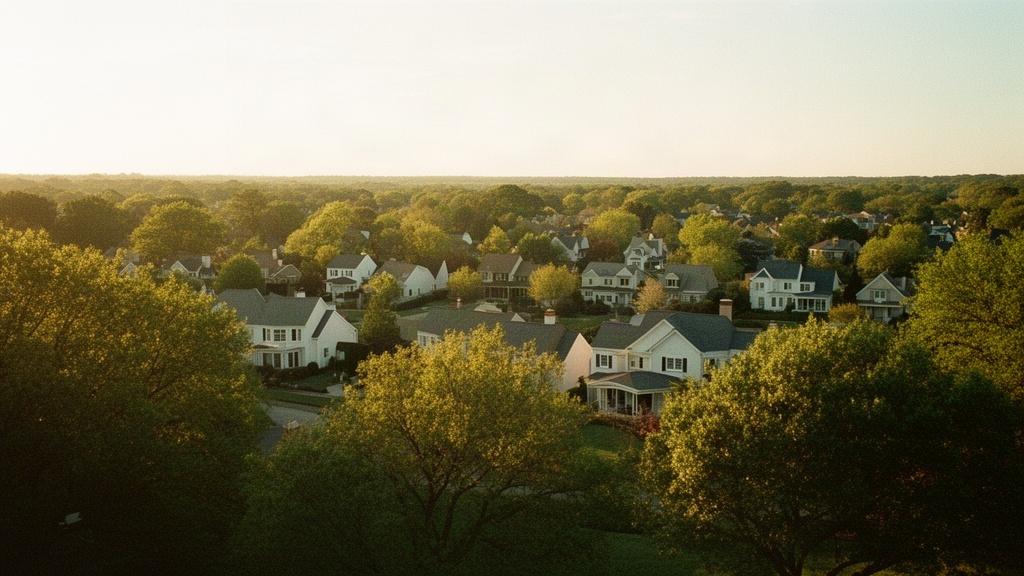
1. Why Manteca's Real Estate Market Has Earned Its Reputation
Manteca's reputation in the Central Valley real estate market is grounded in concrete factors. The city sits at the intersection of Highway 99 and Interstate 5, two of California's primary north-south freight and commuter corridors. That positioning makes it a practical base for workers commuting to Stockton, Modesto, Tracy, and even the Tri-Valley area of the Bay. The city's population has grown steadily past 90,000 residents, and that growth has been supported by consistent housing development, retail expansion along the Yosemite Avenue and Airport Way corridors, and ongoing infrastructure investment.
Location and Connectivity
Manteca is roughly 75 miles east of San Jose and about 60 miles south of Sacramento. The ACE (Altamont Corridor Express) train runs from nearby Lathrop-Manteca station into the Bay Area, giving commuters a rail option that avoids freeway congestion entirely. Amazon, FedEx, and other logistics operators have major distribution facilities in the surrounding area, which means local employment in the warehouse and distribution sector has expanded significantly over the past several years. That employment base supports consistent housing demand.
Housing Stock That Attracts a Wide Range of Buyers
Manteca's housing inventory spans a genuinely wide range. You will find 1960s and 1970s single-family homes on smaller lots in the older central neighborhoods, 1990s and early 2000s tract homes with three and four bedrooms in established subdivisions, and brand-new construction in master-planned communities on the city's eastern and southern edges. Lot sizes range from under 5,000 square feet in denser infill areas to 8,000 to 10,000 square feet in newer planned communities. That variety means buyers at different price points and life stages can all find something that fits.
2. Current Prices and Market Conditions in September 2026
As of September 2026, Manteca's median home price sits in the low-to-mid $500,000s for single-family detached homes. Entry-level homes, typically older two and three-bedroom properties in central Manteca, are priced in the $420,000 to $470,000 range. Mid-range homes with four bedrooms and two-car garages in established subdivisions are clustered between $490,000 and $560,000. Newer construction in master-planned communities on the east side and south side of the city starts around $580,000 and can reach $700,000 or more for larger floor plans with premium lots. You can track current trends directly on Redfin's Manteca housing market page for up-to-date median figures and price-per-square-foot data.
Median Home Prices Right Now
Price per square foot in Manteca currently runs between $240 and $290 for resale homes, depending on the age of the home, lot size, and location within the city. New construction from active builders carries a premium, often landing in the $295 to $330 per square foot range before lot premiums and upgrades. Condominiums and townhomes, which make up a smaller share of Manteca's inventory, are typically priced between $330,000 and $420,000. For a deeper look at how the average home price breaks down by property type, the article on average home prices in Manteca this September covers the numbers in more detail.
Inventory Levels and Days on Market
Inventory in Manteca has loosened compared to the extremely tight conditions of 2022 and 2023, but the market is not oversupplied. In September 2026, active listings are running at roughly two to three months of supply, which keeps conditions moderately competitive. Well-priced homes in move-in condition are still receiving multiple offers within the first one to two weeks. Homes that are overpriced relative to recent comparable sales, or that need significant work, are sitting longer. The article on how long homes are sitting on the market in Manteca this month gives specific median days-on-market figures broken down by price band.
Price Trends Over the Past Year
Compared to September 2025, median prices in Manteca are up approximately three to five percent, a pace that reflects steady demand without the frenzied appreciation seen earlier in the decade. That rate of appreciation is meaningful for sellers who have owned for several years, and it is not so steep that it prices out move-up buyers entirely. Interest rate conditions in late 2026 remain the primary factor influencing monthly payment affordability, and buyers who locked in rates during brief dips earlier this year are in a stronger position than those waiting on the sidelines.
3. Neighborhood Features and Housing Stock Across Manteca
Manteca is not a single uniform housing market. Different parts of the city have distinct architecture, lot sizes, price ranges, and proximity to amenities. Understanding those differences helps buyers focus their search and helps sellers position their home accurately.
Established Central and North Manteca
The older core of Manteca, roughly bounded by Yosemite Avenue to the south and the Union Pacific rail corridor to the north, contains homes built primarily between the 1950s and 1980s. These properties tend to have smaller square footage, typically 1,100 to 1,600 square feet, on lots ranging from 5,000 to 7,000 square feet. Many have been updated over the decades with new kitchens, bathrooms, and HVAC systems. Prices here are generally lower than in newer subdivisions, making this area attractive to buyers who prioritize price per square foot over modern finishes. Proximity to downtown Manteca, the San Joaquin County Fairgrounds, and the established retail corridor along Yosemite Avenue are practical advantages.
South Manteca and the Del Webb Area
South Manteca includes a mix of 1990s and early 2000s subdivisions along with the Del Webb at Woodbridge active-adult community, which sits near the Woodbridge Golf Club. Del Webb homes are age-restricted to buyers 55 and older and offer single-story floor plans ranging from roughly 1,200 to 2,400 square feet, with HOA amenities including a clubhouse, pool, tennis courts, and maintained common areas. Resale prices in Del Webb as of September 2026 typically fall between $430,000 and $580,000 depending on floor plan and lot. Outside the age-restricted community, south Manteca's conventional subdivisions offer three and four-bedroom homes priced in the $490,000 to $560,000 range, with good freeway access via Highway 120.
East Manteca and the Woodbridge Corridor
East Manteca has seen some of the most significant residential growth over the past fifteen years. The Woodbridge area, centered around the Woodbridge Golf Club and the lakes and walking trails of the Woodbridge community, contains homes built from the early 2000s through the mid-2010s. Floor plans here are larger, commonly 1,800 to 3,200 square feet, and many properties back to open space, water features, or golf fairways. Prices in the Woodbridge corridor range from the mid-$500,000s to the low $700,000s for premium lots. The area has its own detailed market breakdown in the Woodbridge Manteca real estate market guide if you want to go deeper on that specific corridor.
New Development Zones on the Outer Edges
Manteca's outer edges, particularly along the Austin Road corridor and in the areas east of the 99 freeway, are where active new construction is concentrated in 2026. Builders including Meritage Homes, Lennar, and KB Home have active phases in these areas, with floor plans ranging from about 1,600 to 3,500 square feet. New homes here come with modern energy efficiency standards, open-concept layouts, and builder warranty coverage. The tradeoff is that surrounding retail and services are still catching up to the pace of residential development. The article on new housing developments being built in Manteca in 2026 covers which builders are active and what to expect from the buying process with new construction.
4. Timing the Market: What Buyers and Sellers Should Know in 2026
Timing in real estate is never a perfect science, but Manteca's market does have seasonal patterns worth understanding. Spring, from March through May, is consistently the most active listing season, with the highest volume of new listings and the most buyer competition. Summer sees continued activity, particularly from relocating households who want to move before the school year starts. Fall, including September and October, is a secondary window of activity where inventory is still present but competition softens slightly compared to the spring peak. Winter, from November through February, is the slowest period, which can benefit buyers willing to negotiate but may mean fewer choices.
For Buyers: When to Move
Buyers in September 2026 are in a reasonable position. The frenzied multiple-offer environment of 2021 and 2022 has settled, and while well-priced homes still attract competition, buyers have more time to conduct inspections, request repairs, and negotiate closing costs than they did a few years ago. Interest rates remain the biggest variable in monthly payment calculations. If your financing is in order and you find a home that fits your criteria, waiting for a theoretical market dip carries its own risk, particularly if rates shift upward before you close. The guide on whether it is a good time to buy a home in Manteca or wait walks through that decision in more detail.
For Sellers: How to Price and When to List
Sellers who price accurately based on recent comparable sales are still moving homes at or near list price in September 2026. The homes that are sitting are the ones priced above what the comparable sales support, often by $20,000 to $40,000. Buyers in the current market are doing their homework, and overpricing leads to price reductions that can signal weakness to subsequent buyers. If you are planning to list, the window between now and mid-November captures buyers who want to close before the end of the year. Listing in late November or December typically means fewer showings and a longer time on market. The article on selling a home in Manteca: pricing, timeline and what to expect covers the full seller process from pre-listing preparation through closing.
5. What Makes Manteca Different From Neighboring Cities
Understanding Manteca's market means understanding how it compares to the cities around it. Buyers relocating to the Central Valley often look at Manteca alongside Stockton, Lodi, Tracy, and Modesto. Each city has a distinct housing profile, price range, and character. The comparison matters because the right city depends on your commute destination, the type of housing you want, and your price ceiling.
Stockton and Lodi Compared
Stockton, which borders Manteca to the north, has a larger overall housing inventory and a wider spread of price points, with entry-level homes available below $350,000 in some areas. However, Stockton's market is more fragmented, with a greater variation in neighborhood conditions across the city. Lodi, located north of Stockton along Highway 99, is a smaller city with a wine-country character, a historic downtown, and a housing market that runs slightly below Manteca's median prices on average. Lodi's housing stock is older on average, with fewer large-scale new construction communities. Buyers who want newer construction at scale tend to find more options in Manteca than in either Stockton or Lodi.
Tracy and Modesto Compared
Tracy, located about 12 miles west of Manteca along Interstate 205, has a median home price that runs roughly $30,000 to $60,000 higher than Manteca's as of September 2026, driven largely by its position closer to the Tri-Valley and Bay Area job markets. Tracy's ACE station access is slightly more direct for Bay Area commuters, which supports that price premium. Modesto, located about 20 miles south of Manteca on Highway 99, generally has lower median prices than Manteca and a larger supply of older housing stock. Modesto's market is more spread out geographically, and its new construction activity is concentrated in specific master-planned areas on its northern and eastern edges. Buyers who want Manteca's combination of newer construction, Central Valley pricing, and freeway access to multiple employment corridors often find it hits a specific set of criteria that Tracy's price point or Modesto's distance makes harder to match.
For a broader picture of Manteca's market data alongside regional context, Zillow's Manteca home values page provides historical price trend charts and current median figures that are updated regularly.
6. Key Factors That Shape Manteca's Market Going Forward
Several structural factors give Manteca's real estate market a foundation that goes beyond short-term price movements. First, the city's general plan allows for continued residential expansion on its eastern and southern flanks, which means new housing supply will continue to come to market over the next several years. That pipeline of new construction helps moderate extreme price spikes but also sustains builder activity and neighborhood investment. Second, the growth of logistics and distribution employment in the broader San Joaquin County area continues to generate housing demand from workers who want to live close to their workplace rather than commute from the Bay Area.
Third, Manteca's retail and service infrastructure has expanded steadily to keep pace with population growth. The area around the Bass Pro Shops anchor on Daniels Street, the Costco on Daniels, and the continued build-out of retail along the Airport Way and Louise Avenue corridors means residents have most major shopping and dining options within a short drive. That retail maturity distinguishes Manteca from some faster-growing Central Valley cities where residential development has outpaced services. Fourth, the Manteca Unified School District serves the city's households, and information on individual schools and performance data is available directly through the California Department of Education at cde.ca.gov for buyers who want to research that independently.
Parks and outdoor amenities add to the city's livability profile. Manteca's parks system includes Woodward Park, which has sports fields, picnic areas, and a community pool, as well as the Big League Dreams sports complex near the freeway, which hosts baseball and softball leagues year-round. The Manteca Transit Center connects residents to regional bus service, and the Lathrop-Manteca ACE station is accessible within a short drive for rail commuters. These are the kinds of concrete amenities that buyers researching the area will want to verify in person.
FAQ
What is the median home price in Manteca, California right now?
As of September 2026, the median single-family home price in Manteca sits in the low-to-mid $500,000s. Entry-level homes in older central neighborhoods are priced between $420,000 and $470,000, while newer construction in master-planned communities on the east and south sides of the city starts around $580,000 and can reach $700,000 or more for premium lots and larger floor plans. Price per square foot for resale homes runs between $240 and $290 depending on age, condition, and location. These figures have risen approximately three to five percent compared to September 2025, reflecting steady but measured appreciation rather than the rapid swings seen earlier in the decade.
How does Manteca's real estate market compare to nearby cities like Tracy and Stockton?
Manteca generally sits between Tracy and Stockton in terms of median home prices as of September 2026. Tracy, which is closer to the Bay Area job market and has direct ACE train access, carries a median price roughly $30,000 to $60,000 higher than Manteca. Stockton, which borders Manteca to the north, has a wider range of price points including entry-level homes below $350,000, but also more variation in neighborhood conditions across the city. Manteca's combination of newer large-scale construction communities, freeway access to both Interstate 5 and Highway 99, and a more developed retail corridor gives it a distinct profile among Central Valley cities in a similar price band.
Is September 2026 a good time to buy or sell a home in Manteca?
For sellers, September 2026 is a productive window. Buyers who want to close before the end of the year are actively searching, and well-priced homes in move-in condition are still selling at or near list price within one to two weeks. Overpriced listings are sitting and requiring reductions, so accurate pricing based on comparable sales is essential. For buyers, the current market offers more negotiating room than the peak competition years of 2021 and 2022, with more time for inspections and contingency periods. The primary variable for buyers is interest rate conditions, which affect monthly payment affordability more than the list price itself. Buyers with financing in order are generally better served by moving when the right property appears than by waiting for uncertain market shifts.