← Back to Blog
Market Trends
Fort Worth, Texas Real Estate Market Guide: Prices, Neighborhoods and Timing — What Every Buyer and Seller Needs to Know Right Now
By Madison Mitchell
TK Realty
September 19, 2026 · 11 min read
The Fort Worth, Texas real estate market guide every buyer and seller needs covers more than just a single price figure. From Fairmount bungalows to Far North Fort Worth new construction, this article breaks down what homes actually cost right now, how inventory is shifting, which pockets of the city are moving fastest, and how to time a move in September 2026.
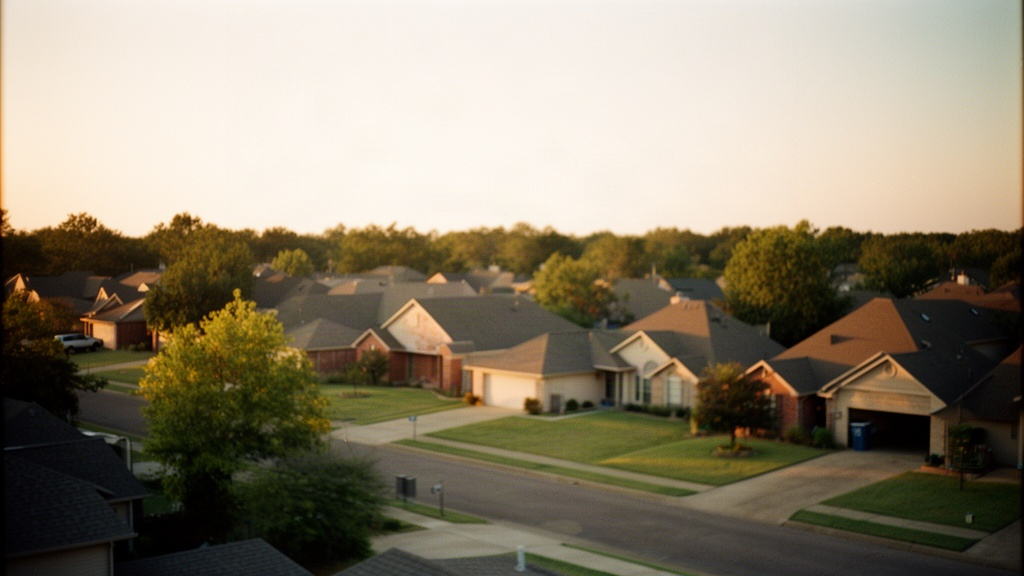
1. Where Fort Worth Home Prices Stand in September 2026
The Fort Worth market is in a period of recalibration, not collapse. After several years of rapid appreciation, prices pulled back modestly through 2025 before stabilizing in early 2026. As of September 2026, the median sale price for a single-family home in Fort Worth sits in the low-to-mid $300,000s, depending on the part of the city. That represents a meaningful correction from the 2022 peak but still reflects substantial long-term appreciation compared to pre-pandemic levels.
Citywide Median and Price Per Square Foot
Price per square foot in Fort Worth currently ranges from roughly $150 to $220 depending on location, condition, and lot size. Entry-level homes under $250,000 still exist in the city, primarily in established neighborhoods on the south and east sides. Move-up buyers targeting the $350,000 to $500,000 range have the widest selection right now. Luxury product above $700,000 is concentrated in specific corridors and takes longer to sell.
How Prices Vary Across the City
Fort Worth covers more than 350 square miles, so a single citywide number tells only part of the story. Homes within a mile or two of the Cultural District or Magnolia Avenue in the Near Southside routinely command premiums over the citywide median. Far North Fort Worth near Alliance and the 76177 zip code is driven heavily by new construction, where builder base prices for a four-bedroom home often start in the mid-$300,000s and can reach $550,000 or more with upgrades. Meanwhile, neighborhoods like Wedgwood and Ridgmar on the west side offer older brick ranch homes in the $220,000 to $310,000 range.
What Happened in 2025 and Why It Matters Now
2025 brought a notable price correction across the Fort Worth area. According to reporting in early 2026, home prices fell across the Fort Worth area in 2025, a trend driven by elevated mortgage rates suppressing demand and a surge in new construction adding supply. That correction has largely run its course by September 2026. Buyers who waited out the uncertainty now face a market that has stabilized but has not roared back to peak-era competition, which creates a relatively balanced window for both sides of a transaction.
2. Fort Worth Neighborhood Breakdown: Housing Stock, Price Ranges and What You Get
Fort Worth's neighborhoods are physically and architecturally distinct from one another. Understanding the housing stock in each area helps buyers set realistic expectations and helps sellers price accurately. The four broad zones below cover the majority of where transactions happen in the city.
Inner-Loop and Historic Districts
The neighborhoods closest to downtown Fort Worth, including Fairmount, Ryan Place, Berkeley Place, and Mistletoe Heights, feature Craftsman bungalows, Tudor cottages, and Colonial Revival homes built primarily between 1910 and 1950. Lot sizes are typically modest, ranging from 5,000 to 8,500 square feet, and square footage runs from around 1,100 to 2,400 square feet. Prices in these corridors generally fall between $300,000 and $550,000, with fully renovated examples pushing higher. If you want a deeper look at what daily life looks like in one of these inner neighborhoods, the article on living in the Fairmount neighborhood covers the physical layout, walkability, and local amenities in detail.
The Cultural District sits adjacent to the Fort Worth Museum of Science and History, the Kimbell Art Museum, and the Amon Carter Museum of American Art. Homes within a few blocks of this cluster tend to hold value well due to proximity to Camp Bowie Boulevard's retail and dining corridor. The TCU area, anchored by Texas Christian University's campus along University Drive, features a mix of 1940s to 1960s brick homes alongside more recent infill construction.
Mid-City Corridors
Moving outward from the inner loop, neighborhoods like Wedgwood, Ridgmar, Hulen Heights, and Forest Hill transition into post-war ranch-style construction from the 1950s through the 1980s. These homes typically sit on lots of 7,000 to 10,000 square feet and offer three or four bedrooms in 1,400 to 2,200 square feet. The price range here is generally $210,000 to $340,000, making this the most accessible segment of the Fort Worth market for first-time buyers.
Benbrook, technically its own municipality but geographically integrated with southwest Fort Worth, adds another dimension. Homes there often back up to Benbrook Lake or the Trinity River trail system. The commute from Benbrook to downtown Fort Worth on a typical weekday morning runs roughly 20 to 30 minutes via I-20 or Bryant Irvin Road, depending on departure time. For a detailed look at that commute, this article on the Benbrook to downtown Fort Worth commute breaks it down by route and time of day.
Far North Fort Worth and Alliance Area
The Alliance corridor in far north Fort Worth, spanning zip codes 76177, 76131, and parts of 76244, is the city's primary new construction zone. Builders including D.R. Horton, Lennar, Pulte, and several regional builders are actively developing master-planned communities with amenity centers, trails, and pocket parks. Base prices for new single-family homes in this corridor start around $320,000 for a three-bedroom and can reach $600,000 or more for larger plans with premium lots. Lot sizes in new communities typically run 5,500 to 7,500 square feet.
The Alliance area also benefits from proximity to the Alliance Texas industrial and logistics hub, which employs tens of thousands of workers. That employment base sustains housing demand in the corridor independent of downtown Fort Worth's job market. For a current look at specific developments underway, the article on new construction in far north Fort Worth near Alliance lists active communities and builder incentives.
West and Southwest Fort Worth
West Fort Worth, including the Westover Hills area and the neighborhoods along Roaring Springs Road, contains some of the city's most substantial residential properties. Lots in this corridor can exceed an acre, and homes often run 3,000 to 6,000 square feet. Price points start around $600,000 and extend well above $2 million for estate-sized properties. The area sits adjacent to Colonial Country Club and along the Trinity River, offering mature tree canopy and larger setbacks than most of the city. For a detailed breakdown of that specific market, the Westover Hills real estate market guide covers pricing, housing stock, and what buyers in that price range should know.
3. Inventory, Days on Market and What They Mean for You
Inventory levels in Fort Worth have risen significantly compared to 2023 and 2024, giving buyers more options than they had during the peak seller's market years. That shift does not mean it is uniformly a buyer's market across the entire city. Conditions vary sharply by price tier and zip code.
How Much Supply Is Out There Right Now
As of September 2026, Fort Worth's active listing count represents roughly three to four months of supply at the current absorption rate. Six months of supply is the traditional benchmark for a balanced market, so the city sits in a zone that still leans slightly toward sellers in the most popular price ranges but gives buyers meaningful negotiating room on properties that have been sitting. The article on Fort Worth housing inventory levels in 2026 provides a more granular breakdown of how supply has shifted month by month this year.
Which Homes Are Moving Fastest
Homes priced between $280,000 and $380,000 in move-in-ready condition are still selling within two to three weeks in many Fort Worth zip codes. Properties above $500,000 are averaging 45 to 70 days on market. Homes that need significant updating, regardless of price, are sitting longer as buyers factor renovation costs into their offers. The fastest-moving zip codes in September 2026 include several in the north and northwest corridors where new employment growth is concentrated.
What Sellers Should Expect
Sellers in September 2026 need to price precisely. Homes that come to market even five percent above comparable sales are seeing price reductions within the first three weeks. Buyers are doing their homework and have access to more data than at any previous point. A well-prepared home with professional photos, accurate pricing, and a clean inspection history is still moving. An overpriced home in average condition is sitting, sometimes for months.
4. Timing the Fort Worth Market: When to Buy and When to List
Timing matters in Fort Worth, but it is not the only factor. The right time to buy or sell depends on your personal financial position, your flexibility on move dates, and what the specific segment of the market you are targeting is doing right now.
Seasonal Patterns in Tarrant County
Fort Worth follows a fairly predictable seasonal rhythm. Listing activity picks up in late February and peaks through May and June. July and August slow as North Texas heat discourages casual lookers. September through October brings a second, smaller wave of serious buyers who want to close before the end of the calendar year. November and December see the fewest new listings but also the most motivated buyers, which can work in a seller's favor on well-priced homes.
For buyers, September 2026 is a useful window. Sellers who listed in spring and have not sold are often more flexible on price and terms. New listings coming to market this month are competing against that backlog. Buyers willing to act on a home that has been on the market for 30 to 60 days sometimes find the most room to negotiate.
Interest Rates and Affordability in 2026
Mortgage rates have moderated from their 2023 highs but remain elevated relative to the 2020 and 2021 environment. For a $350,000 purchase with 10 percent down, the difference between a 6.5 percent rate and a 7.2 percent rate is roughly $150 per month in principal and interest. That gap matters for buyers stretching to qualify. The Texas Housing Market Predictions for 2026 and 2027 suggest that rates are unlikely to return to sub-four-percent territory in the near term, which means buyers who wait for a dramatic rate drop may be waiting longer than the market warrants.
Strategic Timing for Sellers
Sellers who can list in late January through March 2027 will hit the market when buyer demand traditionally surges after the holiday slowdown. If you need to sell before then, October 2026 is a reasonable window. Inventory typically drops in the fall as sellers who did not succeed in summer pull listings, which reduces your competition. A well-staged home hitting the market in early October can stand out simply because there is less to choose from.
5. Costs Beyond the Purchase Price: What to Budget in Fort Worth
The sticker price on a Fort Worth home is only one part of the financial picture. Property taxes, closing costs, and the premium or discount that comes with new construction versus resale all affect your total cost of ownership.
Property Taxes in Tarrant County
Tarrant County property taxes are a significant ongoing cost that buyers sometimes underestimate. The combined effective tax rate for most Fort Worth addresses, including city, county, school district, and special district levies, typically falls between 2.1 and 2.6 percent of appraised value. On a $400,000 home, that translates to roughly $8,400 to $10,400 per year, or $700 to $867 per month added to your housing payment. Texas has no state income tax, which is part of why property taxes are structured this way. For a full breakdown of what taxes look like on a specific price point, the article on property taxes on a $400,000 home in Tarrant County in 2026 walks through each taxing entity and how the numbers stack up.
Closing Costs for Buyers
Buyers in Fort Worth typically pay between 2 and 3.5 percent of the purchase price in closing costs, covering lender fees, title insurance, escrow, prepaid property taxes, and homeowner's insurance. On a $350,000 purchase, that is $7,000 to $12,250 due at closing in addition to your down payment. Some sellers in the current market are willing to contribute toward buyer closing costs as a negotiating tool, particularly on homes that have been sitting. Understanding what these costs include before you make an offer puts you in a stronger position at the table.
What New Construction Adds to the Picture
New construction in Fort Worth comes with both advantages and hidden costs. Builders often advertise a base price but the finished home with standard upgrades, a lot premium, and design center selections can run 15 to 25 percent above that base. On the positive side, new homes carry builder warranties, lower initial maintenance costs, and modern energy efficiency standards that reduce utility bills. Buyers should also know that builder-affiliated lenders sometimes offer rate buydowns or closing cost contributions tied to using their preferred financing, which can be worth comparing against outside lender quotes.
6. Frequently Asked Questions
FAQ
Is Fort Worth a buyer's market or a seller's market in September 2026?
Fort Worth sits in a transitional zone as of September 2026. Inventory has risen to roughly three to four months of supply citywide, which is below the six-month threshold that defines a balanced market but well above the one-month supply seen during the 2021 and 2022 frenzy. Homes priced correctly in the $280,000 to $380,000 range are still moving quickly, while properties above $500,000 are giving buyers more negotiating room. The answer depends heavily on which neighborhood and price tier you are looking at, which is why working with someone who tracks Fort Worth specifically is important.
What is the most affordable area of Fort Worth to buy a home right now?
The most accessible price points in Fort Worth as of September 2026 are found in established mid-city neighborhoods on the south, east, and west sides of the city, including areas like Wedgwood, Polytechnic Heights, and Eastside communities near the I-30 corridor. Homes in these areas range from roughly $180,000 to $290,000 for three-bedroom properties. These neighborhoods feature post-war ranch-style and brick construction on larger lots than you typically find in the inner loop. Buyers should research each specific area using public data sources including the City of Fort Worth's neighborhood planning documents and Tarrant County Appraisal District records.
How long does it take to close on a home in Fort Worth right now?
A standard financed purchase in Fort Worth currently takes 30 to 45 days from executed contract to closing, assuming no major title issues or appraisal disputes. New construction closings can take longer, sometimes 45 to 60 days, because the final walkthrough and certificate of occupancy must precede the closing date. Cash purchases can close in as few as 10 to 14 days. Delays most commonly come from lender underwriting backlogs, inspection negotiations, and appraisals that come in below the contract price, which then require renegotiation. Understanding the step-by-step process before you go under contract reduces the chance of surprises.