← Back to Blog
Buying
First-Time Home Buyer Guide for San Jose, California: What to Know Before You Buy
By Manjula Sharma
Doorlight · DRE# 02103906
September 20, 2026 · 11 min read
Buying your first home in San Jose, California is one of the most significant financial decisions you will make, and the local market moves fast enough that being underprepared can cost you real money. This first-time home buyer guide covers everything from setting a realistic budget and choosing a loan program to understanding how offers work in a competitive Silicon Valley market. Whether you are relocating for a tech job, moving up from renting in Willow Glen, or searching in Berryessa or Evergreen, this guide is built around how San Jose actually works.
1. Understanding the San Jose Housing Market as a First-Time Buyer
San Jose is one of the most expensive housing markets in the United States, and first-time buyers need to walk in with clear eyes. The median home price in San Jose as of September 2026 sits around $1.35 million for single-family homes, though condominiums and townhomes offer entry points closer to $700,000 to $850,000 depending on the area. That gap between condos and detached homes is meaningful for buyers who are working with a limited down payment.
What Prices Look Like Right Now
Prices vary considerably across San Jose's roughly 180 square miles. In Almaden Valley, single-family homes frequently list between $1.5 million and $2.2 million. In Evergreen, you will find a wider range, with many homes priced between $1.1 million and $1.6 million. Berryessa and the areas around Capitol Expressway tend to offer more accessible price points, with condos and smaller single-family homes appearing in the $750,000 to $1.1 million range. For a broader picture of how prices and inventory are trending across the city, the San Jose, California Real Estate Market Guide on this site goes deeper on timing and neighborhood-level data.
HousingWire has noted that San Jose's housing market consistently outperforms broader California trends, driven by persistent demand from the tech sector, limited land for new construction, and a supply of homes that has not kept pace with population growth. That context matters when you are planning your timeline and budget.
How Inventory and Competition Shape Your Experience
San Jose typically carries fewer than two months of housing inventory, which is well below the four to six months that economists consider a balanced market. In practice, that means desirable homes in move-in condition often receive multiple offers within the first week of listing. Homes priced at or below $1.1 million tend to attract the most competition because that is where the pool of qualified buyers is largest. Knowing this before you start touring homes helps you set realistic expectations about timelines and offer strategy.
September 2026 is historically a period of moderate activity in San Jose, with summer's peak pace slowing slightly and sellers who did not transact over summer often motivated to close before the end of the year. That can create small windows of opportunity for first-time buyers who are fully prepared with financing and a clear sense of what they want.
2. Setting Your Budget and Getting Pre-Approved
Getting pre-approved before you tour a single home is not optional in San Jose. Sellers in this market will not entertain offers from buyers who cannot demonstrate financing readiness, and listing agents will ask your agent about your pre-approval status before scheduling private showings on competitive listings. Pre-approval is different from pre-qualification: it requires a lender to verify your income, assets, credit score, and employment, and it results in a written commitment letter.
How Much House Can You Afford in San Jose?
A conventional rule of thumb is that your monthly housing payment should not exceed 28 to 30 percent of your gross monthly income. At a $1 million purchase price with a 20 percent down payment and a 30-year fixed mortgage at current rates near 6.5 percent, your principal and interest payment would be roughly $5,050 per month, before property taxes, insurance, and HOA fees where applicable. Santa Clara County property taxes run approximately 1.1 to 1.25 percent of assessed value annually, which adds another $900 to $1,050 per month on a $1 million home.
Many first-time buyers in San Jose put down less than 20 percent, which triggers private mortgage insurance (PMI) on conventional loans. PMI typically costs between 0.5 and 1.5 percent of the loan amount annually, adding several hundred dollars per month to your payment. Factor that into your affordability calculation before you set your search price ceiling.
Loan Programs Worth Knowing About
California offers several programs specifically designed to help first-time buyers. The California Housing Finance Agency (CalHFA) administers programs including the MyHome Assistance Program, which provides a deferred-payment junior loan of up to 3.5 percent of the purchase price to help cover a down payment or closing costs. The Dream For All program, when funded, offers a shared appreciation loan that can cover up to 20 percent of the purchase price for qualifying buyers.
FHA loans remain popular with first-time buyers in San Jose because they allow down payments as low as 3.5 percent with a credit score of 580 or higher. The FHA loan limit for Santa Clara County in 2026 is $1,149,825 for a single-family home, which covers a meaningful portion of the San Jose condo and townhome market. VA loans are available to eligible veterans and active-duty service members with no down payment required and no PMI. The NAR's Consumer Guide: Preparing for Homeownership is a useful overview of the financial groundwork required before you apply for any loan.
3. Choosing Where to Buy in San Jose
San Jose spans a large geographic area with distinct neighborhoods that differ in housing stock, lot size, age of construction, proximity to freeways, and price. Narrowing your search to two or three areas before you start touring homes will save you significant time and prevent the decision fatigue that derails many first-time buyers in competitive markets.
Neighborhoods by Price Range and Housing Type
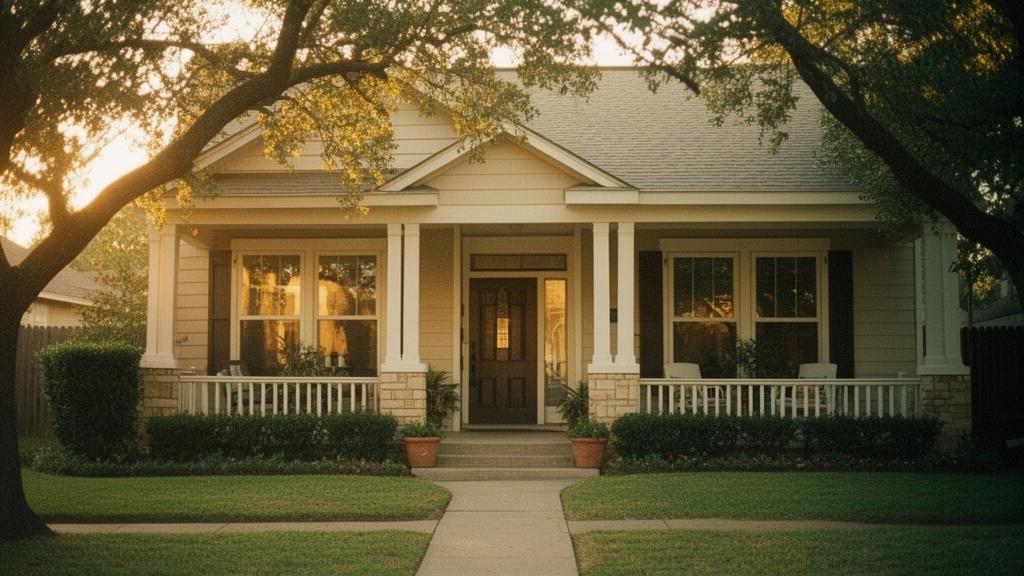
Willow Glen is known for its tree-lined streets, bungalows and craftsman-style homes from the 1920s through the 1950s, and a walkable Lincoln Avenue corridor with local restaurants and shops. Single-family homes there typically list between $1.3 million and $2 million. For a detailed look at what daily life in that neighborhood involves, the article on living in the Willow Glen neighborhood of San Jose covers the area's character in depth.
Evergreen sits in the eastern foothills and is characterized by newer construction, larger lots, and tract homes built primarily in the 1980s and 1990s. Many homes there have three to five bedrooms with two-car garages, and the area borders Alum Rock Park and the hills above Capitol Expressway. The Evergreen, San Jose Real Estate Market Guide has current pricing data and context on how that submarket behaves.
Almaden Valley, in the southwest corner of San Jose, features larger lots, ranch-style and two-story homes, and access to Almaden Quicksilver County Park. Berryessa, in the north, offers a mix of condos and single-family homes at price points that can be more accessible for first-time buyers, with easy access to BART at the Berryessa station, which connects to the broader Bay Area transit network.
Commute, Schools, and Other Research You Should Do Yourself
Commute time is one of the most underestimated factors in long-term satisfaction with a home purchase. San Jose sits at the southern end of Silicon Valley, with major tech campuses clustered in Santa Clara, Sunnyvale, Mountain View, and Cupertino to the north. Driving from Evergreen to a Mountain View campus can take 35 to 55 minutes during morning peak hours via US-101 or Capitol Expressway to I-880. VTA light rail and Caltrain both serve parts of the city, and the article on commute options from Evergreen to downtown San Jose and Silicon Valley tech campuses breaks down transit and driving options in detail.
School attendance zones in San Jose are a frequent question from buyers with children, and the boundaries are more complex than most people expect. San Jose is served by multiple school districts including San Jose Unified, East Side Union High School District, Evergreen School District, and Campbell Union, among others. A street-level address determines which district and school a child would attend, and boundaries do not always follow neighborhood names. The article on how to research San Jose Unified and East Side Union High School attendance zones before you buy explains how to verify a specific address using each district's official tools.
4. The Offer and Purchase Process in San Jose
The purchase process in San Jose follows California contract law but has local conventions that differ from what you may have read in national guides. Understanding those conventions before you make your first offer will prevent costly surprises and help you compete more effectively.
How San Jose Offers Actually Work
Most San Jose listings set an offer review date, typically seven to ten days after the home hits the market, and sellers review all offers at once rather than accepting the first one that arrives. This structure encourages multiple-offer situations. It is common for a home listed at $1.1 million to receive offers ranging from $1.1 million to $1.3 million or higher if the home is in strong condition and in a high-demand pocket. First-time buyers are sometimes surprised to learn that list price is a starting point for negotiation, not a ceiling.
Earnest money deposits in San Jose typically run 1 to 3 percent of the purchase price, and they are deposited into escrow within three business days of offer acceptance. On a $1.2 million home, that means having $12,000 to $36,000 in liquid funds ready to move quickly. Sellers also pay close attention to contingency periods: loan contingency, appraisal contingency, and inspection contingency. Shortening these periods or waiving them entirely can strengthen an offer, but doing so carries real risk that a knowledgeable buyer's agent should explain carefully before you decide.
Inspections, Disclosures, and the Closing Timeline
California law requires sellers to complete a Transfer Disclosure Statement (TDS) and a Seller Property Questionnaire (SPQ), both of which must be provided to buyers before close of escrow. Many San Jose sellers also provide a pre-listing inspection report, a natural hazard disclosure, and a preliminary title report as part of their listing package. Reviewing these documents carefully is one of the most important things a first-time buyer can do before removing contingencies.
The typical closing timeline in San Jose runs 21 to 30 days from accepted offer to recording, though some transactions close in as few as 14 days when buyers are paying cash or have a fully underwritten loan approval in hand. The article on how long it typically takes to close on a house in San Jose in 2026 covers the full escrow timeline step by step, including what can cause delays.
5. Costs First-Time Buyers Often Overlook
The down payment gets most of the attention, but it is far from the only cost involved in buying a home in San Jose. First-time buyers who do not budget for the full range of upfront and ongoing costs often find themselves financially stretched in the first year of ownership.
Upfront Costs Beyond the Down Payment
Closing costs in Santa Clara County typically run 1 to 2 percent of the purchase price for buyers, though the exact figure depends on your lender, the loan type, and whether you negotiate for the seller to cover any portion. On a $1.1 million purchase, budget $11,000 to $22,000 for closing costs on top of your down payment. These include lender origination fees, title insurance, escrow fees, recording fees, and prepaid items like homeowner's insurance and property tax impounds.
A home inspection in San Jose costs between $500 and $900 for a standard single-family home, depending on square footage. If the inspector identifies concerns with the roof, foundation, HVAC system, or electrical panel, you may want to bring in specialists for further evaluation, each of which adds to the cost. Sewer lateral inspections, which are common in older San Jose neighborhoods, typically run $150 to $300. These are not optional expenses: they are the mechanism by which you learn what you are actually buying.
Ongoing Costs After You Close
Property taxes in San Jose are assessed at 1 percent of the purchase price under Proposition 13, plus local voter-approved assessments that typically bring the effective rate to 1.1 to 1.25 percent. On a $1.2 million home, that is $13,200 to $15,000 per year, paid in two installments due in December and April. Homeowner's insurance in the Bay Area has increased meaningfully in recent years; budget $2,000 to $3,500 annually for a standard single-family home, more if the property is in a hillside or fire-risk zone.
HOA fees apply to most condos and many planned developments in San Jose, ranging from $300 to $700 per month depending on the community's amenities and age. Older condo complexes sometimes carry deferred maintenance that results in special assessments, which can be significant. Reviewing the HOA's financial reserves and meeting minutes before you close is one of the most valuable things a first-time condo buyer can do.
Maintenance costs for a single-family home are often estimated at 1 percent of the home's value per year, though older homes or those with deferred maintenance can require more in the first few years. A San Jose home purchased at $1.1 million might require $11,000 annually in ongoing maintenance on average, covering items like HVAC servicing, roof maintenance, landscaping, and appliance replacement over time.
FAQ
What credit score do I need to buy a home in San Jose, California?
For a conventional loan, most lenders in San Jose want to see a credit score of at least 620, though scores above 740 will qualify you for the best rates and terms. FHA loans are available with scores as low as 580 with a 3.5 percent down payment. VA loans have no official minimum credit score set by the VA, though individual lenders typically require at least 620. Given how high home prices are in Santa Clara County, even a small improvement in your interest rate from a higher credit score can translate to tens of thousands of dollars saved over the life of a loan. Pulling your credit report at annualcreditreport.com and addressing any errors or outstanding accounts before you apply is time well spent.
How long does it take to buy a home in San Jose as a first-time buyer?
From the moment you start seriously preparing, most first-time buyers in San Jose spend one to three months getting finances in order and selecting an agent, then another one to four months actively searching and making offers before one is accepted. After an offer is accepted, closing typically takes 21 to 30 days. In total, the process from initial preparation to keys in hand often runs four to eight months, though buyers who are fully prepared financially and have a clear sense of what they want can move faster. The timeline also depends on how competitive the price range you are targeting happens to be when you are searching.
Do first-time buyers in San Jose pay the buyer's agent commission?
As of 2026, buyer's agent compensation in California is negotiated directly between the buyer and their agent and must be disclosed in writing before any homes are toured. In many San Jose transactions, sellers still offer to cover the buyer's agent commission as part of their net proceeds calculation, but this is no longer automatic or guaranteed. Before you sign a buyer representation agreement, ask your agent to explain their compensation structure clearly, including what happens if a seller does not offer to cover it. Some agents offer flexible arrangements for buyers in specific price ranges or situations.