← Back to Blog
Neighborhoods
Living in Central Park Denver: Day to Day Life
By Melissa Smith, Broker
Brokers Guild Real Estate
September 3, 2026 · 12 min read
If you are researching what it is like to live in the Stapleton, now officially Central Park, neighborhood in Denver day to day, the short answer is that it is a planned community with a distinct rhythm: wide tree-lined streets, a grid of parks and trails, a walkable town center, and a housing stock that skews newer than most of Denver. This article covers the morning commute, grocery runs, weekend routines, home prices, HOA life, and the honest tradeoffs so you can decide whether Central Park fits the way you actually live.
1. The Neighborhood at a Glance: What Central Park Actually Is
Central Park is a master-planned community in northeast Denver built on the former site of Stapleton International Airport, which closed in 1995 when Denver International Airport opened. The redevelopment began in the early 2000s and has been ongoing for more than two decades, which means you will find homes ranging from early 2000s construction all the way to brand-new builds still going up in the eastern sections near the Beeler Park and Conservatory Green sub-neighborhoods.
The neighborhood covers roughly 4,700 acres and sits between Quebec Street to the west, Peoria Street to the east, I-70 to the north, and Smith Road to the south. It is one of the largest urban infill projects in United States history, and that scale shows up in daily life: the streets are wide, the blocks are long, and there is a clear internal logic to how the neighborhood is laid out that you do not find in older Denver neighborhoods.
A Planned Community Built on a Former Airport
The airport history is not just a fun fact. It shaped the land itself. The terrain is flat, which is unusual for Denver, and the street grid was designed from scratch with specific targets for park acreage, trail connectivity, and commercial nodes. The result is a neighborhood that feels intentional in a way that older parts of Denver do not.
The Name Change from Stapleton to Central Park
In 2020, the community voted to rename the neighborhood from Stapleton to Central Park, dropping a name that had been associated with a former Denver mayor with a troubling legacy. Most longtime residents still use both names interchangeably, and you will hear both in conversation. For real estate searches, listings appear under both terms, so searching either will surface the same inventory. The official city designation is now Central Park.
2. What Day-to-Day Life in Central Park Looks Like
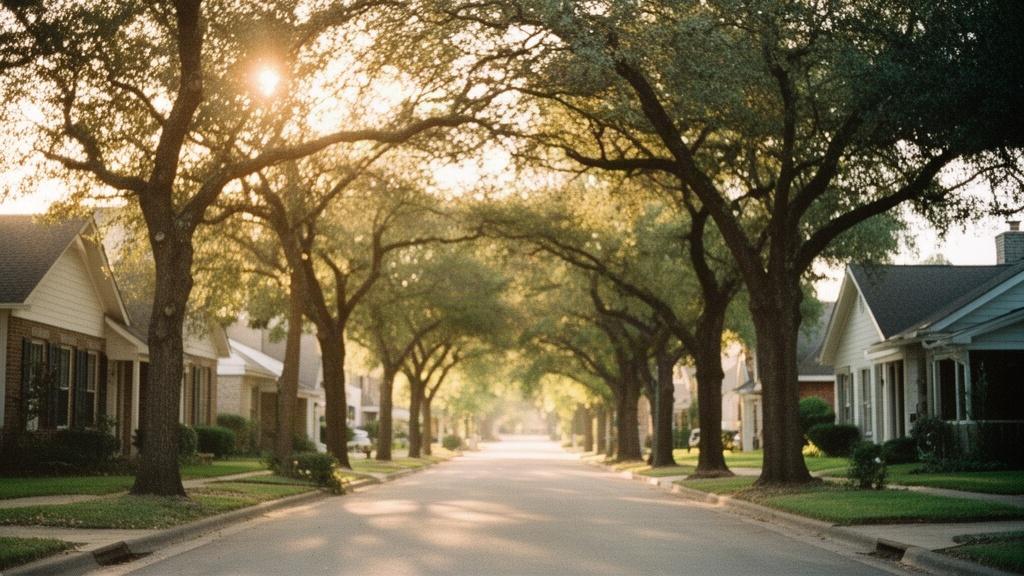
Living in Stapleton or Central Park in Denver day to day has a rhythm that is shaped heavily by the neighborhood's design. Because it was planned rather than grown organically, the commercial areas, parks, and residential blocks are deliberately separated and connected by a trail and sidewalk network. That affects how people move through it every single day.
Morning Routines and Getting Around on Foot
The trail system is genuinely extensive. Central Park has over 60 miles of trails and paths winding through and around the neighborhood, connecting the sub-districts to the town center, the parks, and the regional trail network that links to the High Line Canal and the Rocky Mountain Arsenal National Wildlife Refuge just to the northeast.
On a weekday morning, you will see people walking dogs on the trails that border the retention ponds and park strips, cyclists heading toward the trail that cuts under I-70, and parents pushing strollers toward the town center. The sidewalk network is wide and well-maintained, which is not something you can say about every Denver neighborhood. Whether you walk somewhere depends on where in the neighborhood you live. The western sections near Eastbridge Town Center are the most walkable; the eastern Beeler Park sections require more driving for daily errands.
Grocery Shopping and Everyday Errands
The Eastbridge Town Center at the corner of Martin Luther King Jr. Boulevard and Central Park Boulevard is the commercial heart of the neighborhood. It has a Sprouts Farmers Market, a King Soopers, several coffee shops including a Starbucks and local options, restaurants ranging from fast-casual to sit-down, a hardware store, and a mix of service businesses. For most residents in the western half of Central Park, this covers the majority of weekly errands without leaving the neighborhood.
There is also a Northfield shopping area along 56th Avenue near Peoria Street on the eastern edge of the neighborhood. Northfield has a Target, a Costco, a movie theater, and a larger restaurant selection. Residents in the eastern sub-neighborhoods like Beeler Park and Conservatory Green use Northfield more heavily. For specialty groceries or farmers markets, many residents drive to Park Hill or the Cherry Creek area, which is about 15 minutes south.
Parks, Trails, and Outdoor Life
Central Park has more dedicated park space than almost any other Denver neighborhood. The centerpiece is Central Park itself, a 80-acre park that runs along the neighborhood's spine and includes a splash pad, a playground, a small lake, open lawn space, and the F-15 fighter jet display that has become a local landmark. The park hosts outdoor movies in summer, food truck events, and seasonal programming.
Beyond the central park, the neighborhood is dotted with smaller pocket parks every few blocks. The Rocky Mountain Arsenal National Wildlife Refuge borders the neighborhood to the northeast and offers over 15 miles of hiking and biking trails, wildlife viewing including bison and raptors, and a genuine sense of open space that is unusual this close to a major city. You can walk or bike from most parts of Central Park to the refuge entrance in under 20 minutes.
For more detail on how Central Park fits within Denver's broader neighborhood landscape, the Denver CO Homes for Sale: A Neighborhood-by-Neighborhood Buyer's Guide for 2026 covers how this area compares to other parts of the city in terms of housing stock and price points.
3. The Commute: Getting In and Out of Central Park
Commute times from Central Park depend heavily on your destination and your mode of transportation. The neighborhood's location in northeast Denver puts it close to I-70, which is both an asset and a liability: it connects you quickly to the highway network, but I-70 congestion through Denver is a real daily factor for anyone commuting west toward downtown or south toward the Tech Center.
Driving to Downtown Denver and the Tech Center
Downtown Denver is roughly 6 to 7 miles from the center of Central Park. In light traffic, that drive takes about 15 minutes via MLK Jr. Boulevard or via I-70 west to I-25. During peak morning commute hours, the same trip can stretch to 25 to 35 minutes depending on conditions on I-70 and the downtown approaches. The drive is manageable but not effortless on busy days.
The Denver Tech Center in Greenwood Village is about 18 to 20 miles south, making it roughly a 30 to 45 minute drive depending on traffic on I-25. Residents commuting to the Tech Center by car often find that the I-25 southbound corridor during rush hour is the biggest friction point. Some use the light rail as an alternative for that corridor.
Light Rail and Bus Options
Central Park has direct light rail access via the A Line (University of Colorado A Line), which connects the neighborhood to Union Station in downtown Denver in about 15 minutes. The Central Park Station stop is located near the Eastbridge Town Center, making it genuinely convenient for residents in the western portions of the neighborhood. From Union Station, you can connect to the entire RTD light rail network, including lines that run south toward the Tech Center and southeast toward the airport.
Denver International Airport is about 25 minutes by car or roughly 30 minutes on the A Line from Central Park Station. For frequent travelers, this is one of Central Park's most practical geographic advantages over neighborhoods on the west or south sides of Denver, where a DIA run can easily take 45 minutes or more.
4. Housing Stock and Home Prices in Central Park
The housing in Central Park is newer than the Denver average, and that shows in both the style and the price. You will find single-family homes, paired homes (which share one wall), townhomes, and condos, all built primarily between 2002 and the present. The architectural style leans toward craftsman and contemporary, with front porches, detached garages accessed from alleys, and relatively small front yards by suburban standards.
What Kinds of Homes Are Available
Single-family detached homes are the most common product type and range from modest 1,400 square foot homes on smaller lots to larger 3,500 to 4,500 square foot homes on the park-facing lots. Paired homes, sometimes called duplexes, are popular in Central Park because they offer more square footage than a townhome at a lower price point than a detached single-family. Condos and townhomes are clustered near the Eastbridge and Northfield commercial areas.
For a broader look at how the Central Park housing market fits into Denver's overall picture, the Denver Metropolitan Area, Colorado Real Estate Market Guide: Prices, Neighborhoods and Timing provides context on how neighborhood price trends compare across the metro.
What You Can Expect to Pay in September 2026
As of September 2026, median home prices in Central Park for single-family detached homes are running in the range of $650,000 to $750,000, with park-facing and larger homes pushing well above $900,000. Paired homes typically sell in the $500,000 to $620,000 range. Condos and townhomes start around $350,000 and top out near $550,000 depending on size and location within the neighborhood. These figures reflect the premium that newer construction and the neighborhood's amenity package command relative to comparable square footage in older Denver neighborhoods.
You can explore more detail on current Denver metro pricing trends in the Denver, Colorado Real Estate Market Guide: Prices, Neighborhoods and Timing, which covers how inventory levels and mortgage rates are shaping buyer decisions right now.
HOA Life in Central Park
Central Park is governed by the Central Park Master Community Association (MCA), and almost every home in the neighborhood is subject to HOA dues. Monthly dues for most single-family and paired homes run between $45 and $55 per month for the master association, though some sub-neighborhoods or specific builders have additional sub-association fees on top of that. Townhomes and condos typically have higher combined dues that cover exterior maintenance.
The MCA maintains the trail network, parks, common areas, and community pools. There are currently three outdoor pools in the neighborhood: the F15 Pool near the central park, the Aviator Sports Complex pool, and the Puddle Jumper Pool in the western section. The Aviator Sports Complex also includes a fitness center, an outdoor water park with slides, and sports courts. Access to these facilities is included with HOA membership, which is a meaningful amenity for residents who use them regularly.
The HOA also enforces architectural and landscaping standards. Exterior paint colors, fencing styles, and landscaping changes require approval from the architectural review committee. This keeps the neighborhood looking consistent and well-maintained, but it is a real consideration for buyers who want maximum flexibility to personalize their home's exterior.
5. The Honest Tradeoffs of Living in Central Park
Understanding what it is like to live in the Stapleton or Central Park neighborhood in Denver day to day means being honest about what the neighborhood does well and where it has limitations. No neighborhood is the right fit for everyone, and Central Park has a specific character that resonates strongly with some buyers and feels constraining to others.
What Residents Tend to Love
The park and trail access is the feature residents mention most consistently. Having over 60 miles of trails, multiple pools, and the Rocky Mountain Arsenal on your doorstep changes how you use your free time. People who move here from other Denver neighborhoods often say they spend significantly more time outdoors simply because the infrastructure makes it so easy.
The newer construction means lower maintenance costs in the early years of ownership. Homes built in the 2010s and 2020s come with modern mechanical systems, better insulation, and energy efficiency that older Denver homes require significant investment to achieve. For buyers who want to avoid the renovation projects that come with 1920s bungalows in Berkeley or Sunnyside, Central Park offers a cleaner starting point.
The A Line light rail connection to Union Station is genuinely useful for anyone who commutes downtown or travels frequently through DIA. Parking at Central Park Station is free, and the 15-minute ride to Union Station is reliable enough that many residents use it regularly rather than driving downtown.
What Takes Some Getting Used To
The planned-community aesthetic is not for everyone. Streets are wide and somewhat uniform, and the neighborhood lacks the architectural variety and organic character of older Denver neighborhoods like Washington Park, Highlands, or Congress Park. If you are drawn to the eclectic mix of Victorian homes, mid-century ranches, and local dive bars that define older Denver, Central Park will feel different.
The HOA restrictions are a real consideration. Buyers who want to paint their house a bold color, build a non-standard fence, or skip the lawn maintenance standards will find the approval process cumbersome. The HOA is active and does enforce its standards, which is part of what keeps the neighborhood looking consistent but can feel restrictive to some homeowners.
I-70 noise is a factor for homes in the northern sections of Central Park, particularly those within a few blocks of the highway. The sound barrier walls along I-70 help, but buyers should visit properties near the highway at different times of day before committing. The southern and central sections of the neighborhood are noticeably quieter.
For additional perspective on how Central Park compares as a place to buy right now, the Good Time to Buy a Home in Denver in 2026? article walks through the current market conditions shaping purchase decisions across the metro.
6. Schools and Practical Resources
Central Park is served by Denver Public Schools, with several schools located within the neighborhood itself. School assignments, boundaries, and program options change periodically, so the most accurate and current information comes directly from Denver Public Schools at dpsk12.org, where you can look up specific address-based school assignments. Researching schools is a personal process, and the DPS website along with the Colorado Department of Education's SchoolView data tool are the right places to start that research.
For a well-rounded picture of what buyers and sellers are experiencing in the Central Park area right now, the Buy Sell Love Colorado Central Park neighborhood guide provides additional community context and details on the neighborhood's layout and sub-districts.
For those thinking about selling a home in the broader Denver area after relocating or moving on from Central Park, the Selling a Home in the Denver Metro Area: Pricing, Timeline and What to Expect is a practical guide to how the listing process works in this market.
Practical day-to-day infrastructure in Central Park is solid. The neighborhood has multiple urgent care clinics within or adjacent to it, a dental office cluster near the Eastbridge Town Center, and several pediatric and primary care practices that have opened as the neighborhood has grown. For hospital-level care, Children's Hospital Colorado is about 10 minutes south on Quebec Street, and UCHealth's Anschutz Medical Campus is about 5 minutes west on Colfax.
FAQ
Is Central Park (Stapleton) in Denver walkable enough for daily errands?
Walkability in Central Park depends heavily on where in the neighborhood you live. Residents in the western sections near the Eastbridge Town Center on Martin Luther King Jr. Boulevard can walk to a King Soopers, Sprouts, coffee shops, and restaurants within 10 to 15 minutes on foot. The eastern sections near Beeler Park and Conservatory Green are newer and less built out commercially, so most daily errands there require a car or a bike ride to the Northfield shopping area near Peoria Street. The trail and sidewalk network throughout the neighborhood is well-maintained and makes non-car movement genuinely pleasant when destinations are within reach. If walkability to daily errands is a top priority, ask specifically about proximity to Eastbridge when evaluating individual listings.
What are HOA fees like in Central Park Denver, and what do they cover?
Most single-family and paired homes in Central Park pay between $45 and $55 per month to the master community association (MCA). Some sub-neighborhoods have additional sub-association fees on top of that, particularly in the newer eastern sections, so it is important to confirm the total HOA cost for any specific property before making an offer. The MCA fees cover maintenance of the trail network, common green spaces, and access to the community pools and the Aviator Sports Complex, which includes a fitness center and an outdoor water park. Townhomes and condos typically carry higher combined dues because exterior building maintenance is included. HOA fees are a real line item in your monthly housing cost and should be factored into your budget alongside mortgage, taxes, and insurance.
How long does the commute from Central Park to downtown Denver actually take?
By car, downtown Denver is about 6 to 7 miles from the center of Central Park, and the drive takes roughly 15 minutes in light traffic. During weekday morning rush hour, that same drive can take 25 to 35 minutes depending on conditions on I-70 and the surface streets approaching downtown. The A Line light rail is a practical alternative: the Central Park Station stop near Eastbridge puts you at Union Station in downtown Denver in about 15 minutes, and the train runs frequently enough to be a real daily commute option for residents in the western half of the neighborhood. For the Denver Tech Center in Greenwood Village, plan on 30 to 45 minutes by car depending on I-25 traffic, or use the light rail connection at Union Station to reach the southeast corridor.